
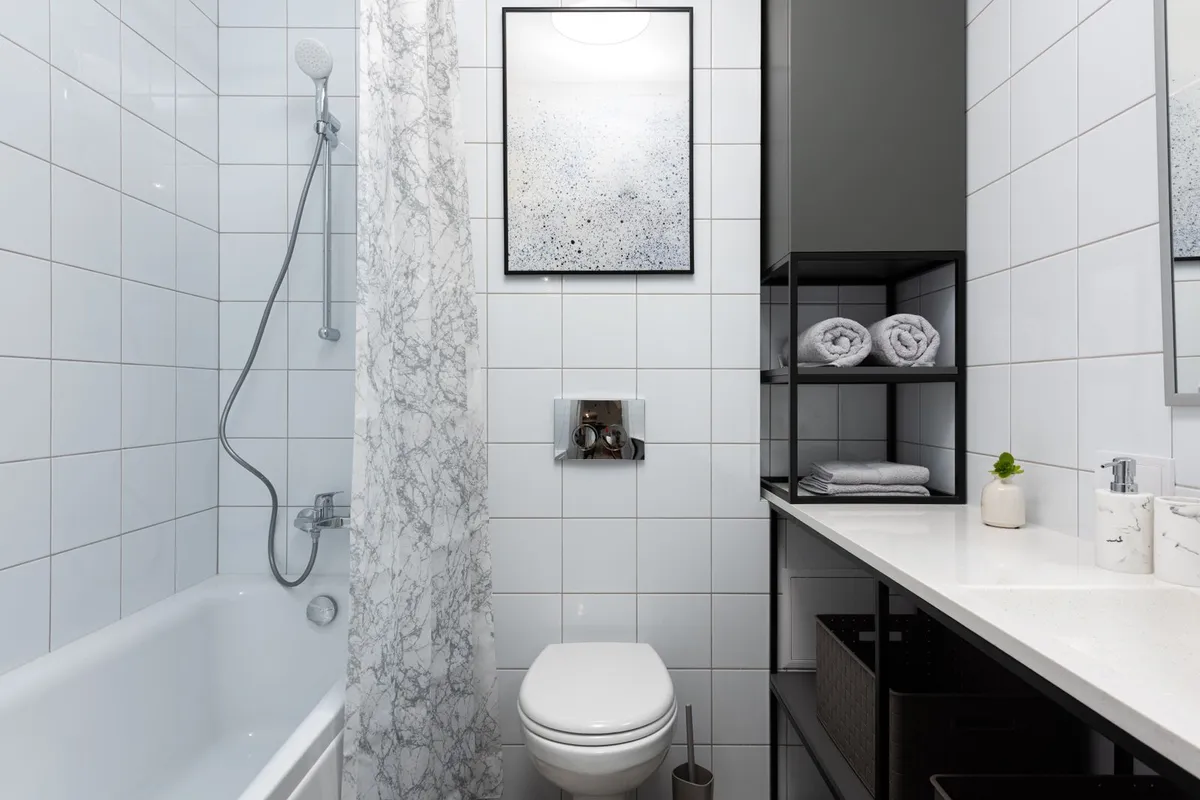
12 Small Bathroom Storage Ideas for Renters (No Drilling)
Small bathroom storage ideas for renters start with one problem: almost no floor space, one towel rail if you are lucky, and tile a landlord checks closely at move-out — so drilling is not an option. These 12 small bathroom storage ideas for renters use the wall above the toilet, the back of the door, and the height inside the shower — no renovation needed. Every idea below needs no drilling, most cost under $25, and all of it lifts off, unhooks or walks out with you when you move. Measure first, buy second — an over-toilet unit that misses the tank lid by half an inch is just clutter in a box.
Before you buy anything — 3 rules
- Measure the four numbers that decide what fits. Tank height and width (for an over-toilet unit), door thickness and swing clearance (for over-door racks — most interior doors are 1⅜ inches thick, and every rack lists the range its bracket fits), floor-to-ceiling height in the shower corner (for a tension-pole caddy), and the width of the gap beside the toilet or vanity (for a slim cart). Write them on your phone before you shop.
- Check your lease before adhesives, and use bathroom-rated ones only. Standard adhesive hooks lose grip in steam; use water-resistant bathroom strips and stay inside their weight limit. 3M’s Command Bath replacement strips are rated 3–5 lb in medium/large sizes and are made to hold in hot, wet, humid conditions and remove cleanly — while a standard small Command wire hook holds only 0.5 lb, so do not hang a full shampoo bottle on one. Sources: 3M Command Bath strips ; 3M Command small wire hooks
- Zone the bathroom before you shop, and match storage to humidity. Daily items (toothbrush, face wash, the towel in use) live within arm’s reach of the sink or shower. Everything else earns a higher shelf or a bin. Pick rust-resistant metal, sealed wood, plastic or acrylic, and open or draining designs in the shower so water does not sit and turn to mildew. Run the exhaust fan during and after showers.
1. Put a freestanding shelf unit over the toilet
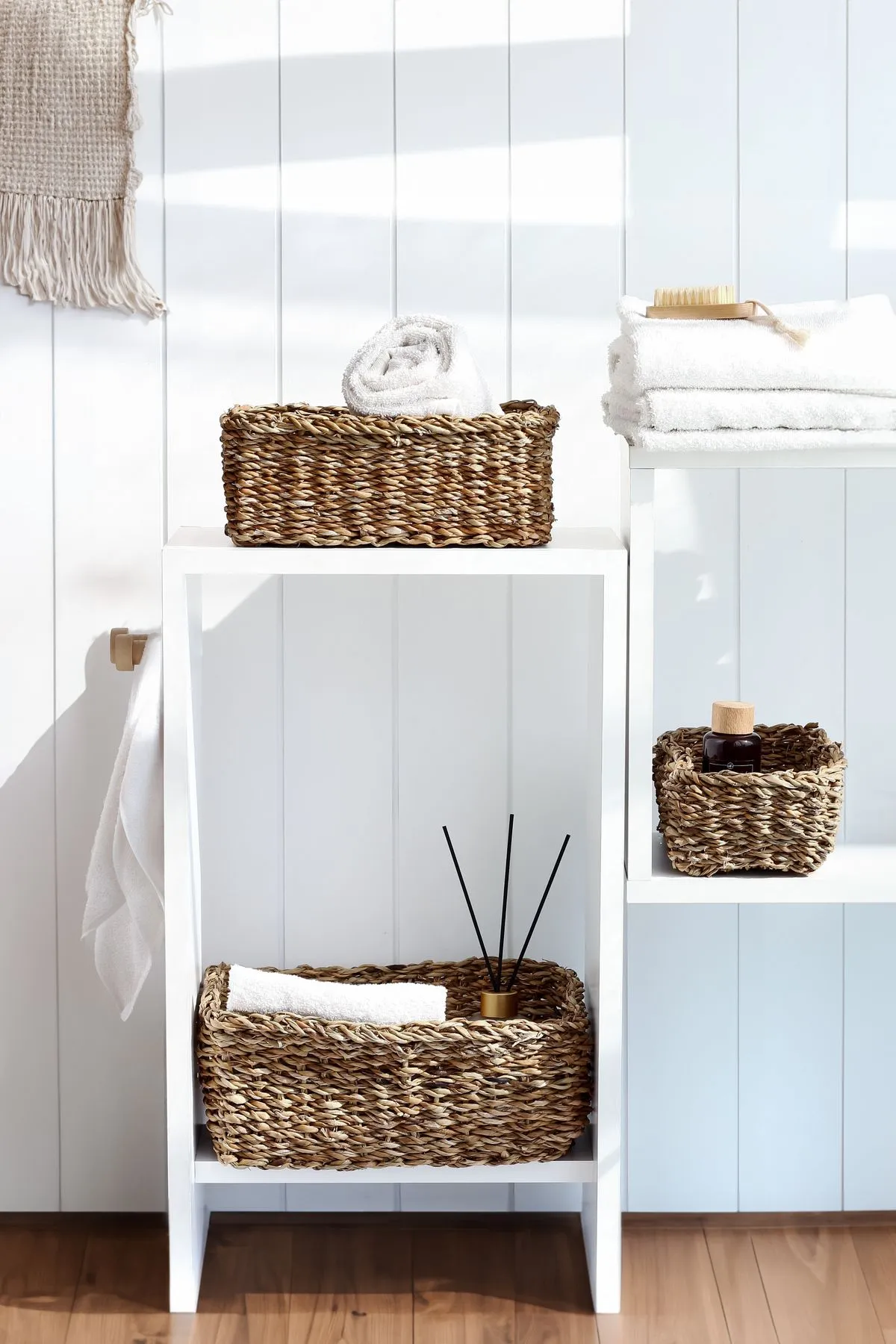
The wall above the toilet is the most wasted space in a small bathroom. A freestanding over-toilet unit stands on the floor and straddles the tank, so it needs no drilling and no fixing to the wall at all. Use it for spare towels, toiletries and one basket, and keep the top shelf for the things you reach for daily.
Try this: measure the tank before you buy — the unit must clear the lid by a few centimetres, and the feet must sit flat on the floor. If the floor is uneven, look for adjustable feet; do not overload the top shelf.
Cost: $20–$45 · Time: 20 minutes to assemble · Renter-safe: yes, freestanding.

Shop this: Kalrin Over-The-Toilet Storage Rack, 4-Tier on Amazon
2. Hang an over-door rack on the bathroom door
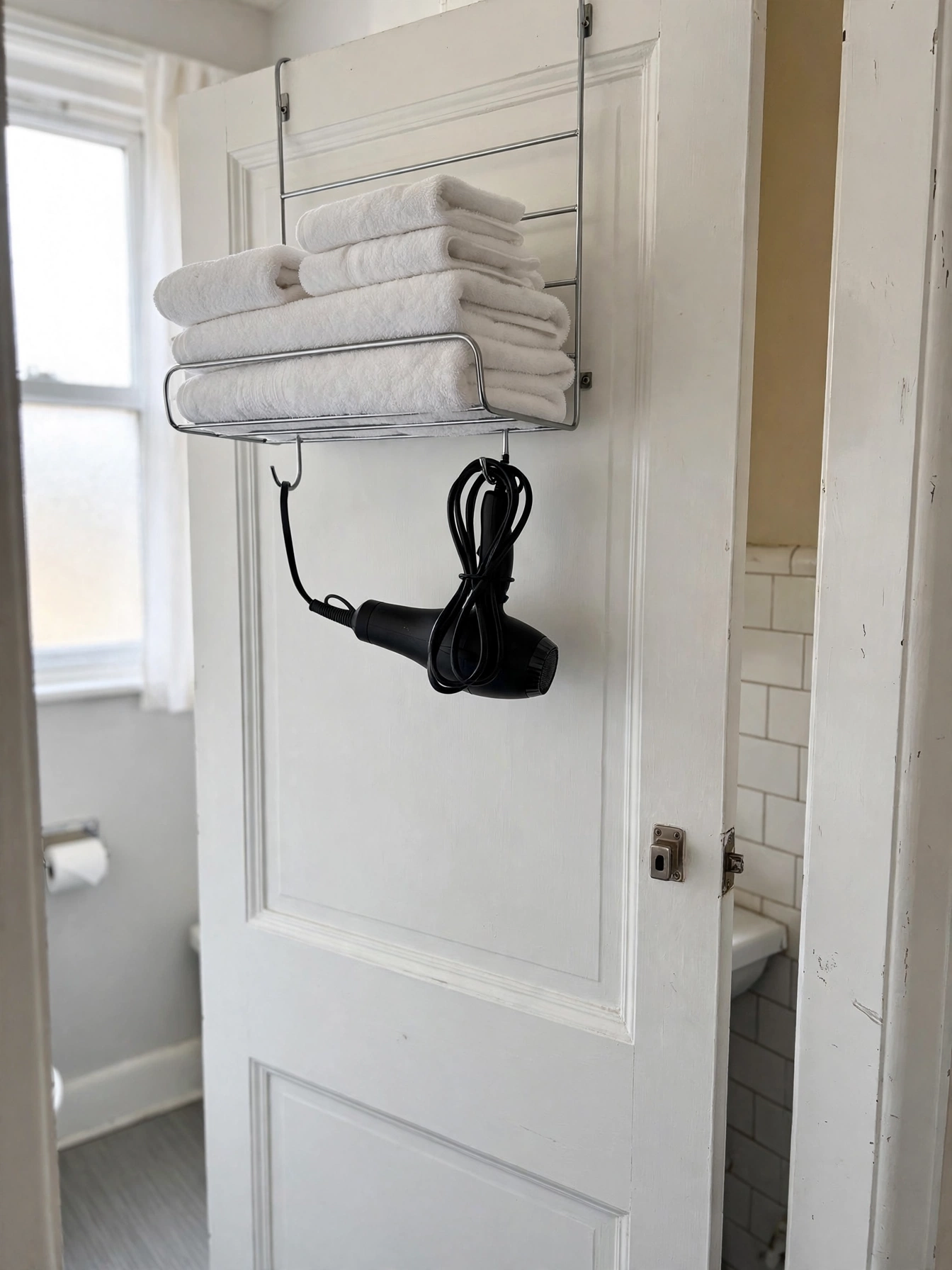
The back of the door is free storage. An over-door rack with hooks or pockets holds towels, a hair dryer, cleaning supplies or spare toilet rolls, and it lifts off in seconds when you move out. Choose a flat-hook style so the door still closes properly and the hinges are not strained.
Try this: check the bracket fits your door thickness first, then hang the door and open and close it fully before you load anything. In a shared bathroom, give each person one hook or one pocket and the towel pile disappears.
Cost: under $25 · Time: 5 minutes · Renter-safe: yes.
3. Wedge a tension-pole shower caddy floor to ceiling
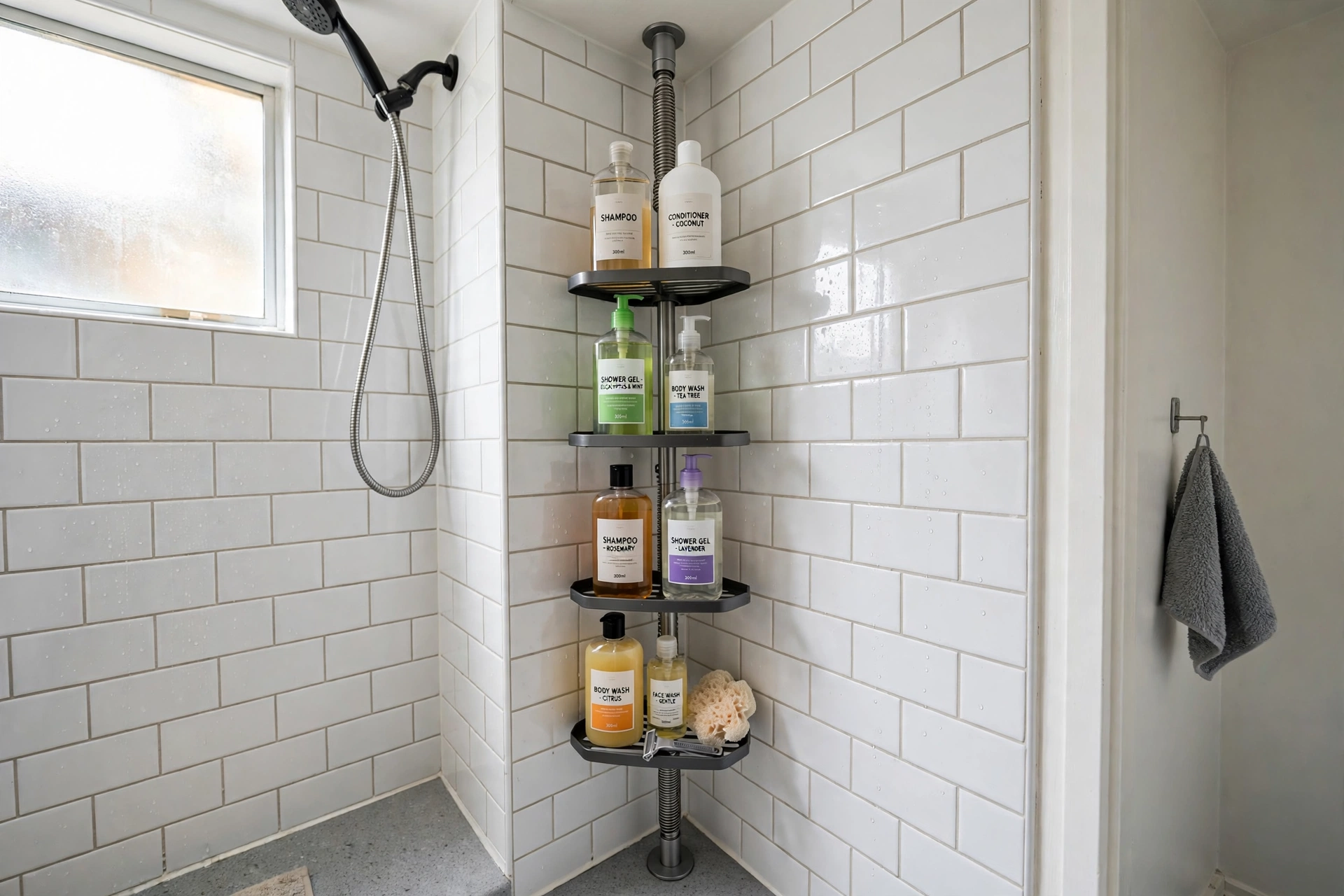
A tension-pole caddy wedges between the shower floor and ceiling on spring pressure — no holes, no adhesive, and four shelves of storage in a corner that was holding nothing. It is the best option when the shower has no shelf and the walls are tiled.
Try this: measure the floor-to-ceiling height in the exact corner first, and check nothing cuts the run short — no shower head, no recessed niche. Load the heaviest bottles on the lowest shelf so it cannot tip.
Cost: $25–$40 · Time: 15 minutes · Renter-safe: yes.
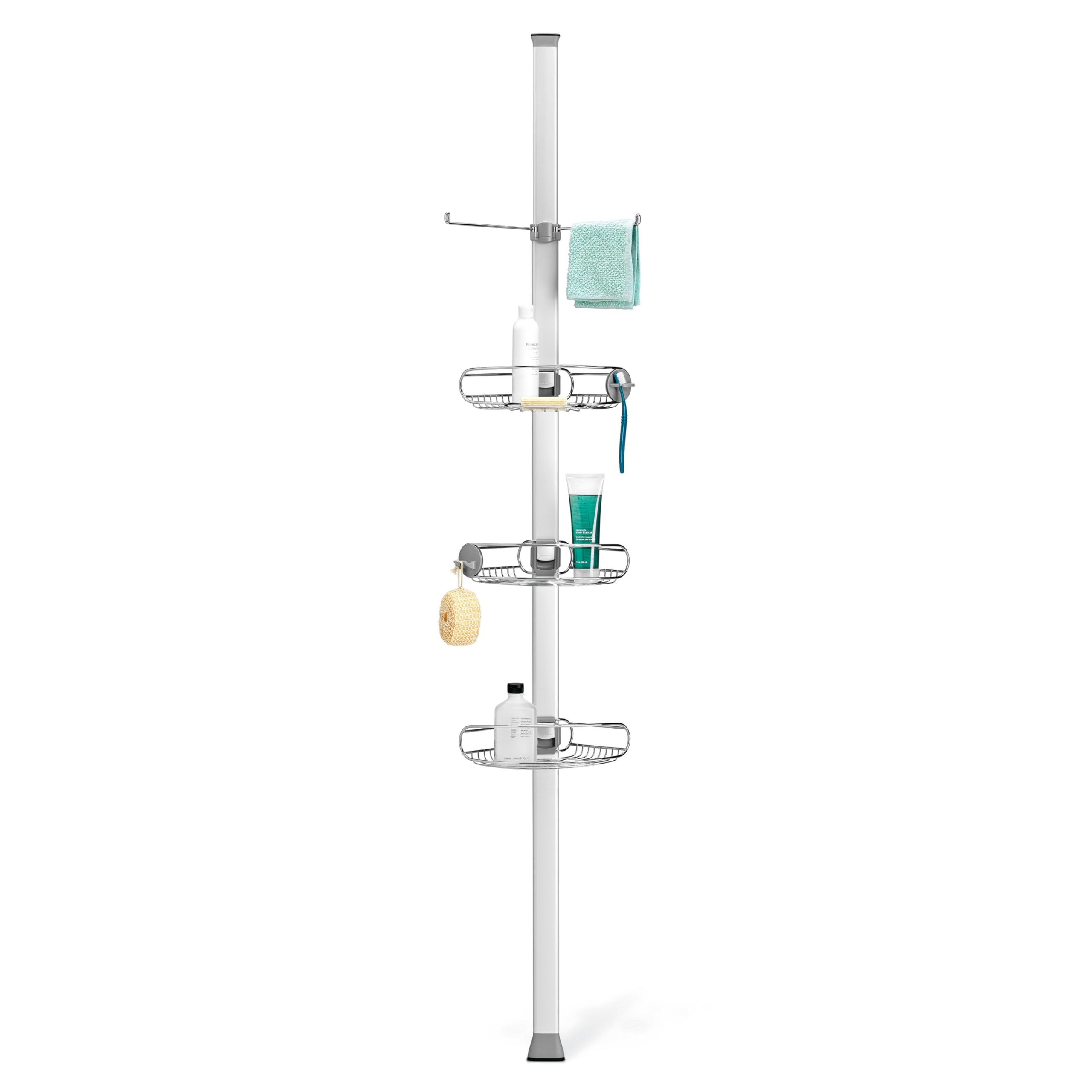
Shop this: simplehuman Tension Pole Shower Caddy on Amazon
4. Stick an adhesive shower caddy on smooth tile or glass
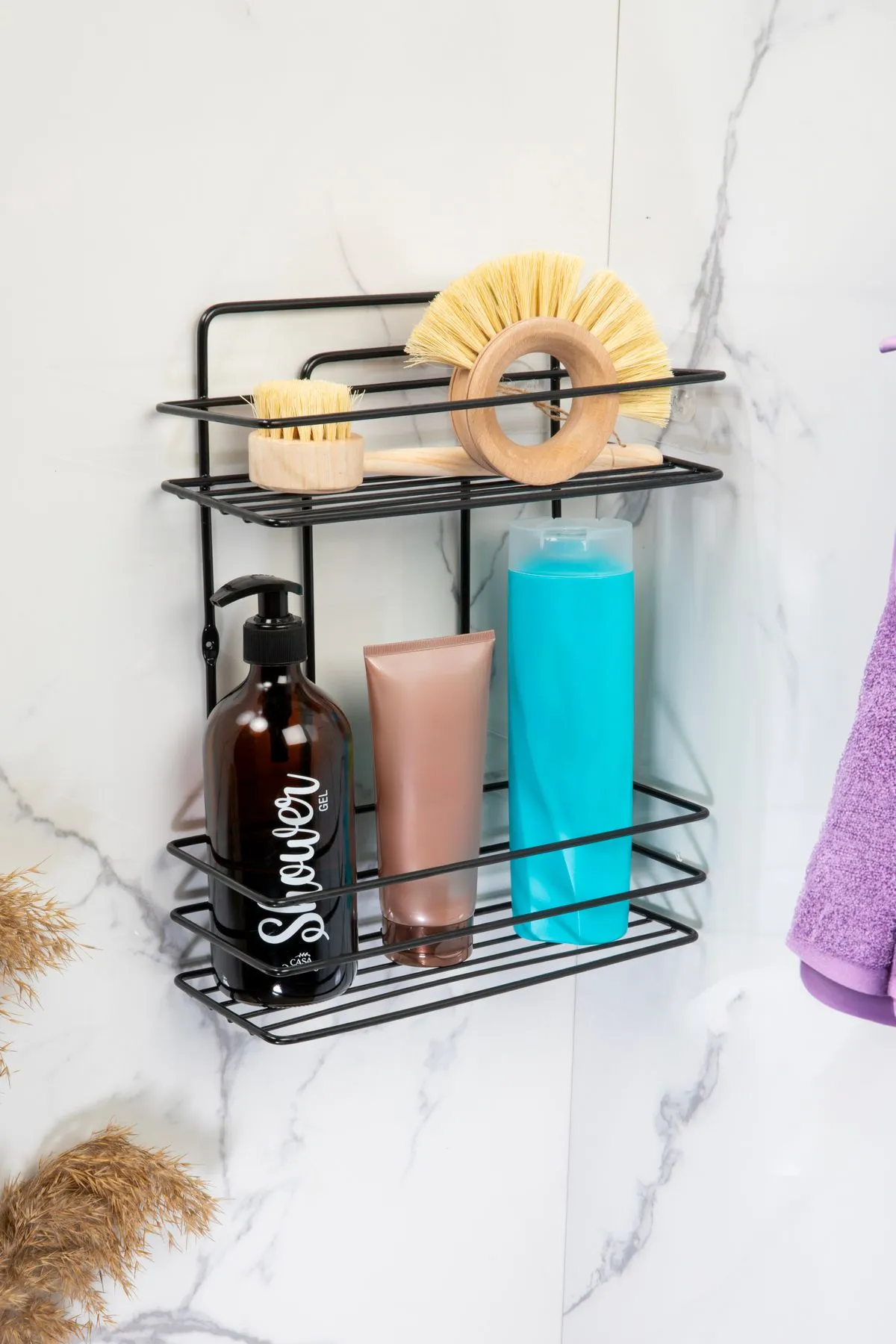
If the ceiling is low or the corner is taken, an adhesive caddy sticks flat to smooth tile or glass and holds the daily bottles where you can reach them. Adhesive beats suction cups here — suction fails most often in steam, usually at the worst moment — but only if the surface is smooth, clean and dry when you stick it on.
Try this: clean the tile with rubbing alcohol first, avoid grout lines, and let the adhesive cure for the full time the instructions give before you load it. Use bathroom-rated strips (3–5 lb, see the rules above) and keep the total load under the rating.
Cost: under $25 · Time: 10 minutes plus curing time · Renter-safe: yes, if bathroom-rated strips are used and the weight limit is respected.
5. Hook a caddy over the showerhead or shower rail
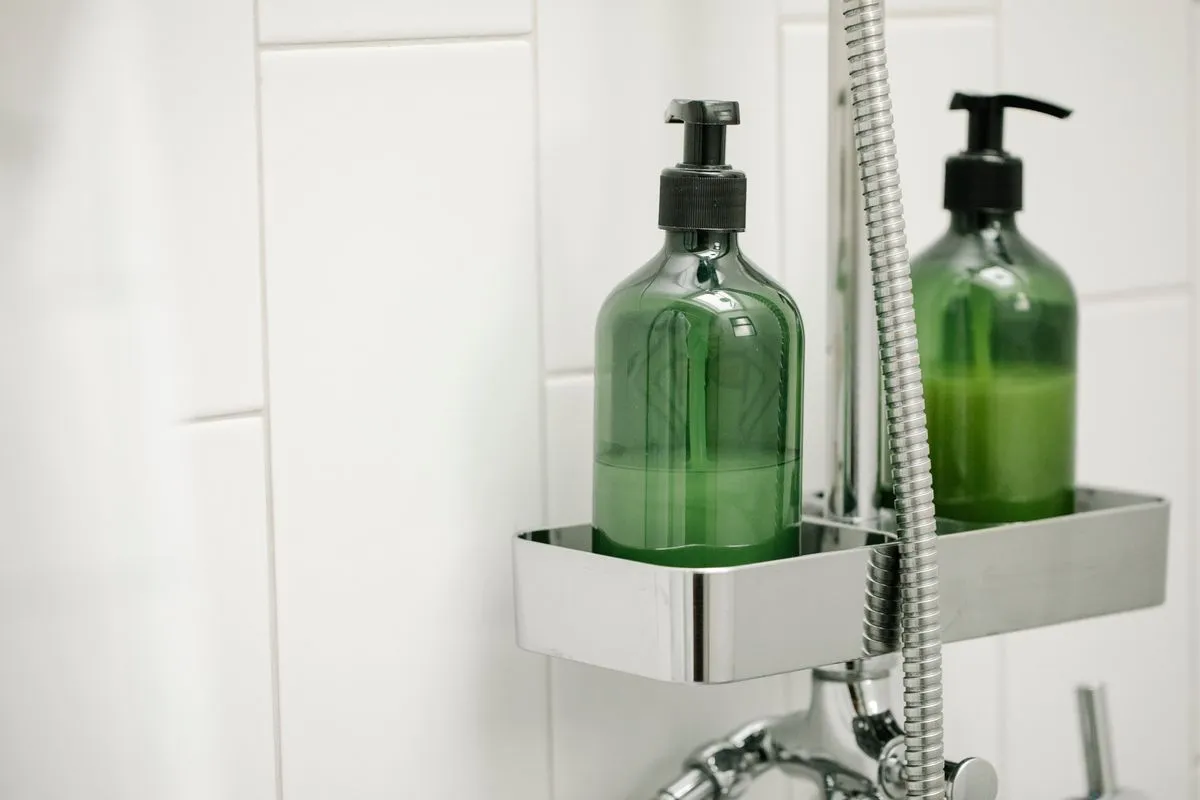
A caddy that hooks over the showerhead or the shower rail needs no sticking at all — it hangs there by its own hook and comes off in one lift. It holds the two or three bottles you actually use every day, which is usually all a small shower needs.
Try this: keep it to daily bottles only. If it starts collecting half-empty products, it is a shelf, not a caddy — move the rest to the over-toilet unit.
Cost: under $20 · Time: 2 minutes · Renter-safe: yes.
6. Add a second tension rod in the shower for towels
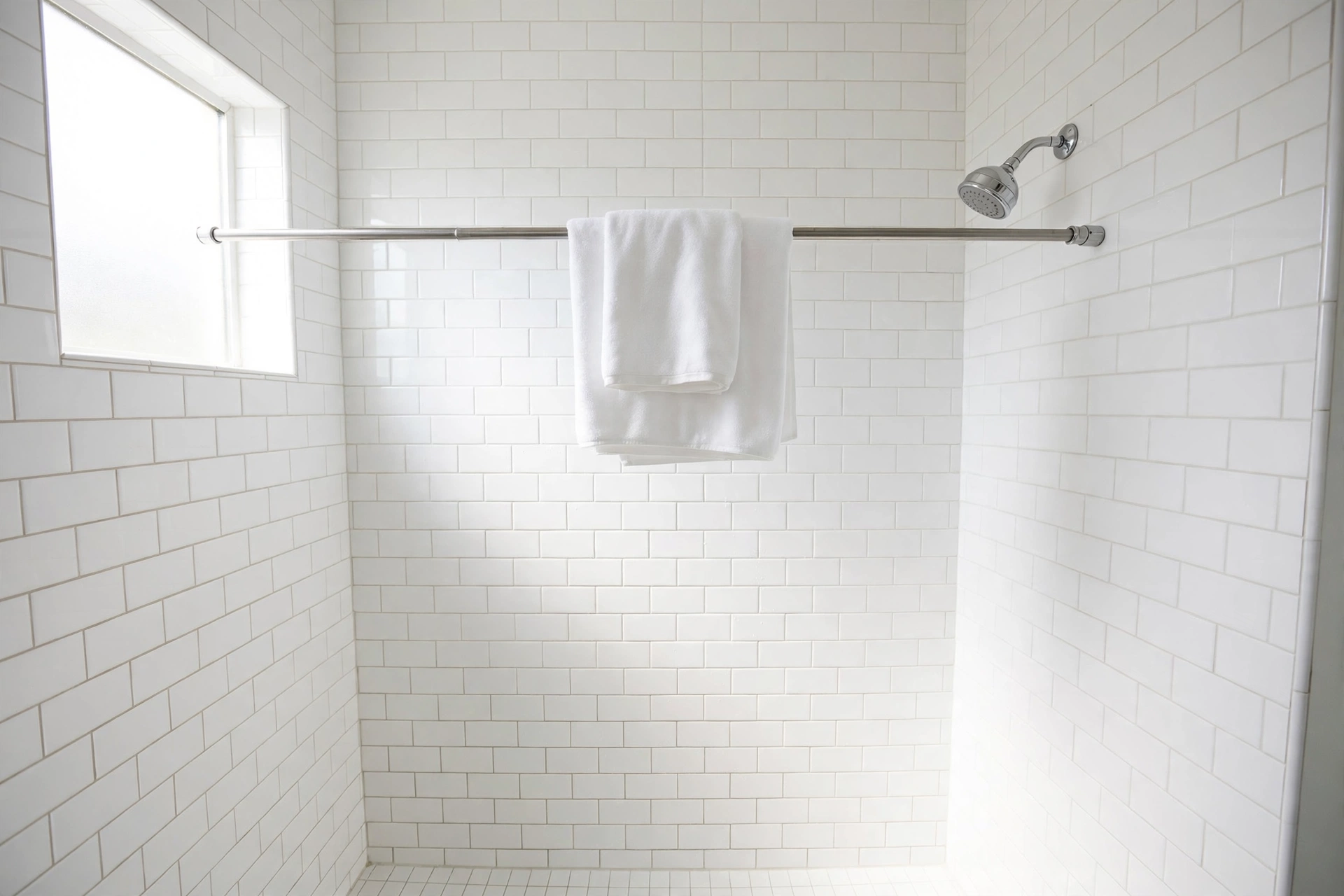
If the towel rail is full, a second tension rod a few inches inside the shower becomes a towel bar without stealing wall space or a single screw. Hang the towel you are using now on it, and keep the wall rail for fresh towels.
Try this: fit the rod high enough that the towel does not sit in the spray, and twist it tight — a rod that slips once will not be trusted again.
Cost: under $15 · Time: 5 minutes · Renter-safe: yes.
7. Slide a slim rolling cart beside the toilet or vanity
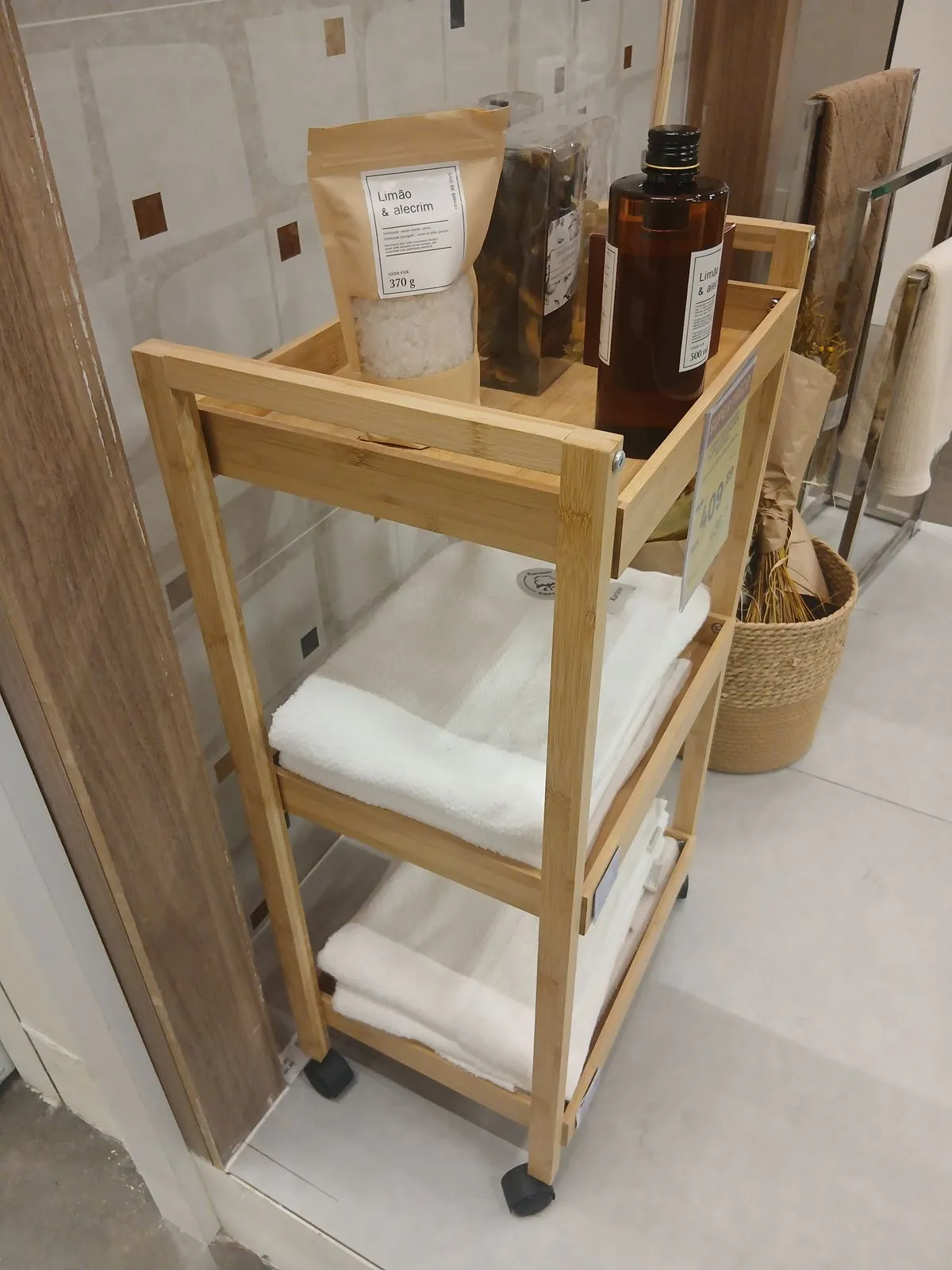
Most bathrooms leave a narrow gap beside the toilet or vanity. A slim rolling cart slides into it and holds spare toilet rolls, cleaning bottles or hair products, then rolls out when you need something from the back. It is the same trick as the fridge-gap cart in the kitchen, sized for the bathroom.
Try this: measure the gap at the floor and at counter height — walls and vanities are rarely perfectly straight, and the cart has to clear both.
Cost: $15–$30 · Time: 10 minutes to assemble · Renter-safe: yes, freestanding.
8. Organise under the sink with a sliding unit — and a tension rod
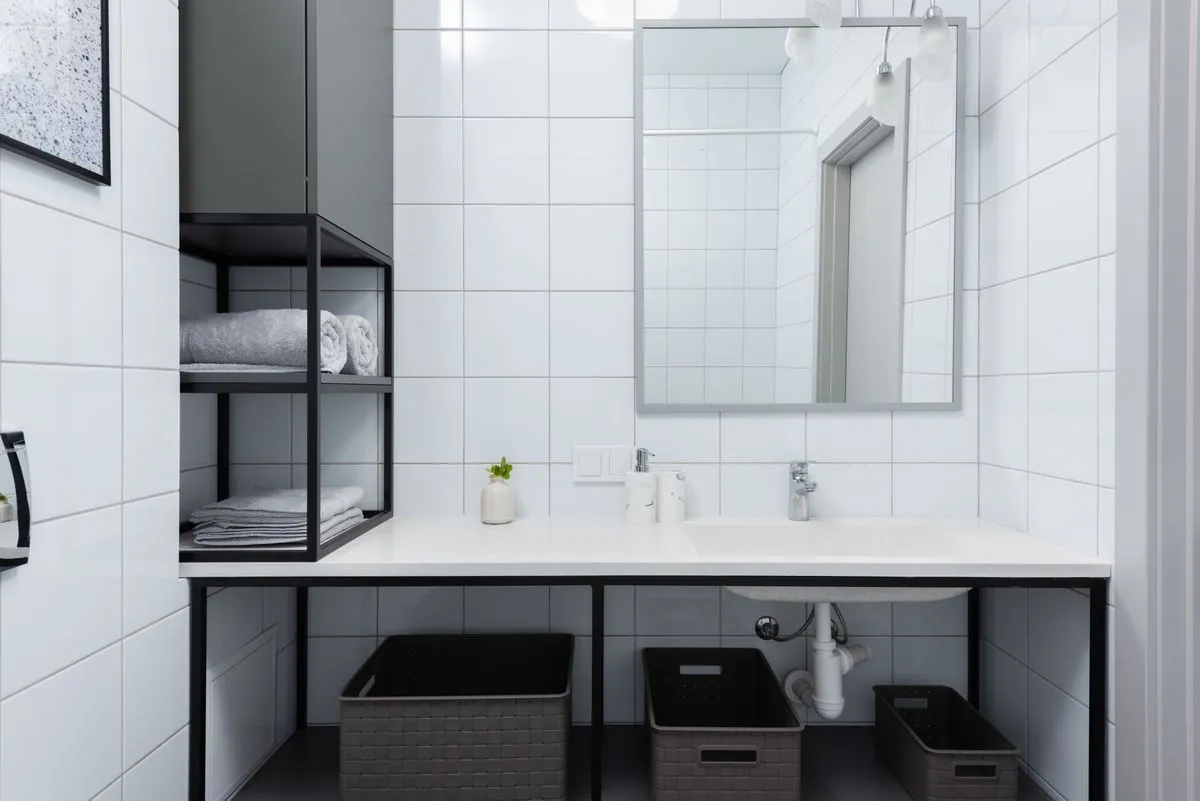
The cabinet under the sink is usually a jumble of cleaning supplies, because the pipes get in the way. A sliding, adjustable organizer works around the plumbing and pulls out so you can see the back, and a tension rod across the top holds spray bottles by their triggers.
Try this: hang the bottles on the rod first, then size the bins to whatever floor space is left — not the other way round. Keep anything that leaks in a tray, not straight on the cabinet floor.
Cost: $15–$30 · Time: 15 minutes · Renter-safe: yes.
9. Use the inside of the vanity and medicine-cabinet doors
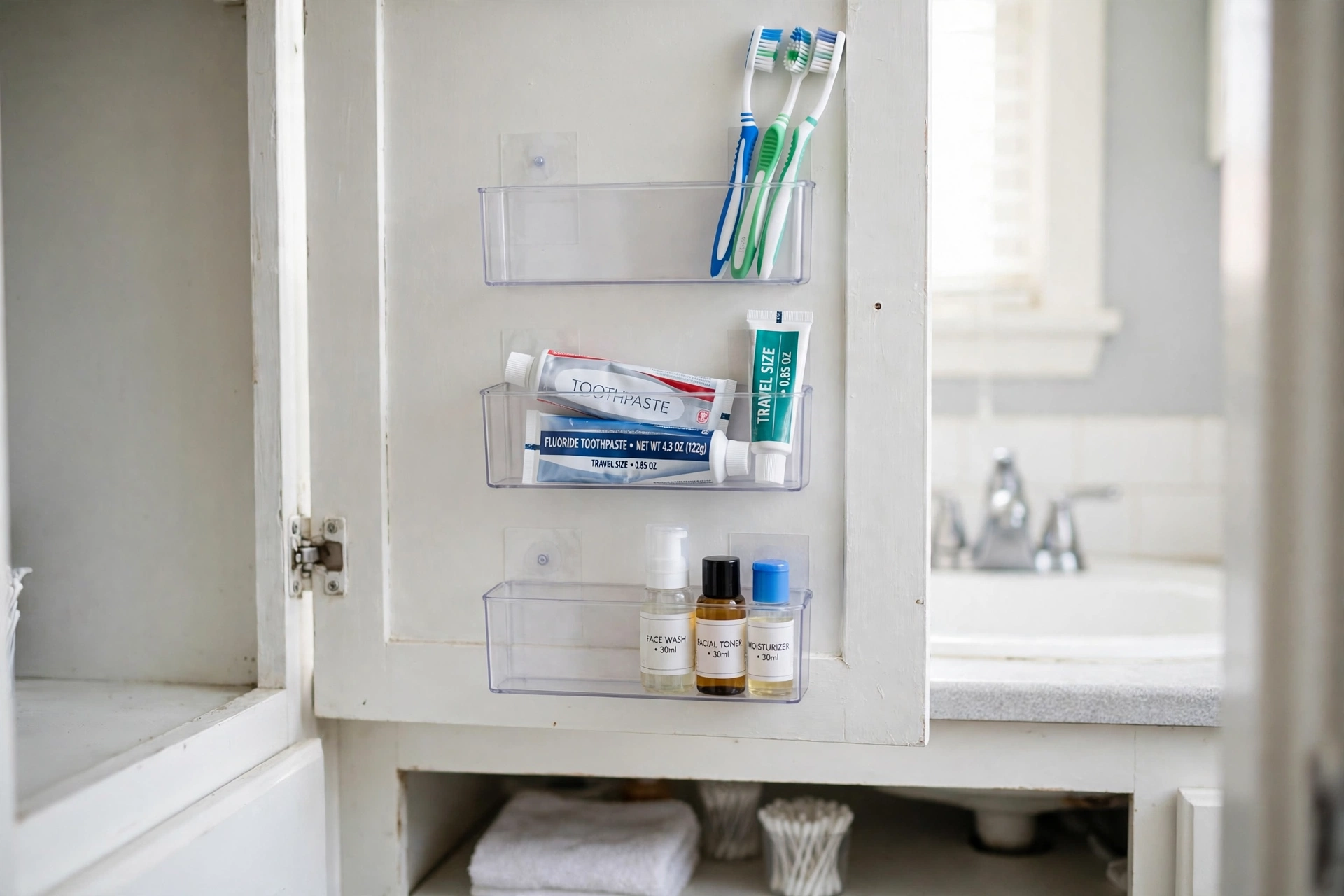
The inside of a cabinet door is free storage, and in a bathroom it is the best place for the small things that clutter the counter: toothbrushes, toothpaste, minis and small bottles. Slim adhesive bins or a small adhesive shelf on the inside of the door keep them off the counter and wipeable in one swipe.
Try this: keep only flat, light things here, and use bathroom-rated strips. Heavy jars belong on a shelf, not a door — excess weight strains hinges and can pull adhesive off in steam.
Cost: under $20 · Time: 10 minutes · Renter-safe: yes, if bathroom-rated strips are used for light items only.
10. Corral the counter on a tray — and move the toothbrushes off it
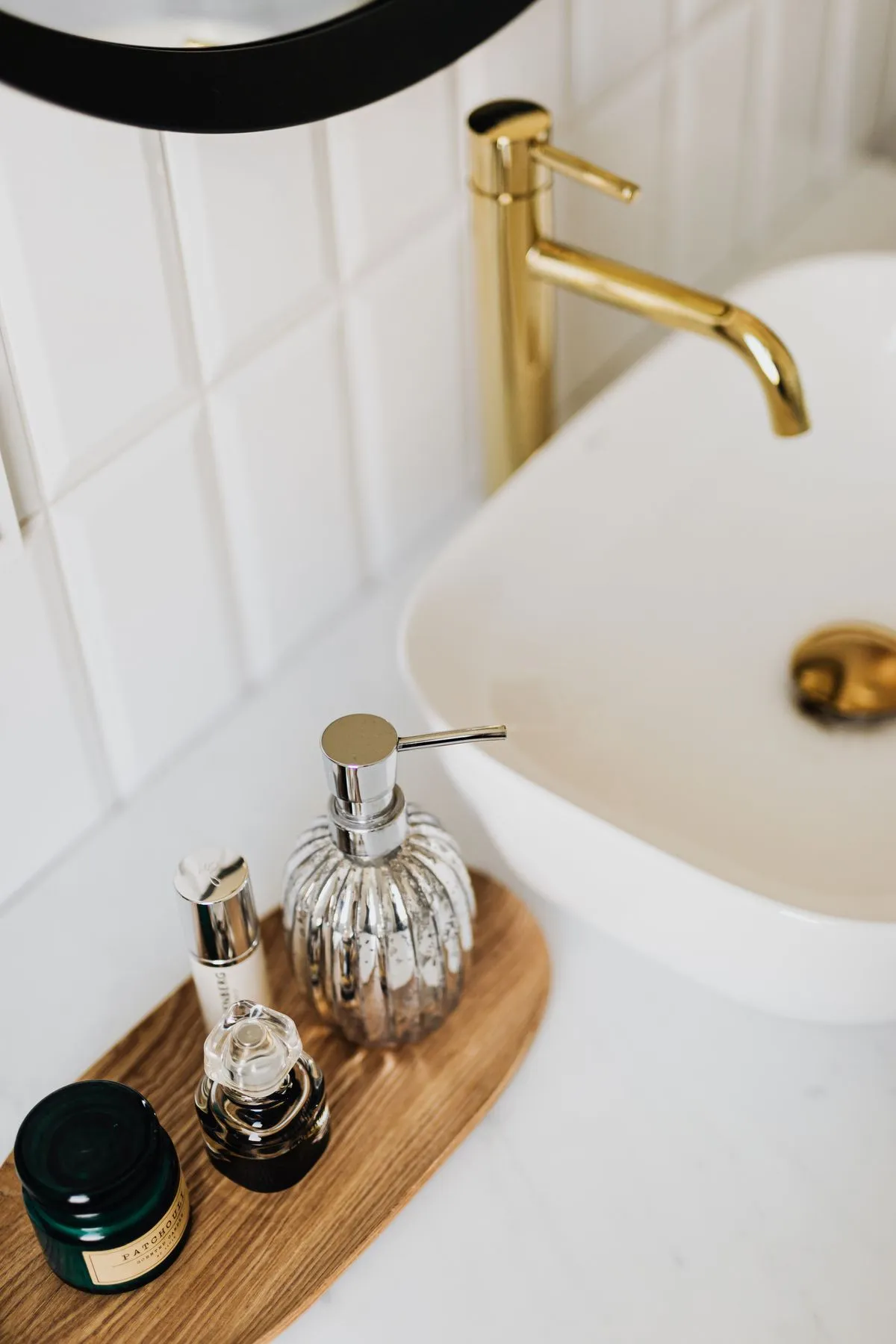
A bathroom counter gets messy fast because the footprint is tiny. One tray in a corner holds the daily items, keeps rings and spills in one spot, and leaves the rest of the sink clear for washing. Move toothbrushes and toothpaste onto the wall (idea 9) and the counter becomes wipeable in one swipe.
Try this: if the tray is full, something leaves the counter. The tray is the limit, not a starting point.
Cost: under $20 · Time: 5 minutes · Renter-safe: yes.
11. Give a pedestal sink its storage back
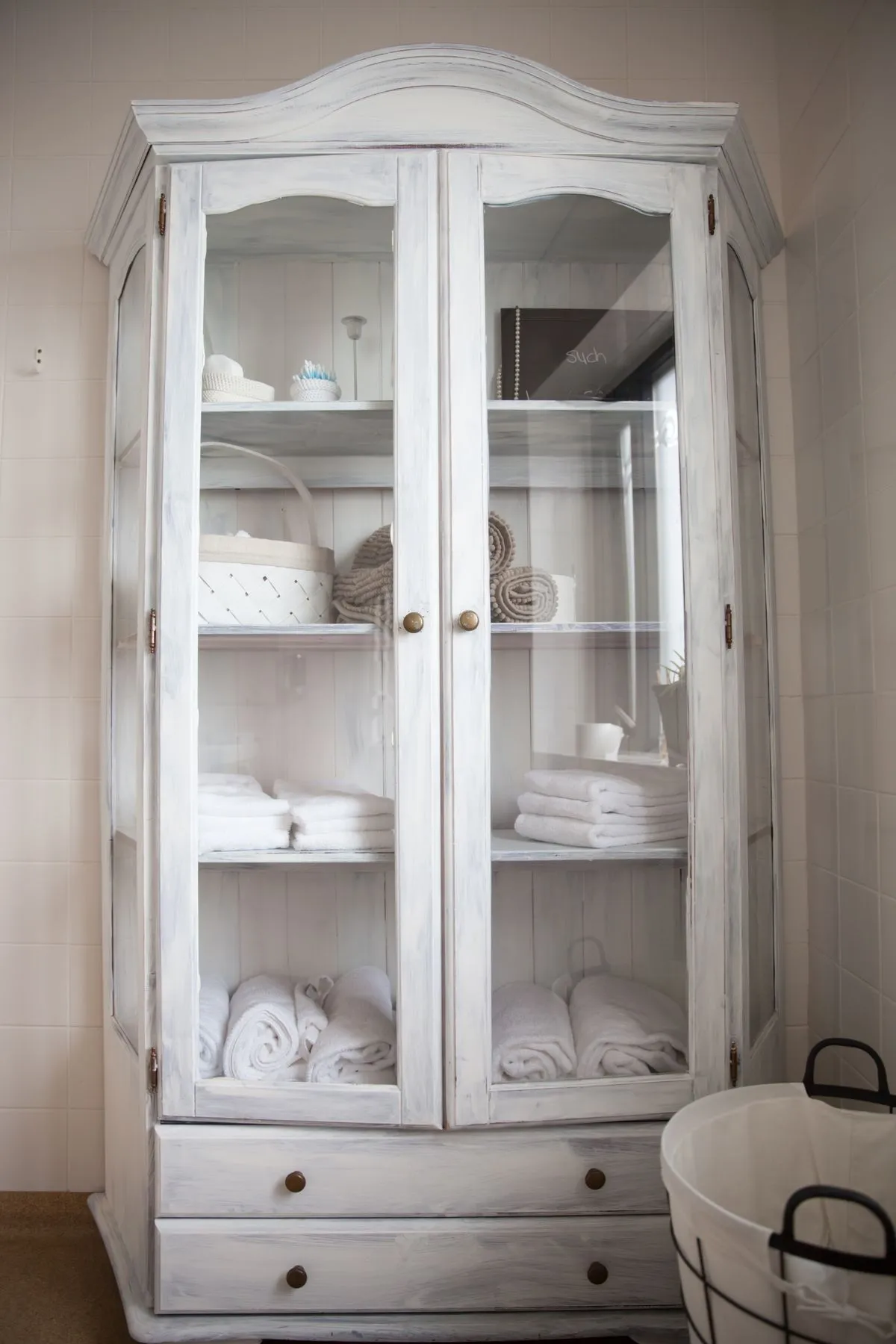
If the bathroom has an open pedestal sink instead of a vanity, a whole tier of storage is missing. A freestanding cabinet designed to slide around pedestal plumbing adds that storage back with no mounting, and a narrow shelf beside the sink does the same job in a tighter room.
Try this: measure around the pedestal before you buy — the cut-out has to clear the plumbing, not just the width of the sink. Keep daily items on top and spares inside.
Cost: $25–$60 · Time: 20 minutes to assemble · Renter-safe: yes, freestanding.
12. Do the 5-minute nightly reset — and beat the humidity
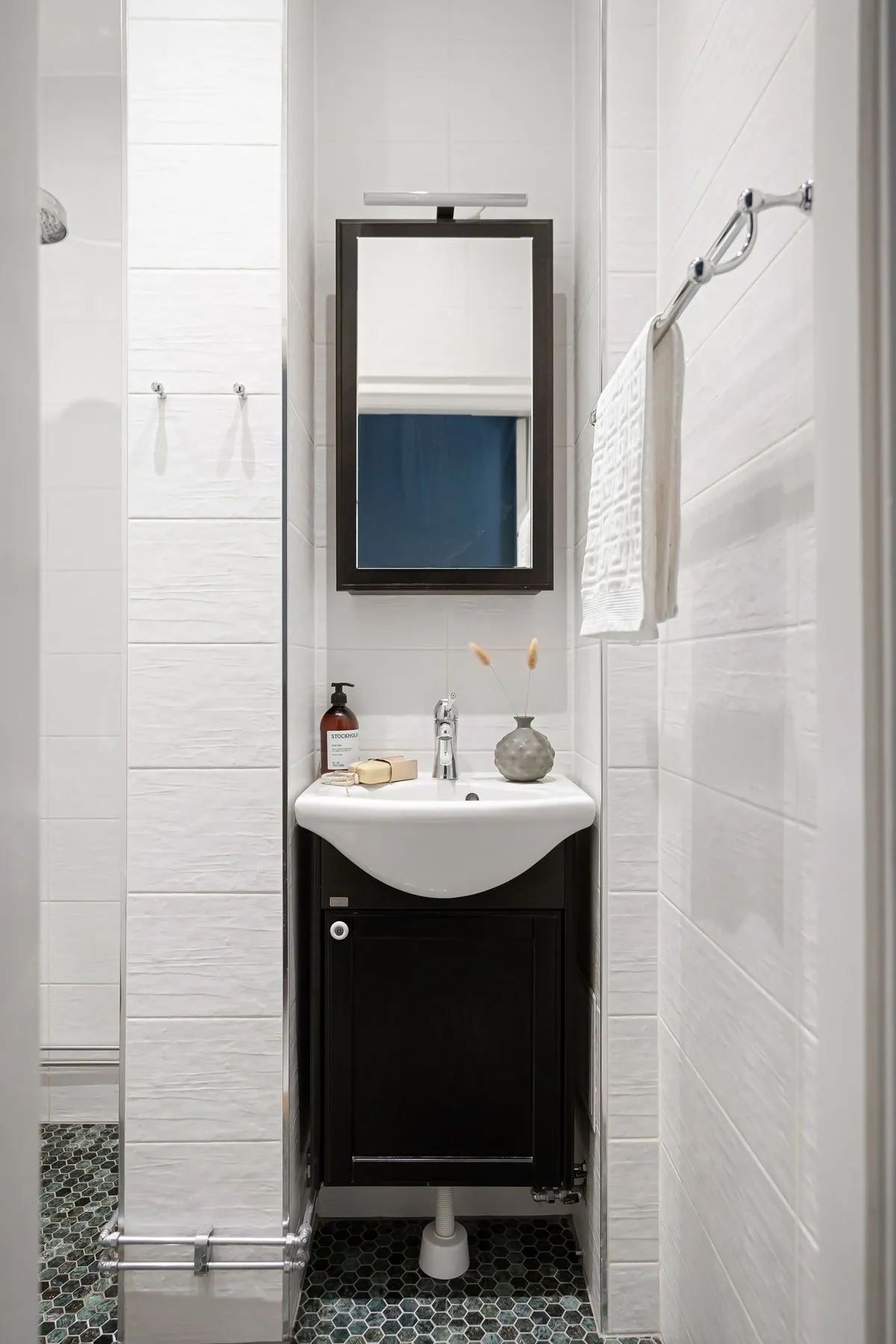
Organizers only work if the bathroom goes back to its zones. Every night, return products to their shelf or bin, hang the towel to dry, and wipe the sink. Five minutes keeps the other 11 ideas working — and run the exhaust fan during and after showers, because damp air is what turns tidy storage into mildew.
Try this: set a phone timer for five minutes. When it rings, stop — the point is a habit you will keep, not a deep clean.
Cost: free · Time: 5 minutes a night · Renter-safe: yes.
What to do first: 3 small bathroom storage ideas for renters to start with
Start with ideas 1, 2 and 4 — the over-toilet shelf unit, the over-door rack and the adhesive shower caddy. These three small bathroom storage ideas for renters cost about $50–$90, take under an hour, need no drilling, and fix the three places a small bathroom actually stores things: above the toilet, behind the door, and in the shower. Then add the tension-pole caddy (idea 3) if the shower still has nowhere to put bottles, and the slim cart (idea 7) if you have a gap beside the toilet.
More ideas for small spaces: 14 Small Closet Organization Ideas for Apartments Under 500 Sq Ft and 12 Under-Bed Storage Ideas for Small Bedrooms.

2 Comments