
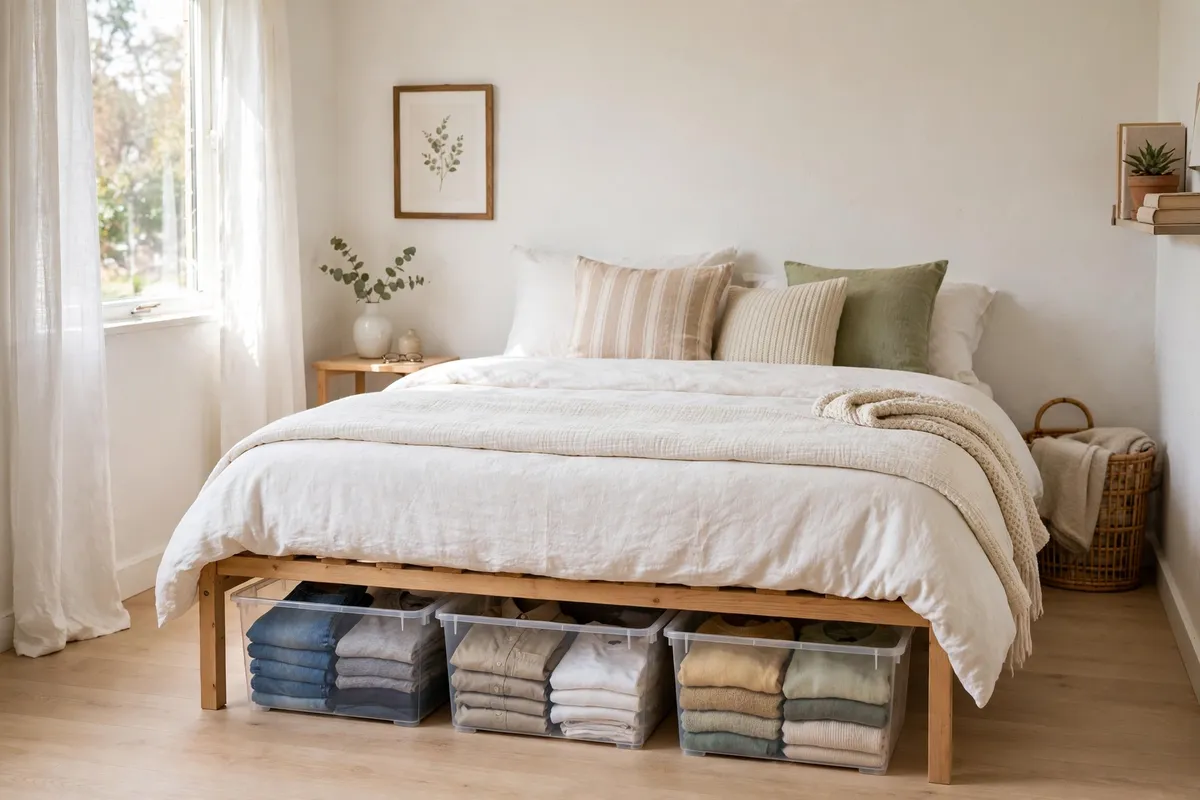
12 Under-Bed Storage Ideas for Small Bedrooms
Under-bed storage ideas for small bedrooms start with one fact: a queen bed covers roughly 30 square feet of floor, and the gap underneath it is usually the largest empty space in a small bedroom — yet most renters buy the bins first and measure second, then rage-return the box that is half an inch too tall. You do not need a new bed frame or a single hole in the wall to use it — you need the clearance number, one container family per category, and lids that keep the dust out. Every idea below needs no drilling, most cost under $25, and all of it slides out, rolls away or lifts off on moving day. Measure first, buy second — a bin that misses the clearance by half an inch is just clutter in a box.
Before you buy anything — 3 rules
- Measure the three numbers that decide what fits. Floor to the lowest point of the bed frame (not the mattress, not the box spring), the width between the bed legs, and the floor space beside the bed where the bin has to slide out. Clearance by bed type: platform bed 5–12 in, standard frame with box spring 8–12 in, tall frame or captain’s bed 14–20 in. The interior width between bed legs is usually 4–8 in narrower than the mattress, and many bins sold as under-bed sized are too wide for the actual opening. Source: Build-Construct under-bed sizing guide
- Buy a bin at least 1 in shorter than the clearance. Measure the clearance, then subtract an inch for the container lid and any carpet pile — a 9 in bin under a 10 in frame slides in and out with one hand, and rolling bins need that inch for the wheels. Leave 2 in of air between the top of the storage and the mattress base: sealed plastic pressed against the bottom of the mattress traps humidity and can breed mildew, especially in humid climates.
- Only raise the bed if the clearance forces you to — and check the weight first. Stackable bed risers add 2–6 in of height; adjustable sets usually come in 3 in, 5 in and 8 in sizes. You need four to six risers, and the set must support the combined weight of the bed, mattress and sleepers — most sets are rated 1,000–2,000 lb on the low end, and always check the weight limit before installing. A riser that does not fit the leg will wobble, and a jump onto the mattress can shift a riser that is not seated properly. Sources: EachNight bed risers guide ; Build-Construct under-bed sizing guide
1. Start with low-profile rolling bins for the things you reach for weekly
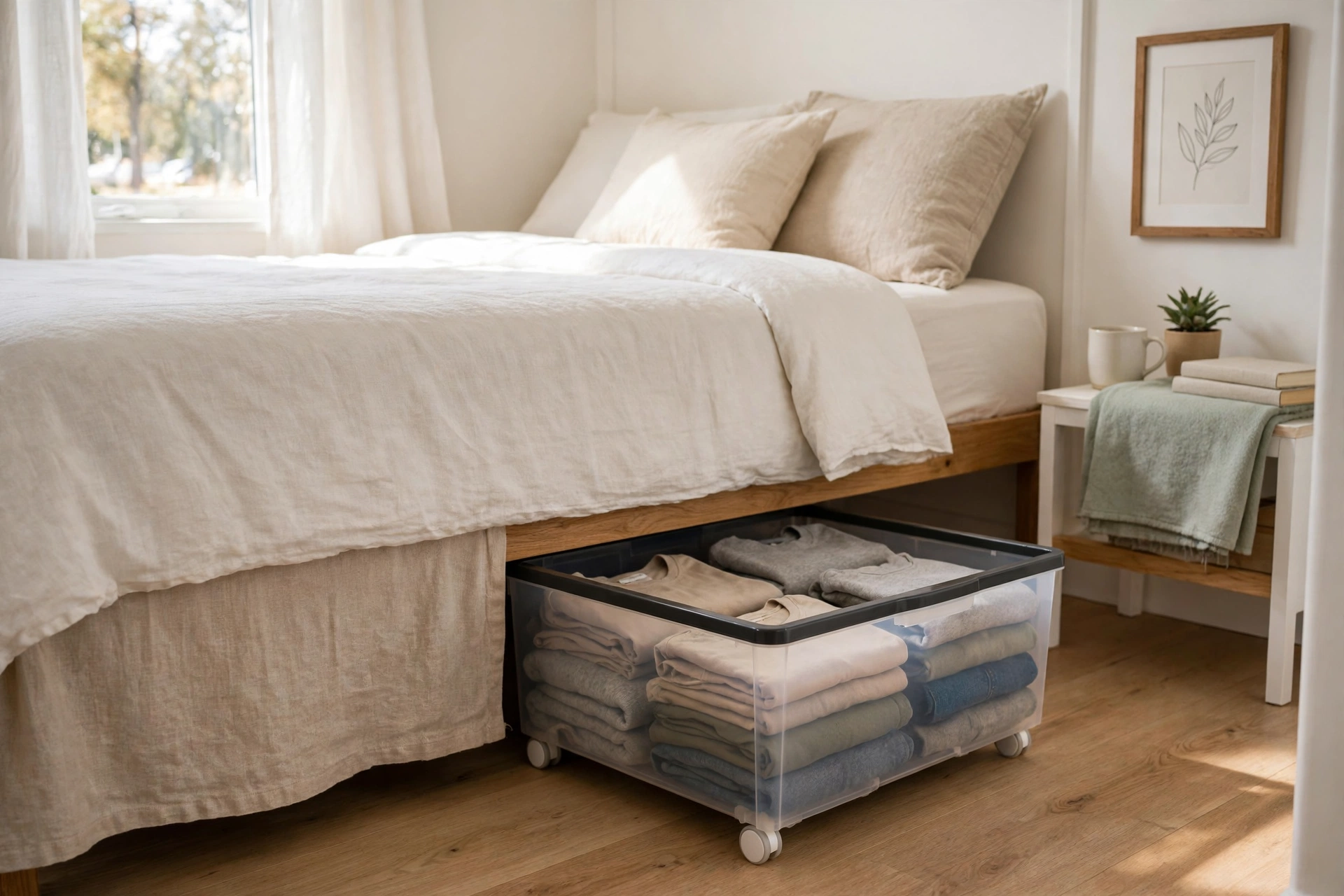
Rolling bins are the easiest win because they solve the real problem with under-bed storage: getting things back out. A shallow wheeled bin glides out with one hand, so folded pyjamas, workout clothes and spare sheets stop living in a pile on the dresser. Give each bin one category, so grabbing leggings never means unpacking the bedding.
Try this: buy the bin to fit the clearance minus 1 in, wheels included — a 6 in bin needs more than 6 in of clearance once the wheels are on. Put the daily bin on the side you sleep on, and the seasonal bin on the far side.
Cost: $25–$60 for a rolling drawer unit · Time: 5 minutes · Renter-safe: yes.

Shop this: NADAMOO Under Bed Storage with Wheels, 2 Pack on Amazon
2. Use clear lidded bins for seasonal clothes you only touch twice a year
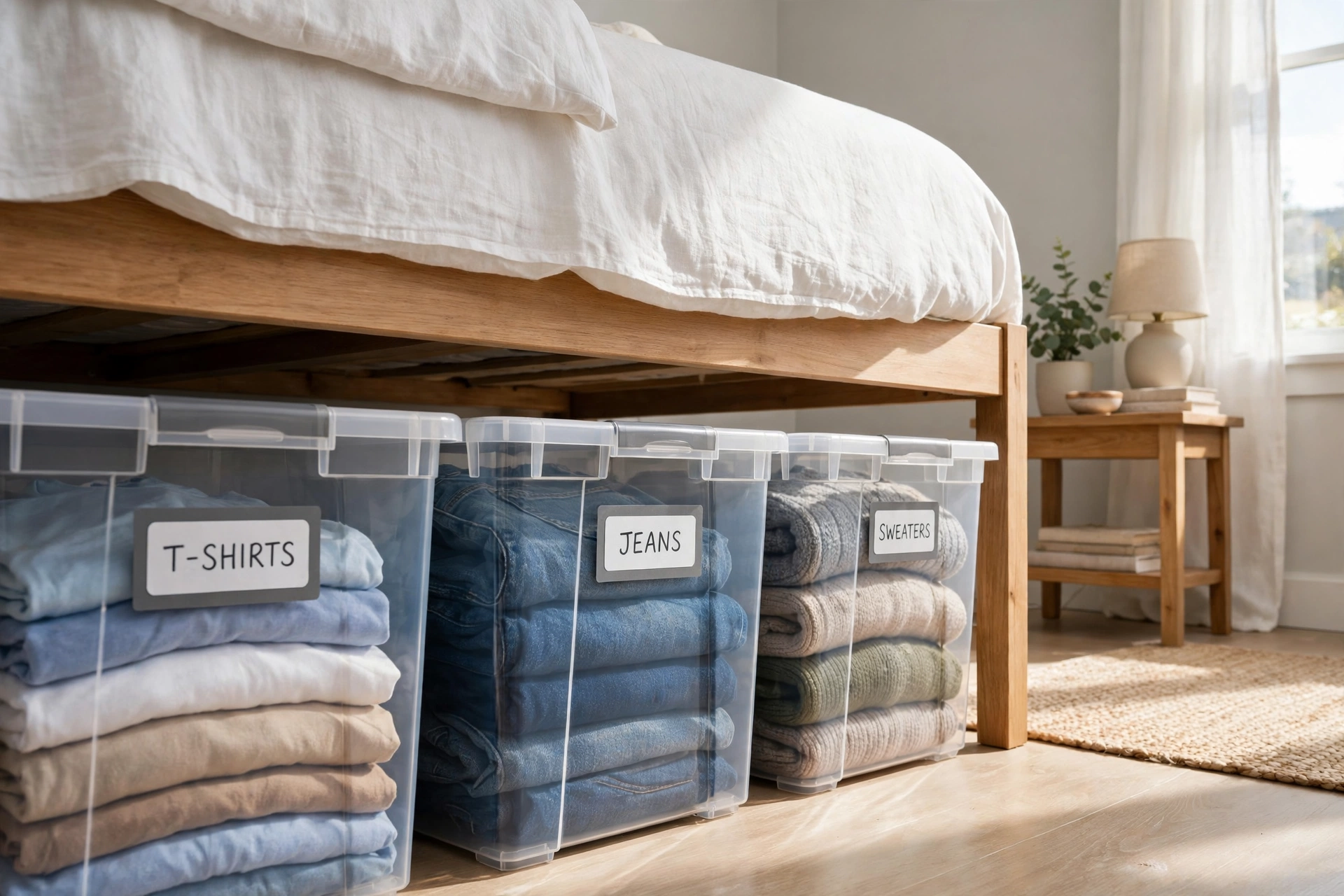
Clear lidded plastic bins are the workhorse for out-of-season clothes: you can see what is inside without opening anything, the lid keeps dust out, and the hard sides stop the pile from spreading. Sweaters in summer, shorts in winter — one bin per season, one label on the front.
Try this: label the side of the bin, not just the lid — the side label is the one you can read when the bin is slid halfway out. Keep the heaviest bins near the bed legs, where the frame transfers weight to the floor.
Cost: $10–$25 per bin · Time: 15 minutes to fill and label · Renter-safe: yes.
3. Keep spare bedding in zippered fabric bags
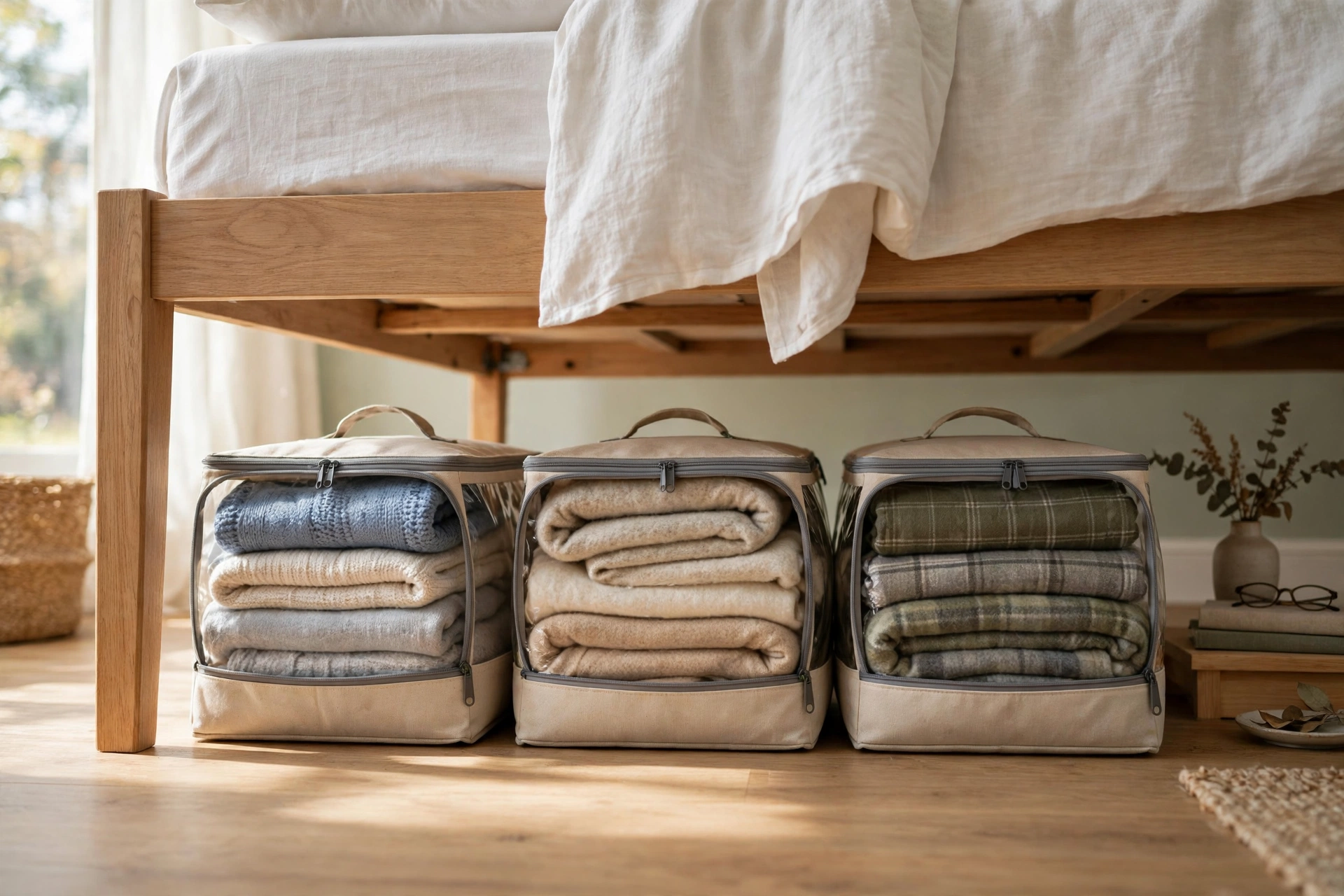
Zippered fabric bags suit guest bedding, extra towels and off-season clothes you only retrieve occasionally. They collapse flat when empty, which makes them the best choice when the storage is temporary, and the zip keeps dust off the sheets. They breathe, so they suit bedding better than airtight plastic.
Try this: one bag per bed set — sheets, pillowcase and duvet cover together — so making the guest bed is one pull, not three. Do not store anything damp in them; fabric lets dust through if the bag is left unzipped.
Cost: $8–$20 per bag · Time: 10 minutes · Renter-safe: yes.
4. Vacuum-seal the bulky stuff — coats, comforters, spare pillows
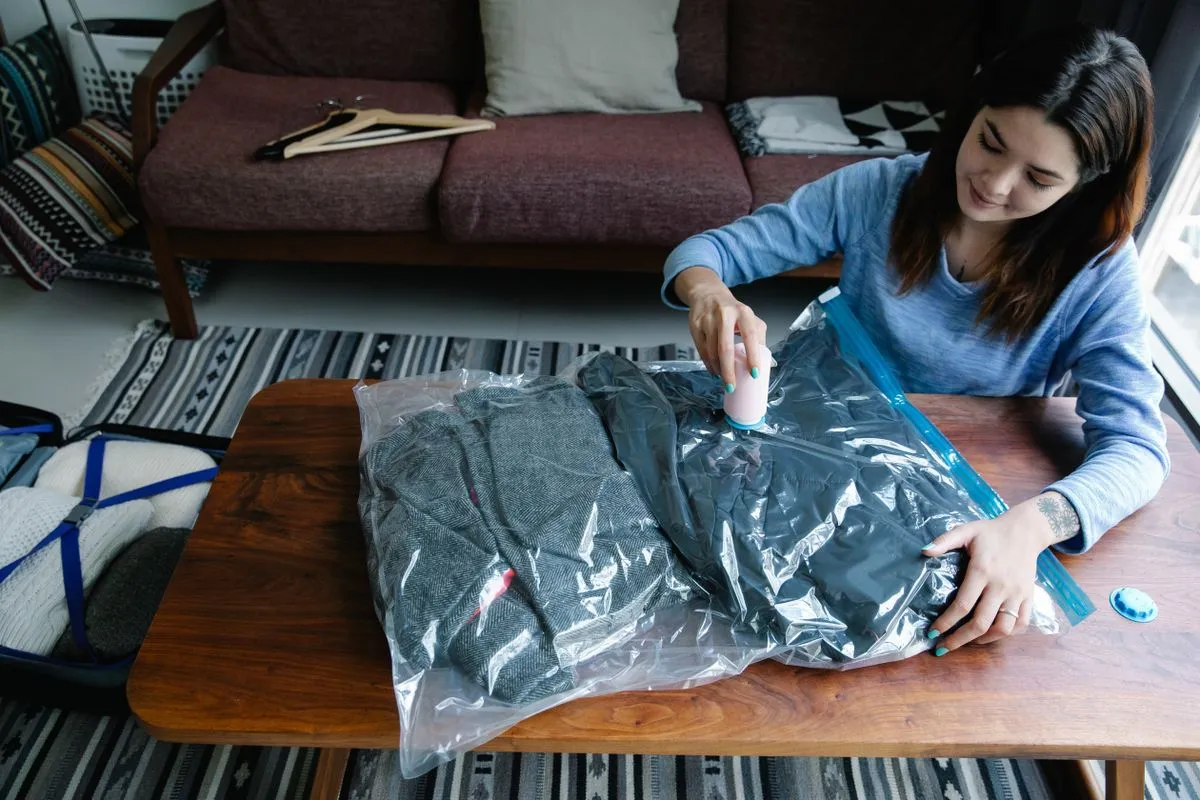
Vacuum bags compress a comforter to about a third of its volume, freeing room for a second layer of bins. They are the fix for the puffy things that eat a whole bin on their own: winter coats, spare doonas, guest pillows. A flat vacuum bag squashes to about 4 in and slides under almost any bed.
Try this: use vacuum bags only for seasonal bulk, not for daily clothes — and skip them for delicate knits and down or feather fills, where long-term compression can crease the fabric and flatten the fill. Roll the air out, seal, then slide the bag flat under the bed.
Cost: $10–$30 per pack · Time: 15 minutes · Renter-safe: yes.
5. Give shoes their own rolling drawer — out of season only
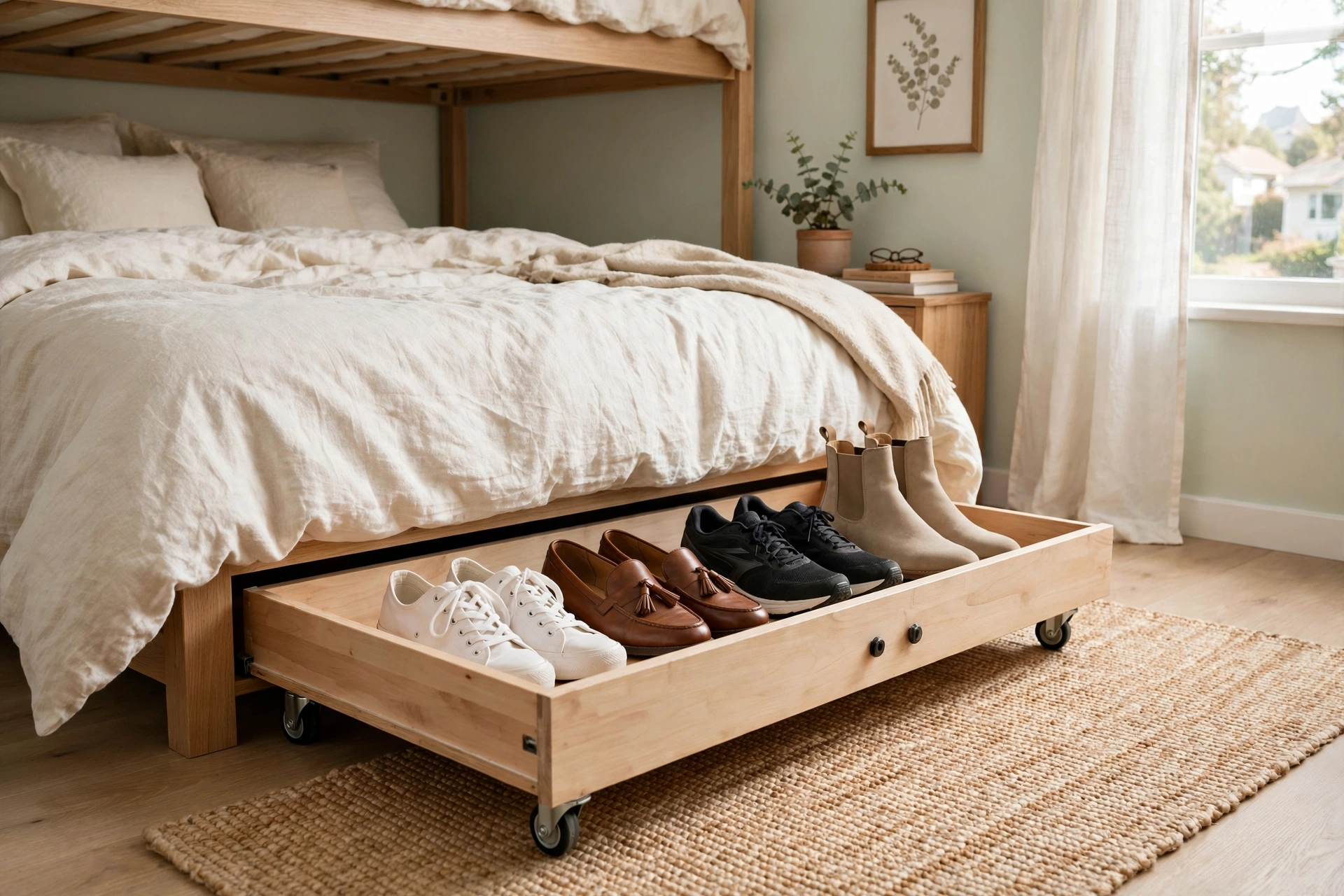
Shoes are the fastest way for under-bed storage to turn into a junk drawer, so they get their own drawer with dividers, and only the out-of-season pairs live there. A rolling shoe drawer pulls out from the foot of the bed, one pair at a time, and the everyday shoes stay by the door where they belong.
Try this: clean the shoes before they go under the bed — dirt and damp are what the dust down there sticks to. One drawer per person, and if the drawer has no lid, add a dust ruffle or a flat sheet over the top.
Cost: under $25 · Time: 10 minutes · Renter-safe: yes.
6. Add bed risers only when the bed is too low to store under
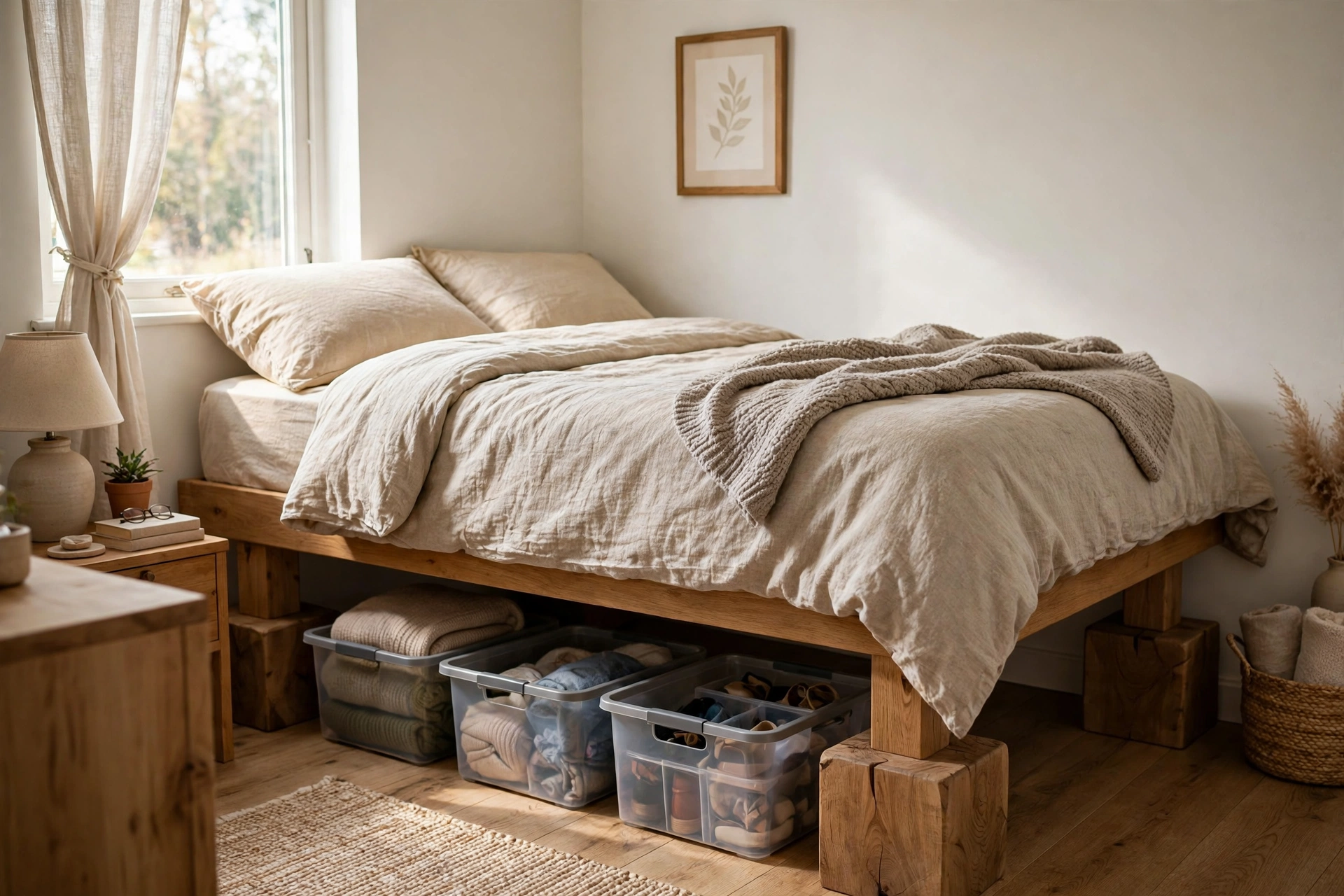
If your bed barely has clearance, risers can turn “no storage” into “actual storage” — a 3 in riser is enough for flat bags, a 5–6 in riser fits most plastic storage bins. This is the one idea in the list that changes the bed itself, so it is the one to do last, after you know exactly which bin needs the extra height.
Try this: measure the bin you plan to slide under, add the clearance inch, and buy the riser height that covers it — do not guess. Match the riser cup to the leg shape (round, square or wide feet), check the set’s weight rating against bed plus mattress plus sleepers, and put risers on every leg including the centre support, or the frame sits unevenly.
Cost: $10–$30 per set of four · Time: 15 minutes · Renter-safe: yes, if the lease allows it and the risers fit the legs; check the lease first.
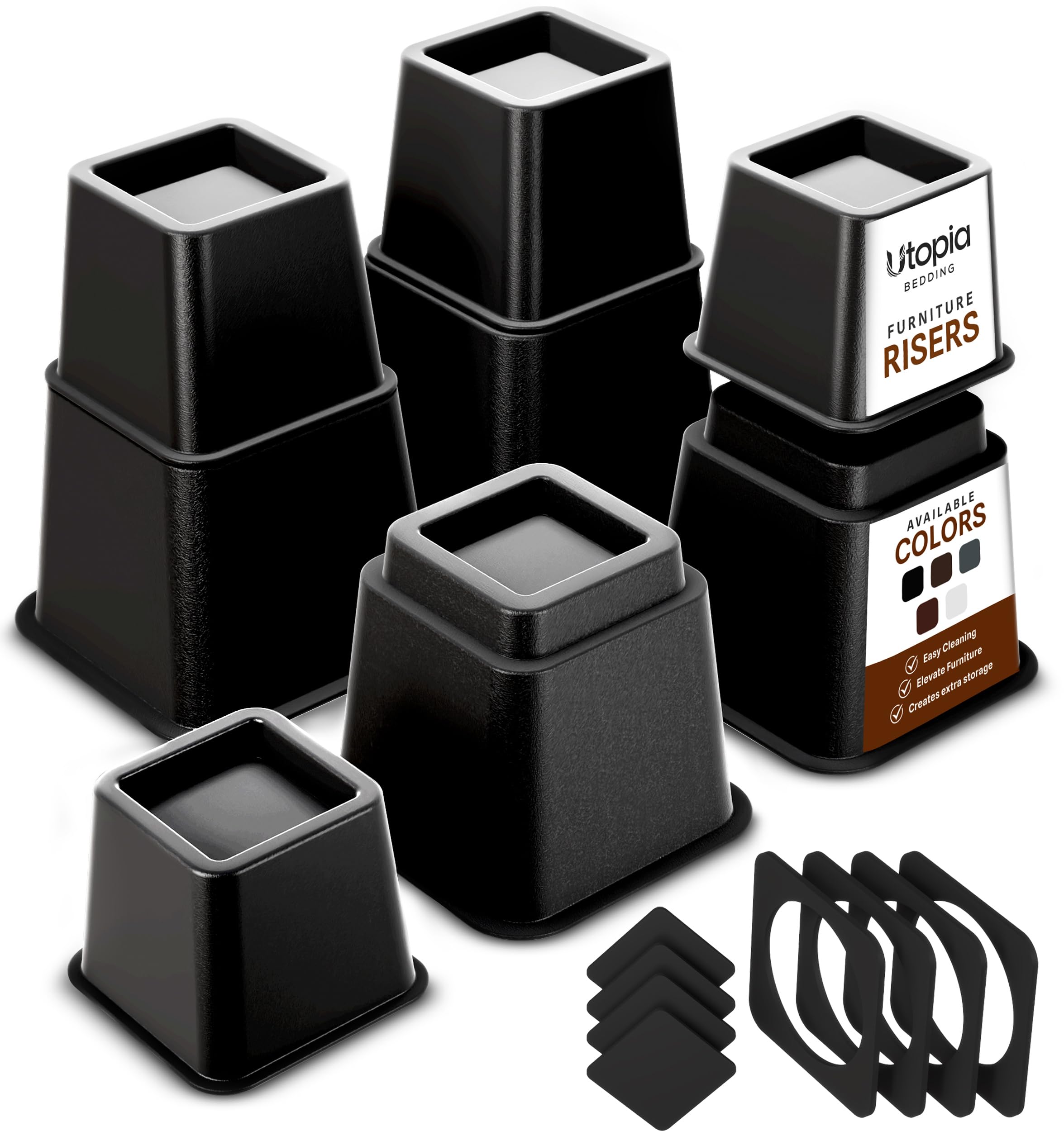
Shop this: Utopia Bedding Adjustable Bed Risers, Set of 4 on Amazon
7. Use the suitcases you already own as storage
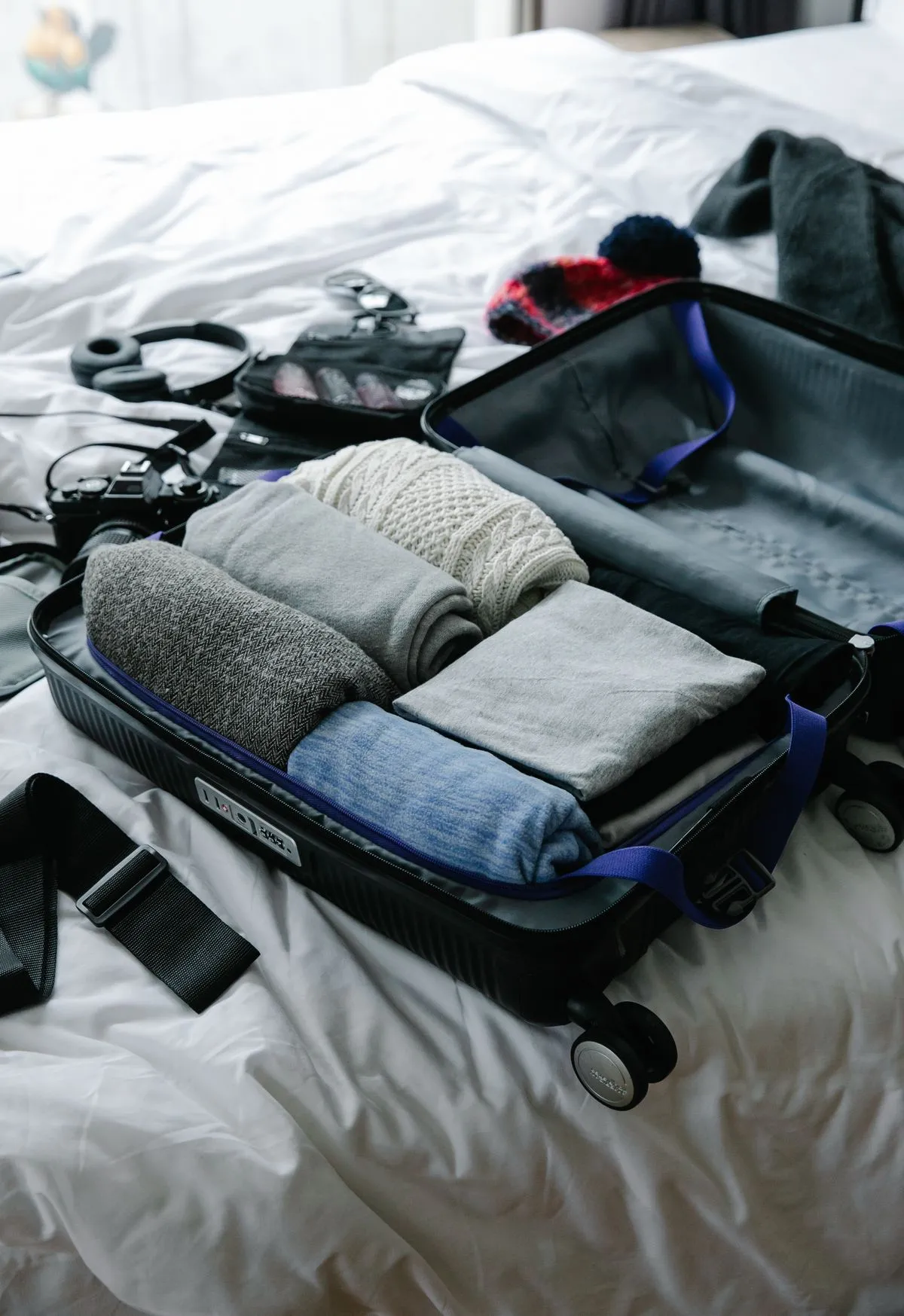
A suitcase is a lidded, wheeled, labelled storage box you already paid for — and it is the right size for under a bed. Off-season clothes, holiday clothes, spare bedding: one suitcase per category, zipped shut, slid under the bed on its own wheels. When travel comes, empty it, pack it, and the storage moves with you.
Try this: put the suitcase on the side you can reach without moving the bed, and keep a note on the outside of what is inside — a luggage tag works. Do not store anything damp or food in a suitcase; the lining holds smells.
Cost: $0 if you already own one · Time: 10 minutes · Renter-safe: yes.
8. Protect woolens with a cedar box — not mothballs
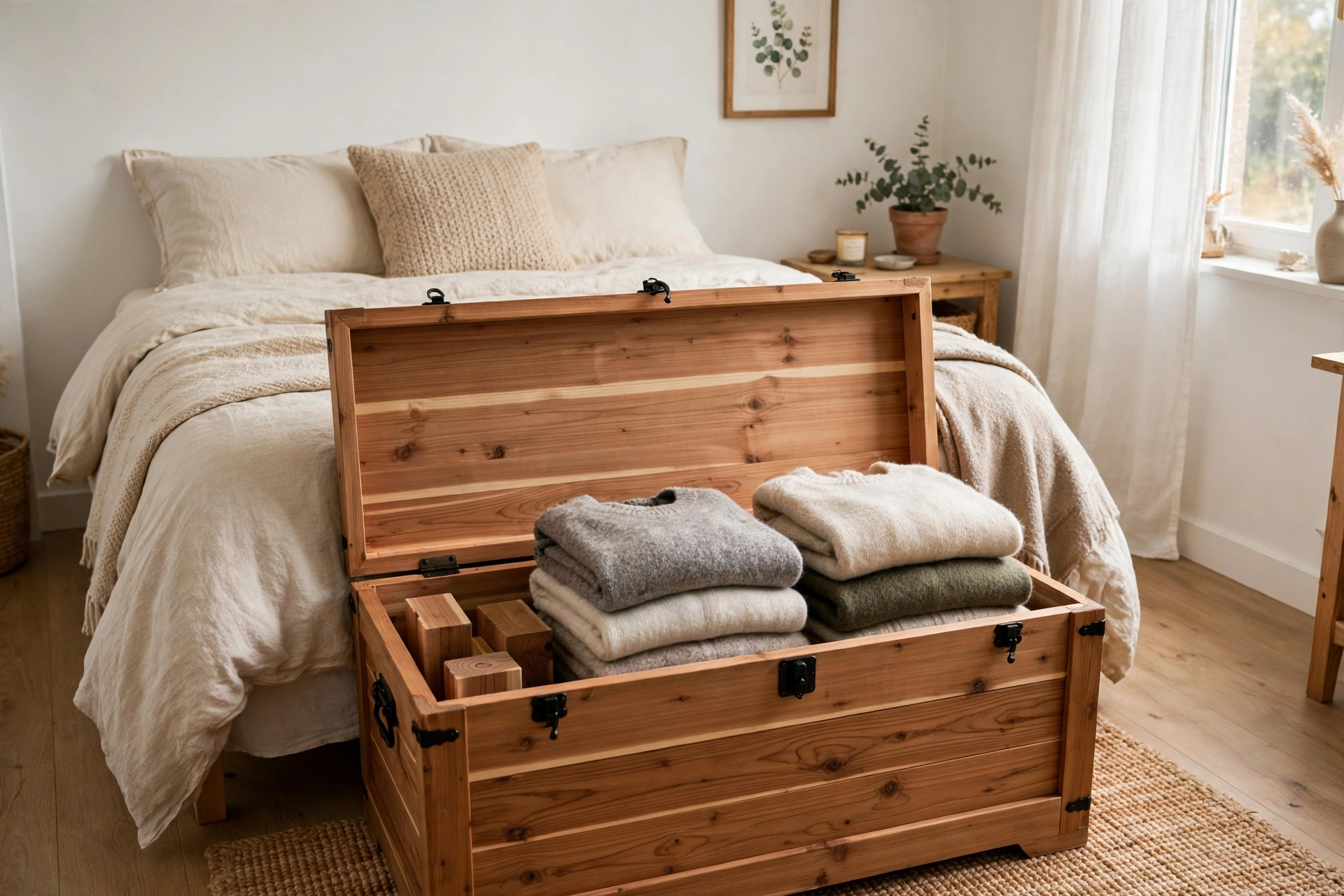
Cedar repels moths naturally, which makes a cedar under-bed box the right home for wool sweaters, heirloom textiles and anything moth-prone. It is the one container in this list chosen for what it keeps out, not what it holds. For wool and heirlooms, cedar or a cotton-lined bin is safer than airtight plastic, which traps humidity.
Try this: add cedar blocks or cedar balls inside fabric bags too, for the same protection without buying a new box. Air the cedar out once a season — sand it lightly if the scent fades — and never store wool damp.
Cost: $40–$120 for a cedar box, under $10 for cedar blocks · Time: 10 minutes · Renter-safe: yes.
9. Slide a shallow tray out for crafts, chargers and flat gear
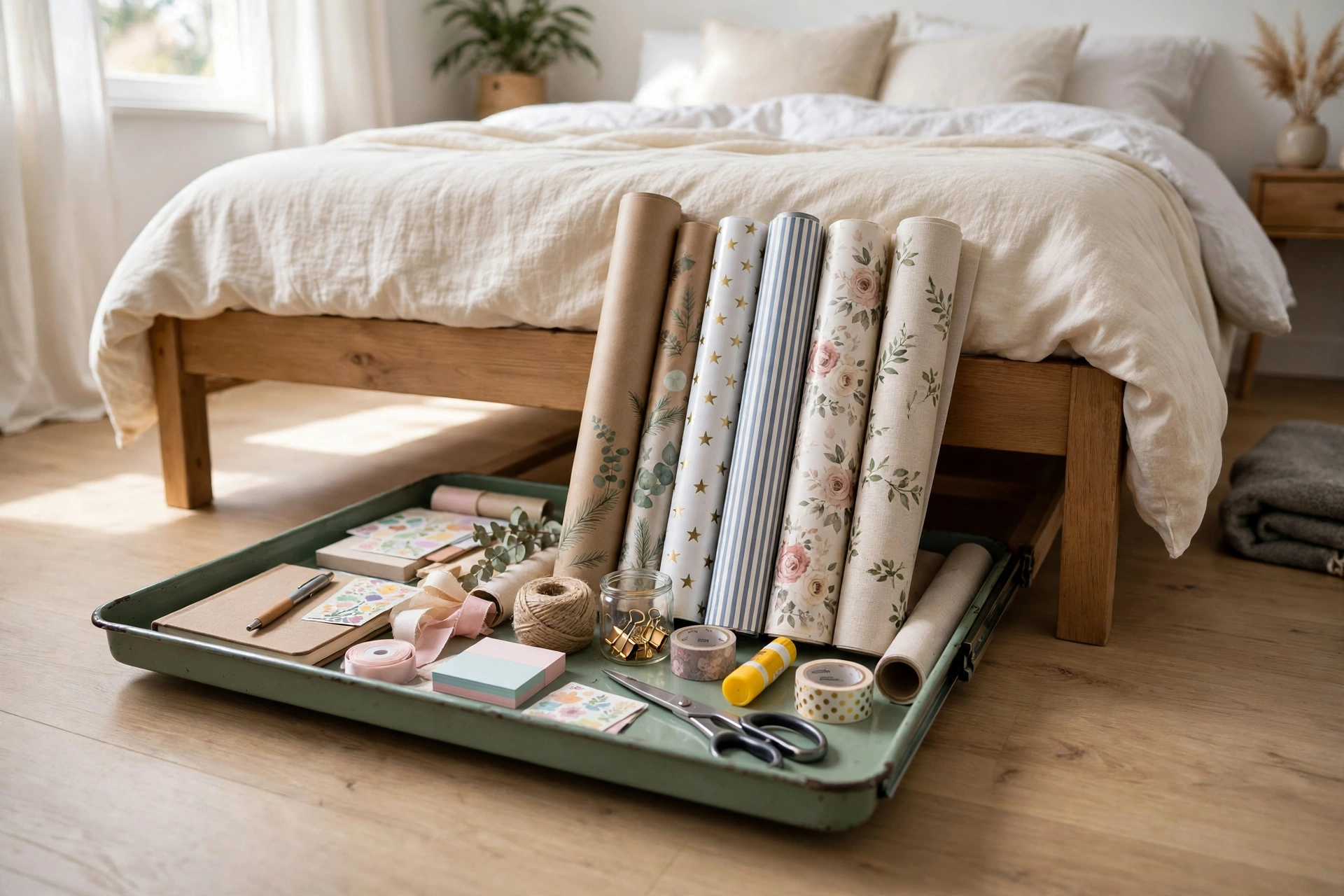
A shallow slide-out tray is the under-bed drawer for flat things that do not belong in a deep bin: craft supplies, wrapping paper, chargers and cables, yoga mats, a spare laptop sleeve. It pulls out like a drawer, so you can see everything at once instead of digging through a pile.
Try this: keep the tray to one category and keep it shallow — 5–6 in tall is enough, and anything deeper becomes a second junk drawer. A thin plastic tray under a bin on carpet turns drag into glide, so the same trick works for bins that stick.
Cost: under $25 · Time: 10 minutes · Renter-safe: yes.
10. Hide it all with a bed skirt — or match the bins and skip it

A bed skirt or a fabric panel hides the storage while keeping access free, and a wrap-around skirt with a zipper lets you open one side without taking the whole skirt down. In a small room, though, matching bins read as intentional rather than hidden — so the skirt is optional, not required.
Try this: if you use a skirt, pick one you can lift or unzip on one side, or you will stop using the storage underneath it. If you skip the skirt, buy bins in one colour and label them the same way, so the row under the bed looks deliberate.
Cost: under $25 for a skirt, $0 to skip it · Time: 5 minutes · Renter-safe: yes.
11. Label every bin on the front — and give each bin one job
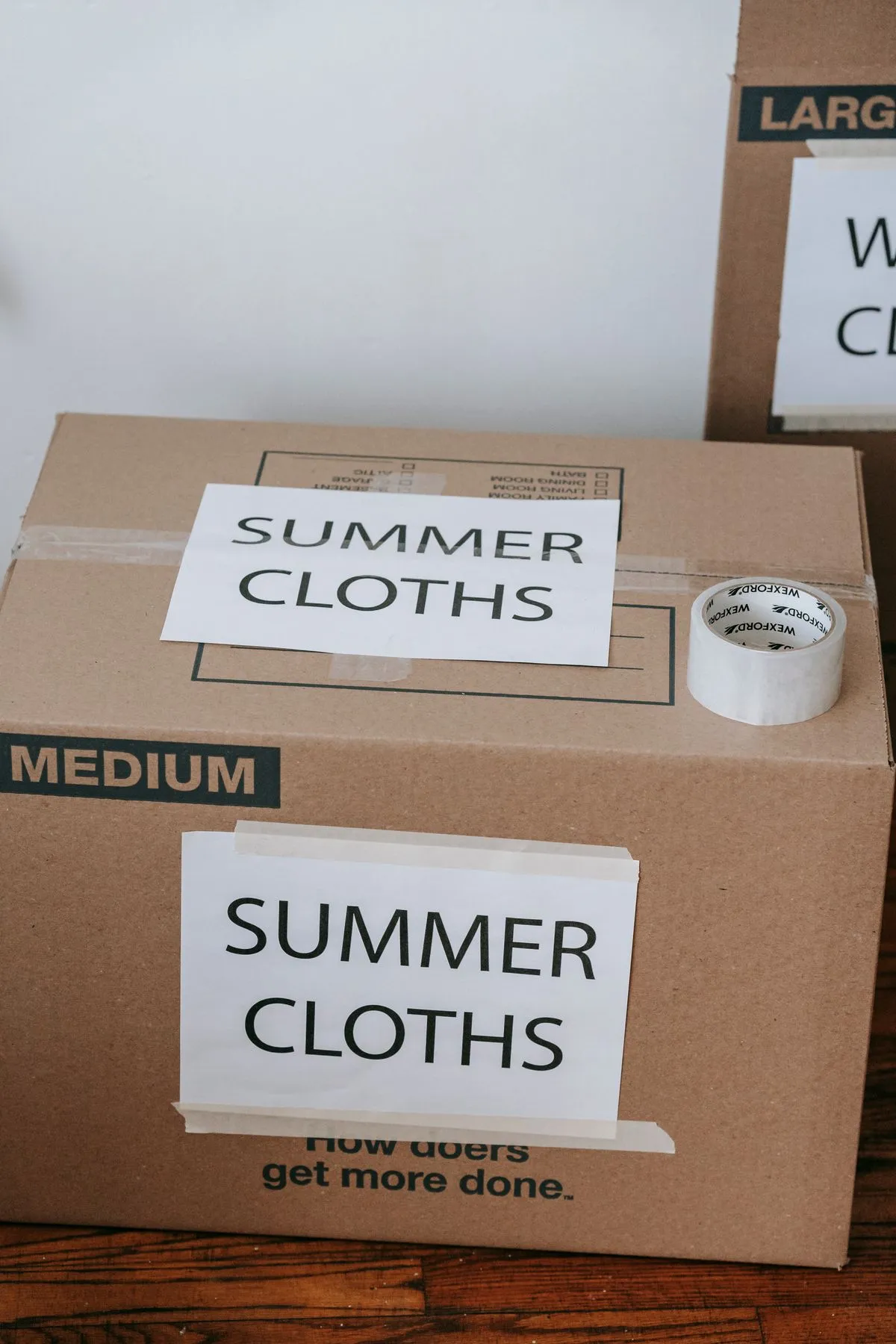
A label on the lid is not enough; the side label matters when the bin is slid halfway out. One bin, one category, one label: “winter jumpers”, “guest bedding”, “shoes — winter”. When a bin holds one thing, you open it once and the answer is visible — and you stop buying a second one because the first was hiding.
Try this: label before you fill, not after — write the category on a removable label or a luggage tag so the bin can change jobs next season. Put the label on the end that faces out from the bed.
Cost: under $5 · Time: 5 minutes · Renter-safe: yes.
12. Run the two-season swap — and a five-minute monthly clean

Under-bed storage works as a two-season rotation: at the season change, swap the bins — summer clothes out, winter clothes in — and note what you did not touch last season. Anything untouched for two full cycles moves to a harder-to-reach spot or leaves the house. Under-bed areas collect more dust than open shelves because air moves less freely there, so vacuum around the bins monthly and rotate the contents every 3–6 months.
Try this: do the swap the same weekend you change the bedding over, with the label list in hand — the empty bin tells you what to buy and the full one tells you what not to. Never store food, damp items or valuables under the bed, and never store anything under a bed with a heating vent blowing into the gap.
Cost: $0 · Time: 5 minutes a month, 30 minutes at the season change · Renter-safe: yes.
Do three first: 3 under-bed storage ideas for small bedrooms to start with
If you only do three things this weekend: measure the clearance and buy bins 1 in shorter (idea 1’s rule), add one rolling bin for the weekly clothes (idea 1), and vacuum-seal the winter coats or spare doona (idea 4). These three under-bed storage ideas for small bedrooms cost about $35–$60, take under an hour, and give the bedroom back the equivalent of a small closet without losing any floor space.
More ideas for small spaces: 14 Small Closet Organization Ideas for Apartments Under 500 Sq Ft and 12 Small Bathroom Storage Ideas That Don’t Damage the Walls.

3 Comments