
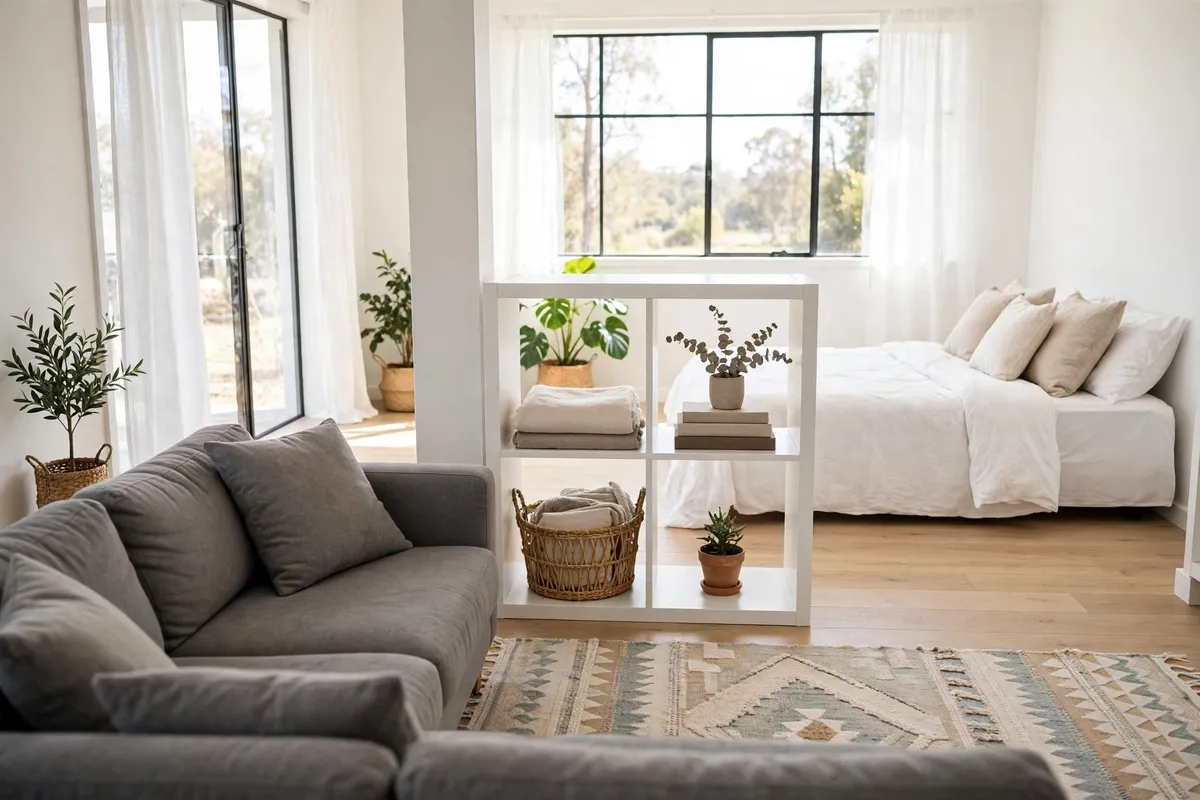
15 Small Living Room Storage Ideas for Renters (No Drilling)
Small living room storage ideas for renters start with one fact: a studio living room is never just a living room — it is also the office, the dining room, the guest room and the hallway to the kitchen. When every piece of furniture only does one job, the room fills up and the floor disappears. Every idea below stores something inside furniture you already need, uses a wall or a corner you are not using, or folds away when the room needs to be something else. Measure first, buy second — in a studio, a piece that is two inches too deep is a walkway you no longer have.
Before you buy anything — 3 rules
- Measure the gaps, not just the furniture. Keep a main walkway 30–36 in (76–91 cm) wide, and leave 14–18 in (36–46 cm) between the sofa and the coffee table so you can reach a drink and stand up without hitting your shins. A coffee table about one-half to two-thirds the length of the sofa, at about seat height or up to 2 in lower, is the size that works in most rooms. Source: OROA Living Room Furniture Spacing Guide
- Zone the room before you shop. In a studio, mark the living zone with a rug — front legs of the sofa on it — and keep sleeping, working and living in their own corners, even if the only wall between them is the back of the sofa or a cube shelf. One job per zone, one home for everything in it.
- Check the lease before anything goes on a wall, and anchor tall furniture. Most ideas below are freestanding and need nothing fixed at all. Floating shelves and wall-mounted cabinets need screws, so they are not renter-free — use the freestanding versions here instead. For any tall bookcase, ask the landlord about anchoring: a tip is worse than a small hole, and a hole you did not ask about is a deposit problem.
1. Swap the coffee table for a storage ottoman
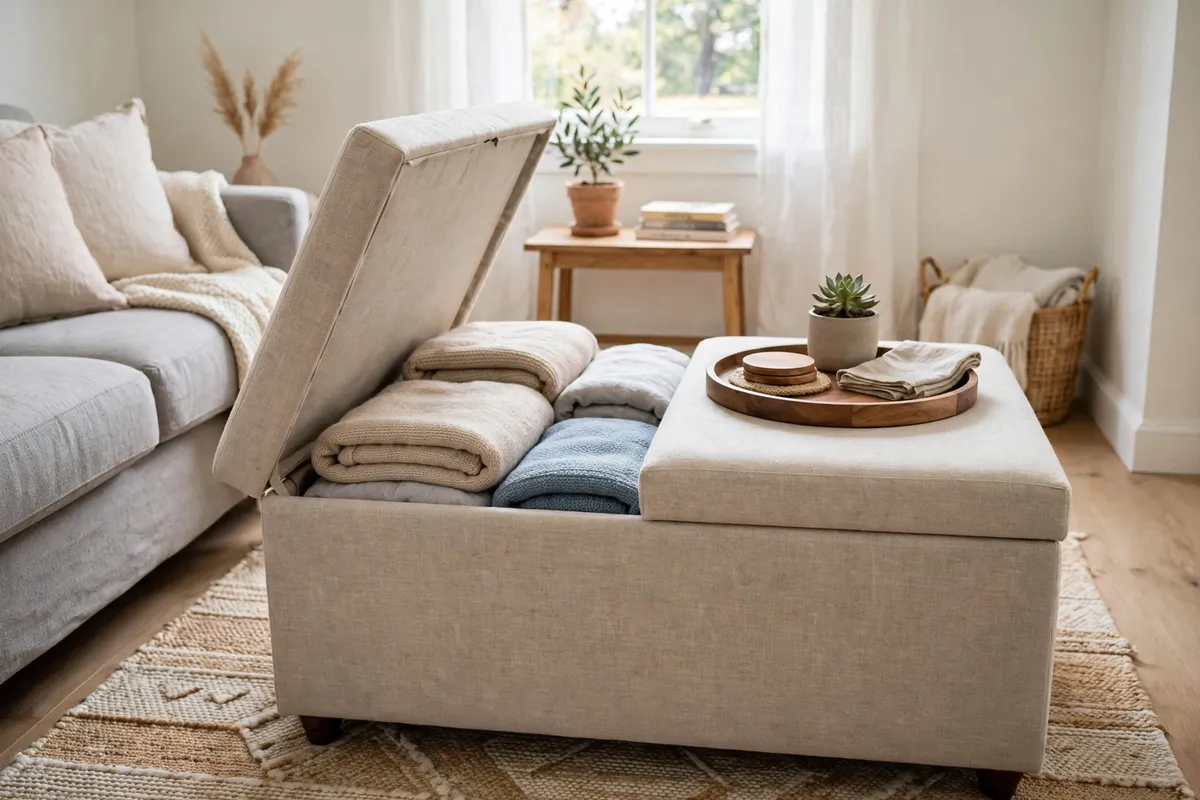
A storage ottoman is the hardest-working swap in a small living room. It is a footrest, an extra seat and a hidden box for blankets, remotes and board games, all in the footprint your coffee table already takes.
Try this: pick a flat-topped one and put a tray on top for drinks, so it still works as a table. Aim for a top about 1–2 in lower than your sofa cushions, so it is comfortable as a footrest.
Cost: $60–$150 · Time: 0 minutes · Renter-safe: yes, freestanding.

Shop this: SONGMICS MAZIE Folding Storage Ottoman Bench, 43″ on Amazon
2. Use a lift-top coffee table
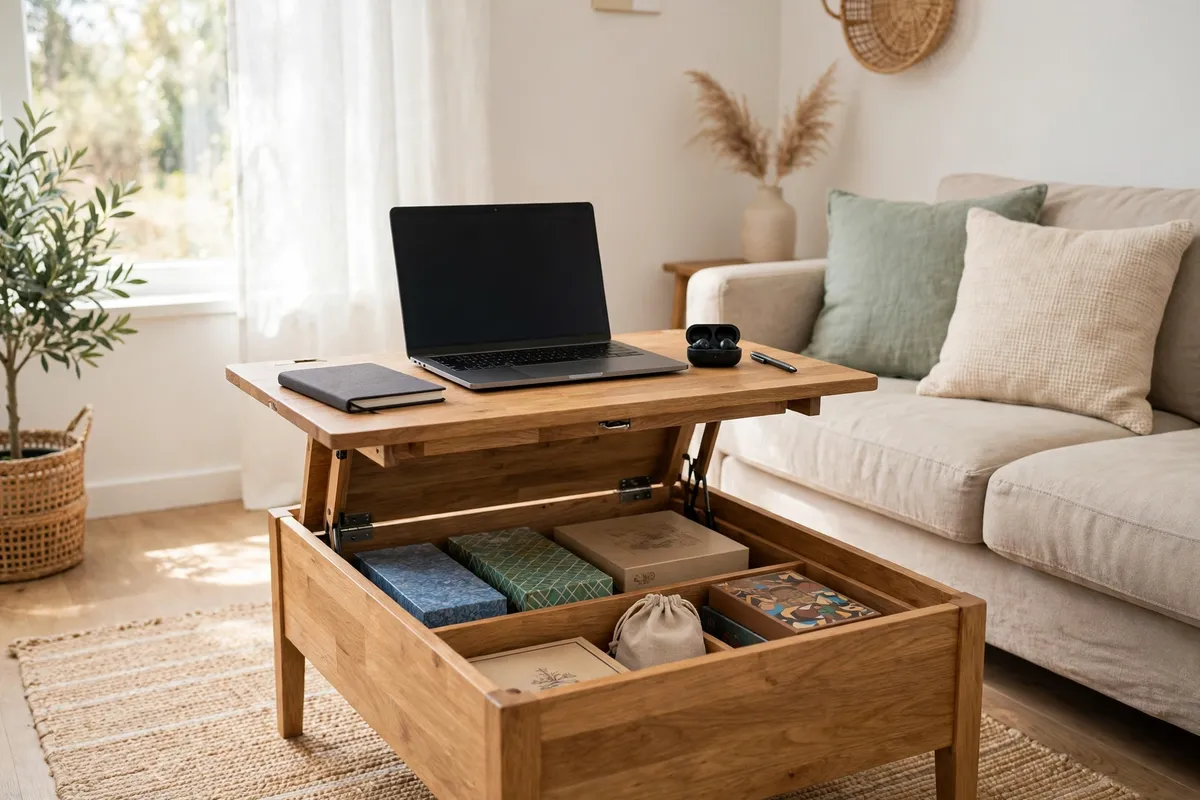
If you eat or work from the sofa, a lift-top table earns its floor space twice. The top raises and angles toward you for a laptop or a meal, and the deep compartment underneath holds board games, chargers, magazines and art supplies.
Try this: measure the open position, not just the closed size — the lid needs clear space behind and above it, and it must not hit the sofa when it lifts.
Cost: $120–$250 · Time: 30 minutes to assemble · Renter-safe: yes, freestanding.
3. Turn a KALLAX cube unit into a room divider
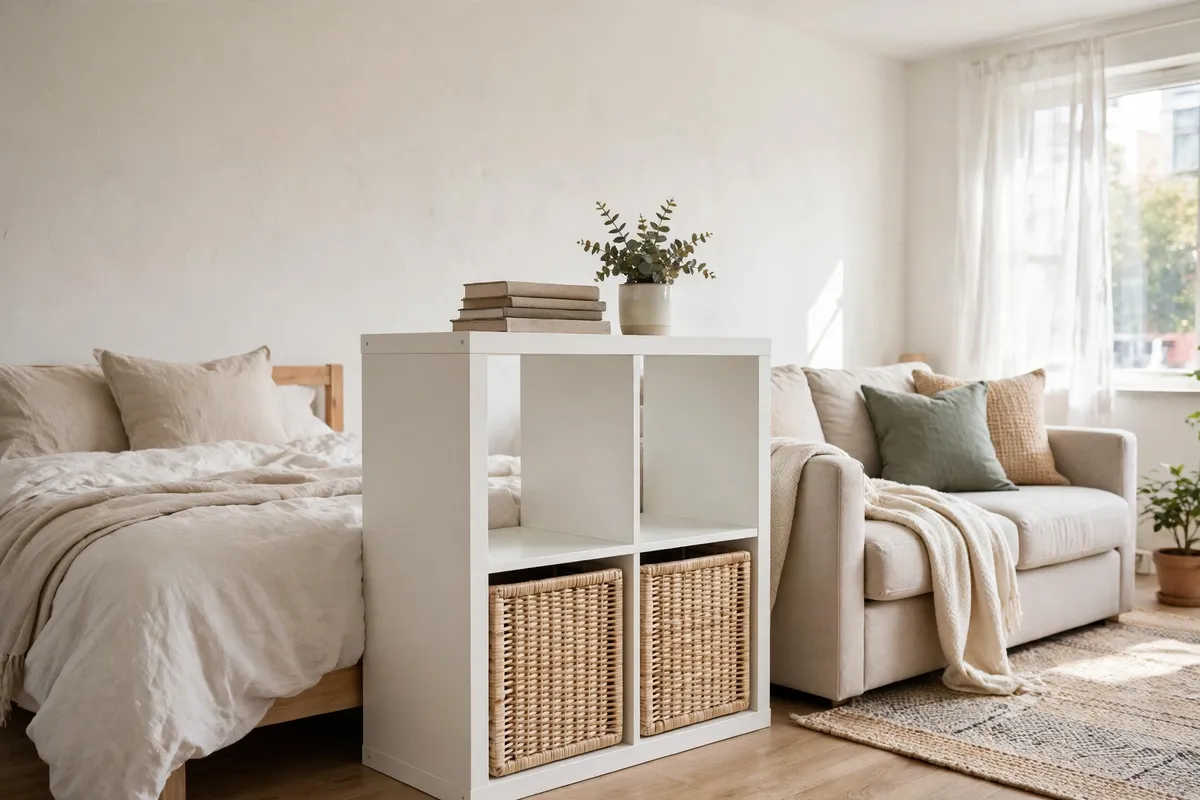
A 2×2 KALLAX turned sideways from the wall is a low divider you can see over: bed on one side, living room on the other, storage in the cubes. It is 77 × 77 cm (about 30 × 30 in) and 39 cm (about 15 in) deep, with each cube opening about 33 × 33 cm — deep enough for baskets and books, shallow enough to walk past. Source: IKEA KALLAX listings checked 24 Oct 2026
Try this: use a 2×2 as the divider and keep the top clear or low — taller than about 5 ft can tip, so do not stack a tall unit as a divider without asking about anchoring. Put closed bins in the lower cubes and leave some empty space, so it reads as furniture, not clutter.
Cost: about $50 for a 2×2 unit, plus baskets · Time: 30 minutes to assemble · Renter-safe: yes freestanding at 2×2 height; anchoring for taller units needs landlord permission.
4. Put a slim console behind a floating sofa
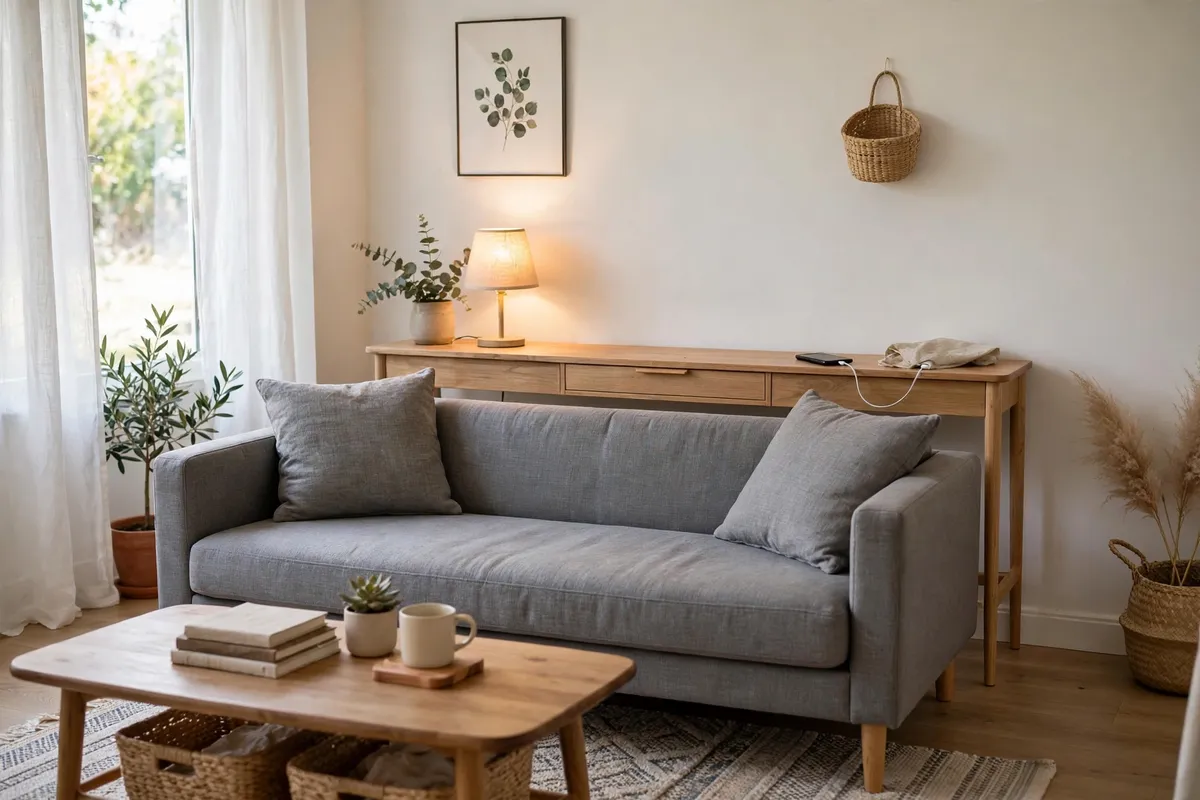
If the sofa floats away from the wall, the narrow strip behind it is a landing spot, not dead space. A slim console — 8–12 in deep — gives you a shallow drawer for chargers, remotes and a notepad, a surface for a lamp, and a charging spot, without taking a full cabinet’s footprint.
Try this: keep the console no deeper than the gap you measured, and leave at least 24 in behind it if anyone walks there — 30–36 in if it is the main route through the room.
Cost: $60–$150 · Time: 20 minutes to assemble · Renter-safe: yes, freestanding.
5. Use a tall, shallow bookcase in the dead corner
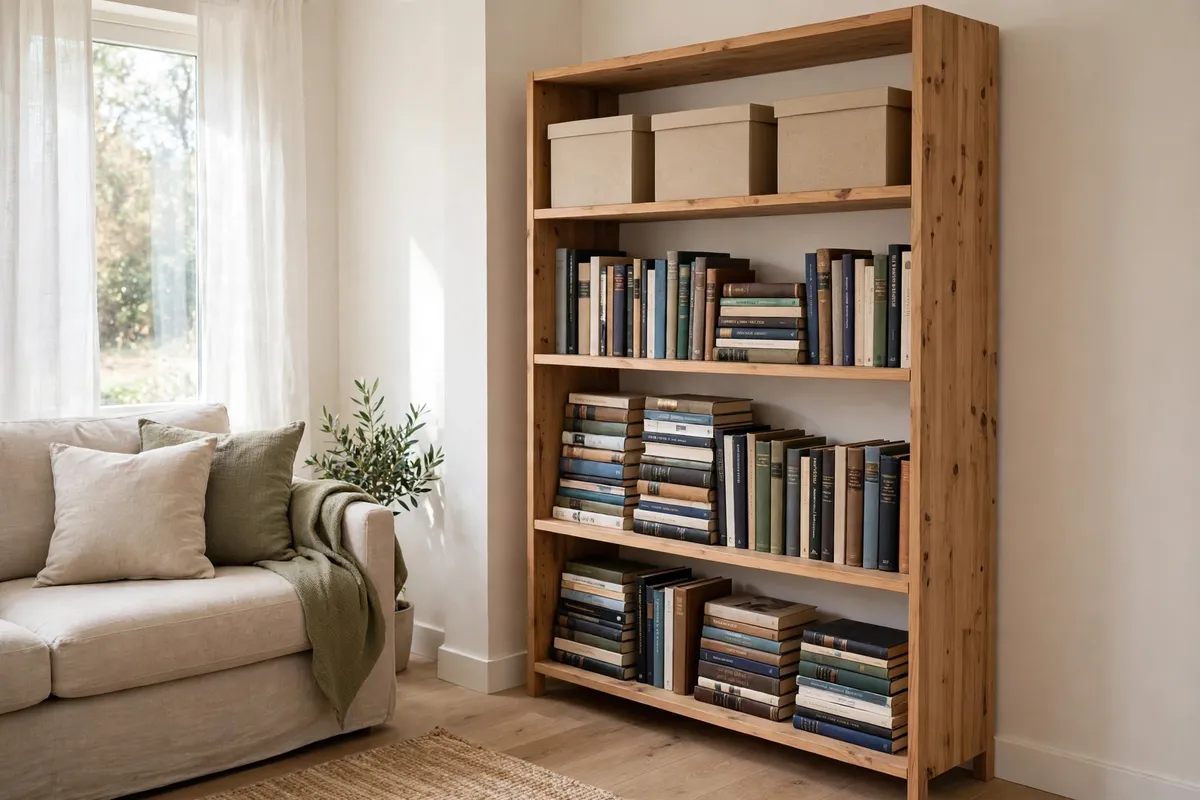
Corners hold nothing but dust in most studios, and a tall shallow bookcase uses the height you are wasting. Choose one 12–16 in deep: deeper than that eats the walking path, and the top 18 in is for things you touch a few times a year, not daily items.
Try this: put daily items at eye level, weekly items below, and seasonal or spare items at the top. Heavy books go low, so the unit stays stable.
Cost: $60–$180 · Time: 30 minutes to assemble · Renter-safe: yes freestanding; ask about anchoring if it is tall.
6. Add a corner shelf unit
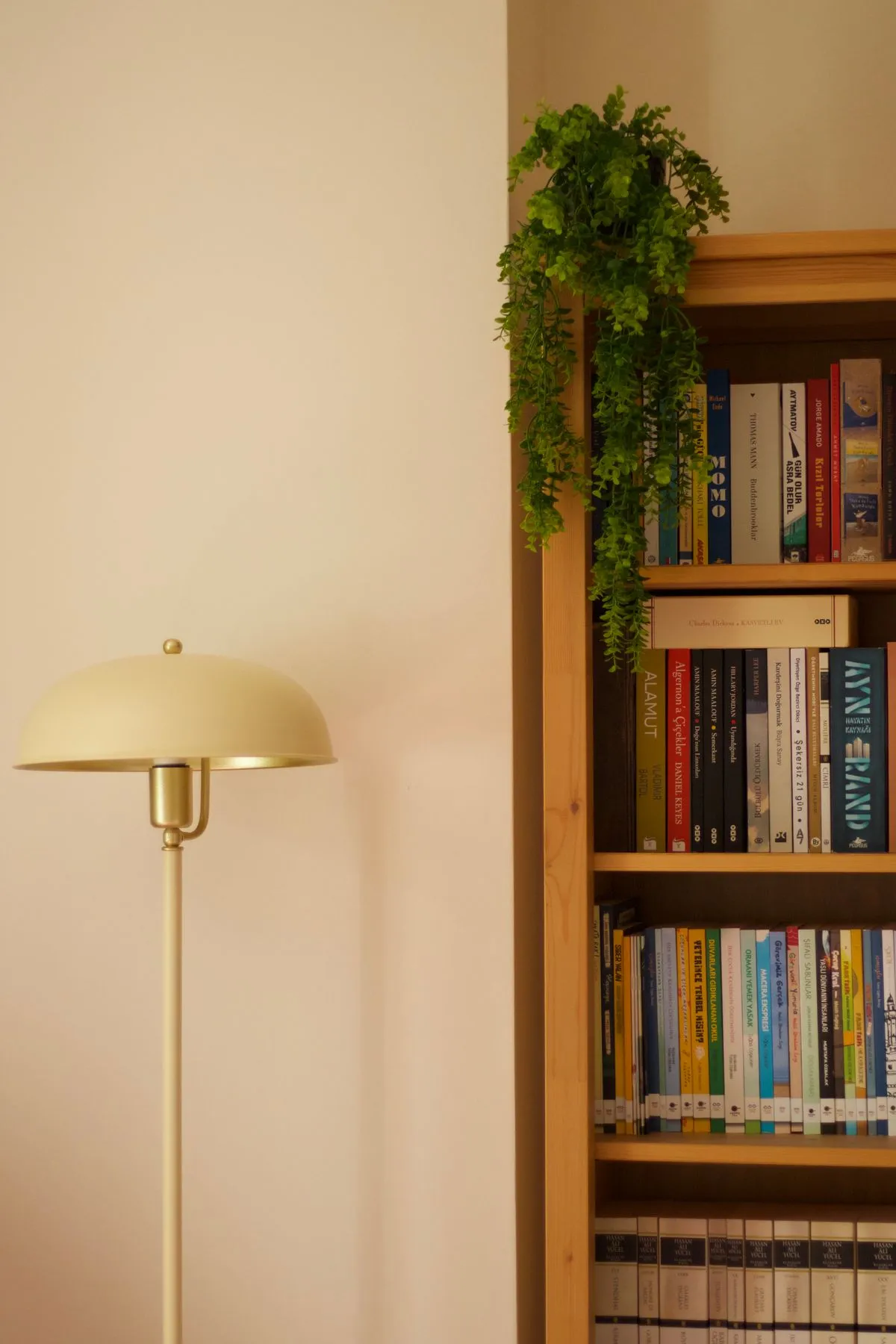
A corner shelf fits where a straight bookcase cannot, and it keeps books, plants and games out of the walking path. It works best for things you do not need every day, because the back of a corner is the hardest spot to reach.
Try this: use it for one category only — books, or games, or plants — so it does not become the shelf where everything homeless lands.
Cost: $40–$120 · Time: 20 minutes · Renter-safe: yes, freestanding.
7. Swap side tables for nesting tables
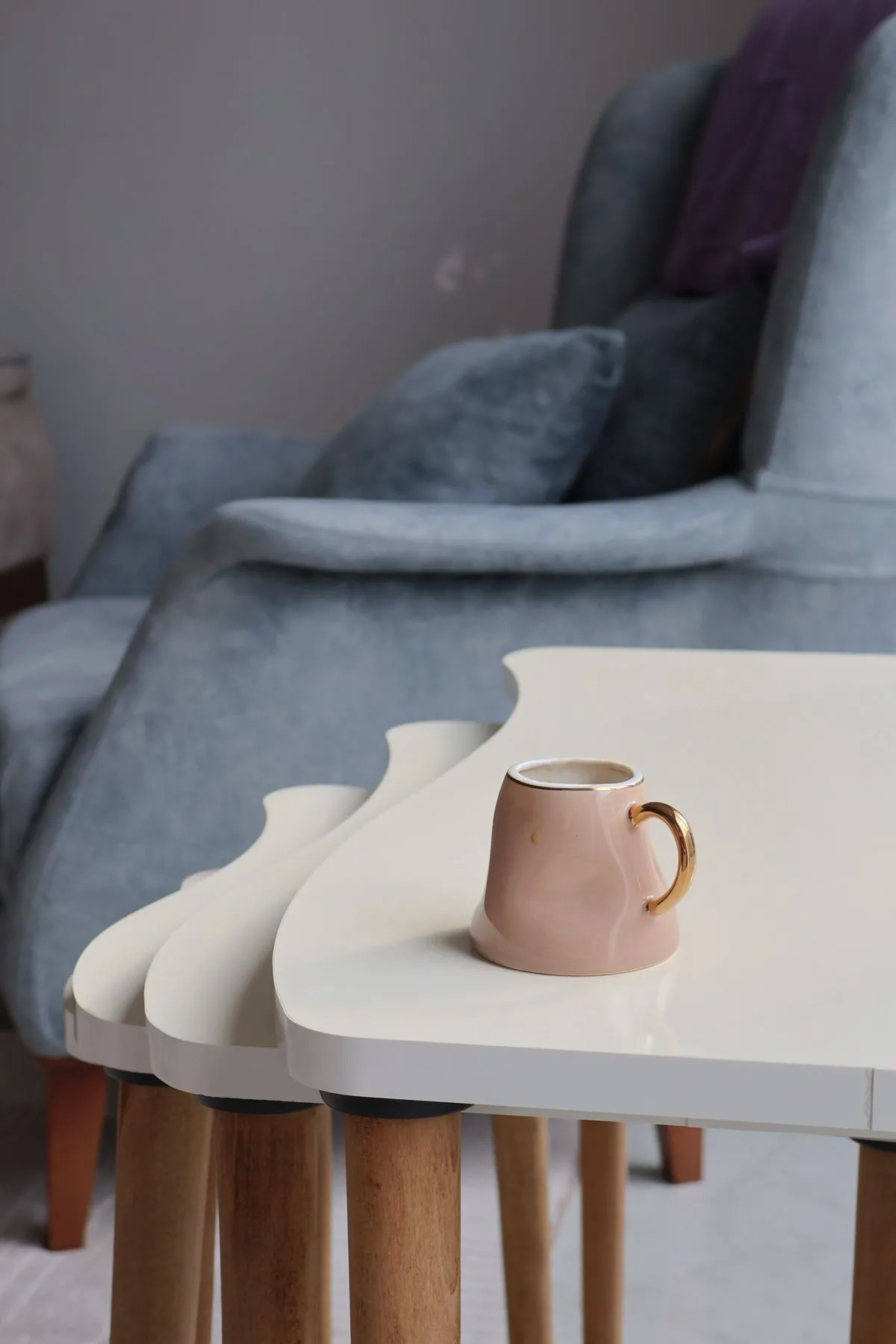
Three nesting tables take up the footprint of one when they are stacked together. Pull one out for a guest’s drink or a laptop, and nest them away when the room needs floor space again.
Try this: tape the nested footprint on the floor first and walk around it. If you have to turn sideways to pass, the set is too big for that spot.
Cost: $40–$100 · Time: 0 minutes · Renter-safe: yes.
8. Put a storage bench under the window
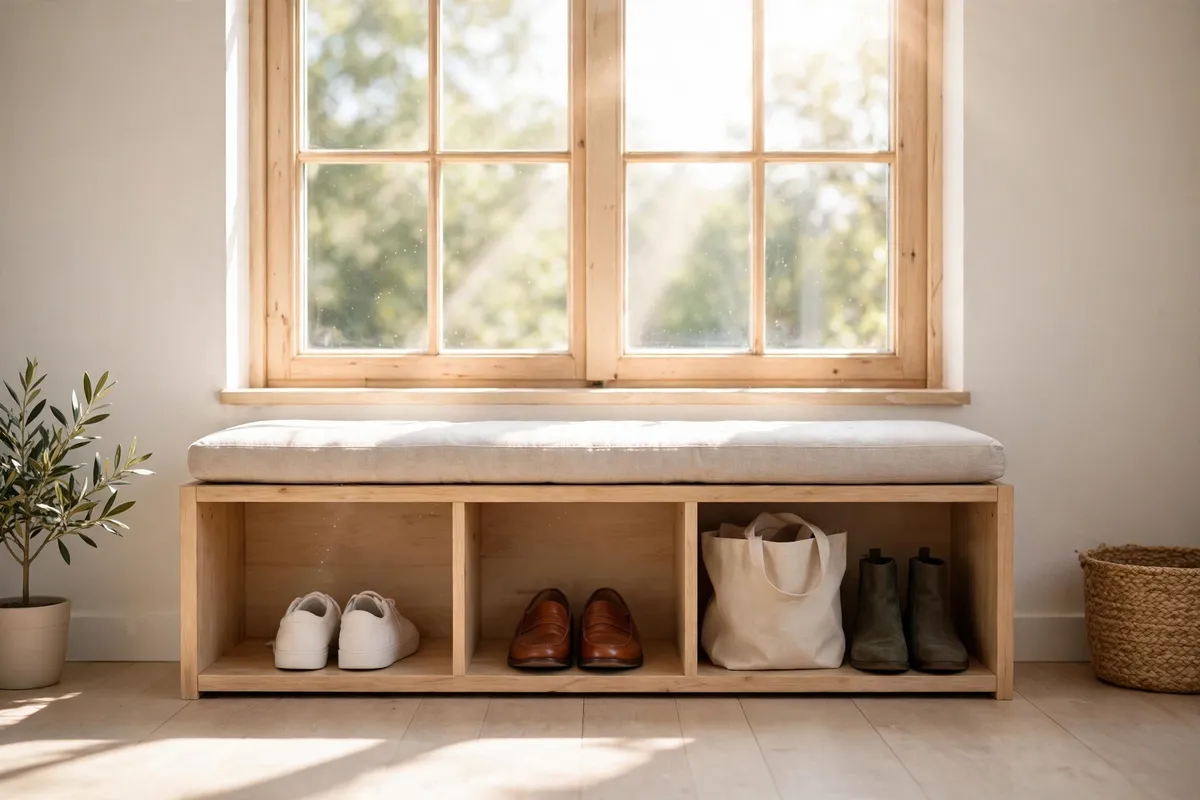
A slim storage bench under a window is a window seat, a shoe spot and a hidden box for tote bags, seasonal gear and extra linens in one piece. In a studio, a bench behind the sofa can also act as a low divider.
Try this: measure the window-sill height first — the bench must sit below it, and you still need to reach the window to open it.
Cost: $70–$180 · Time: 20 minutes to assemble · Renter-safe: yes, freestanding.

Shop this: VASAGLE CUSTOS Storage Bench with Cushion on Amazon
9. Hide the TV clutter in a closed console
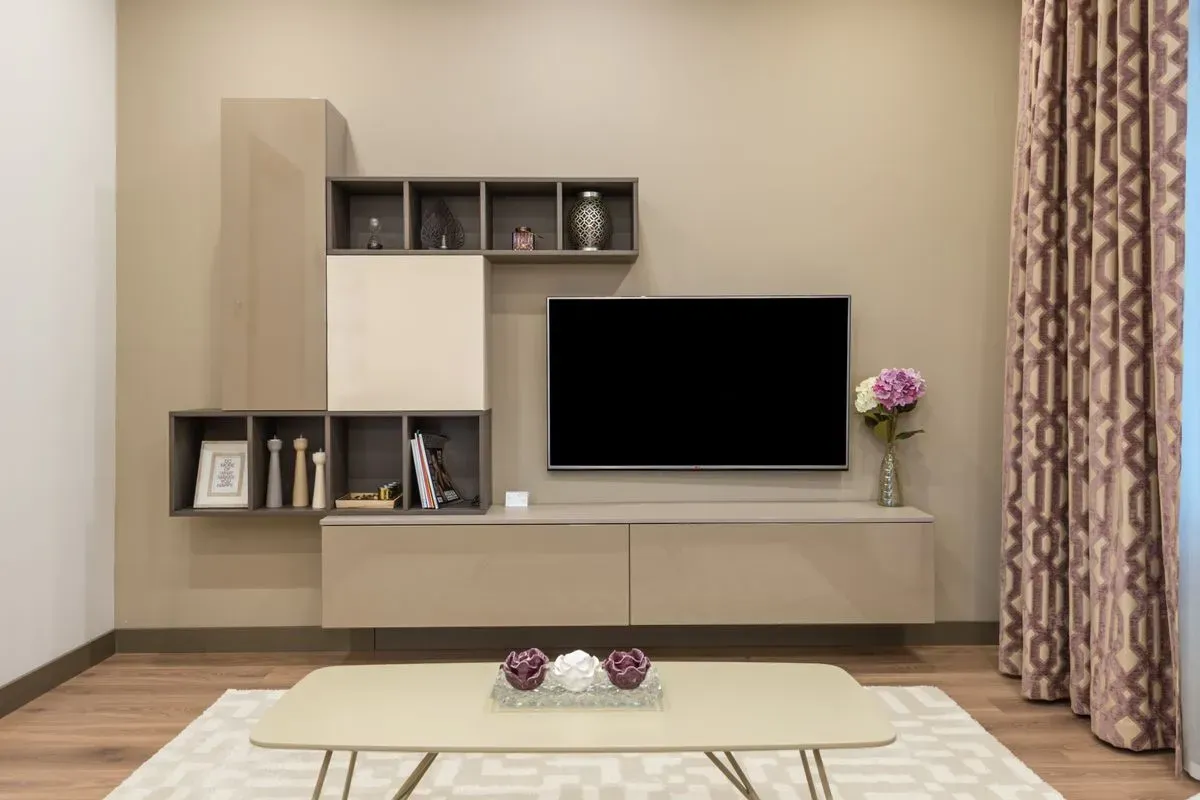
An open TV stand displays every remote, cable, controller and charger. A closed console with doors hides the same footprint’s worth of media equipment, board games and cables, and the room reads as a living room instead of a charging station.
Try this: drill nothing — run cables through a cable box or a clip-on cable channel on the back of the console, and keep the power board inside the console with air around it, never buried under blankets.
Cost: $80–$200 · Time: 30 minutes to assemble · Renter-safe: yes, freestanding.
10. Choose a side table with a drawer
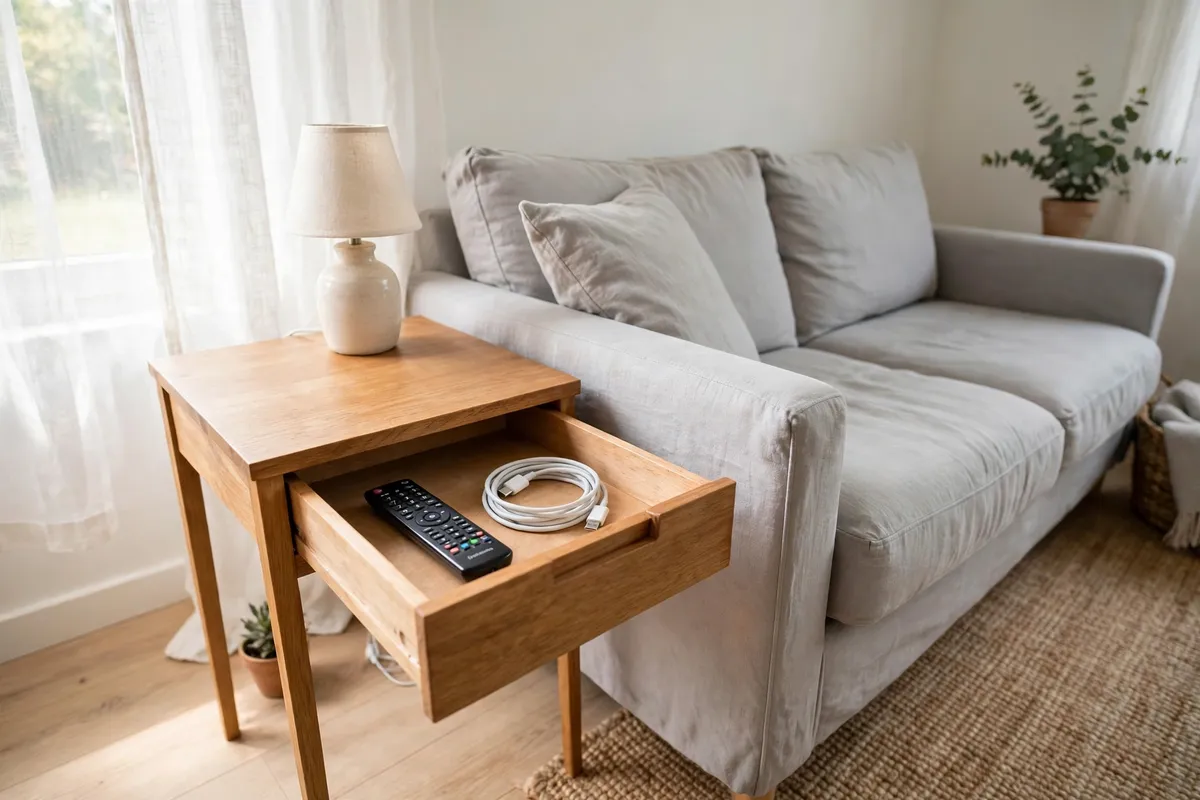
A narrow side table with one drawer holds the small things that otherwise spread across every surface: the remote, a charging cable, reading glasses, a notebook and coasters. It is barely bigger than an open pedestal table, and it hides the clutter instead of displaying it.
Try this: give the drawer one job — the remote and charger live there, nothing else — so it does not become a junk drawer in a week.
Cost: $25–$70 · Time: 10 minutes to assemble · Renter-safe: yes.
11. Give every open shelf one matching basket per category
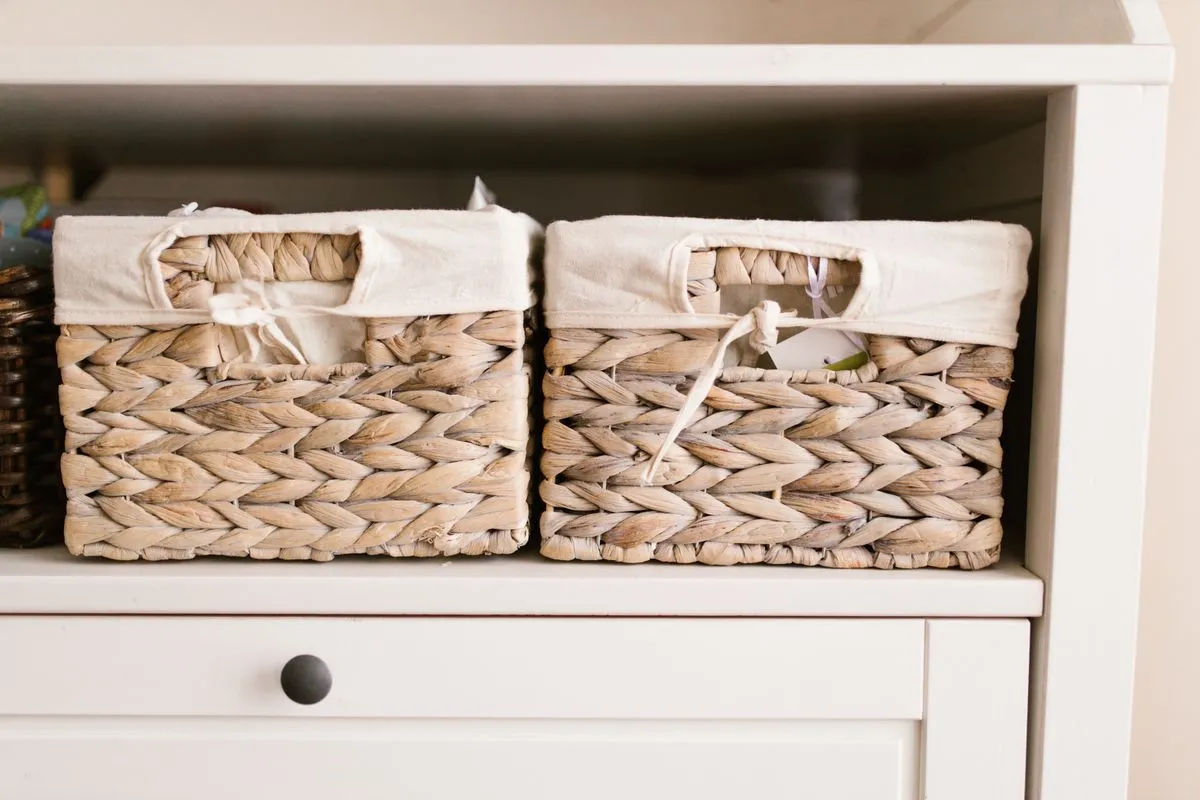
Open shelves only look tidy when each shelf has one job. Matching baskets — one for blankets, one for games, one for chargers — turn a shelf into closed storage without adding a cabinet, and you can see the category at a glance.
Try this: measure the cube or shelf opening before buying baskets. A KALLAX cube takes a basket about 33 cm square; a basket that sticks out by an inch makes the whole shelf look messy.
Cost: under $25 for a set · Time: 10 minutes · Renter-safe: yes.
12. Use the back of the living-room closet door
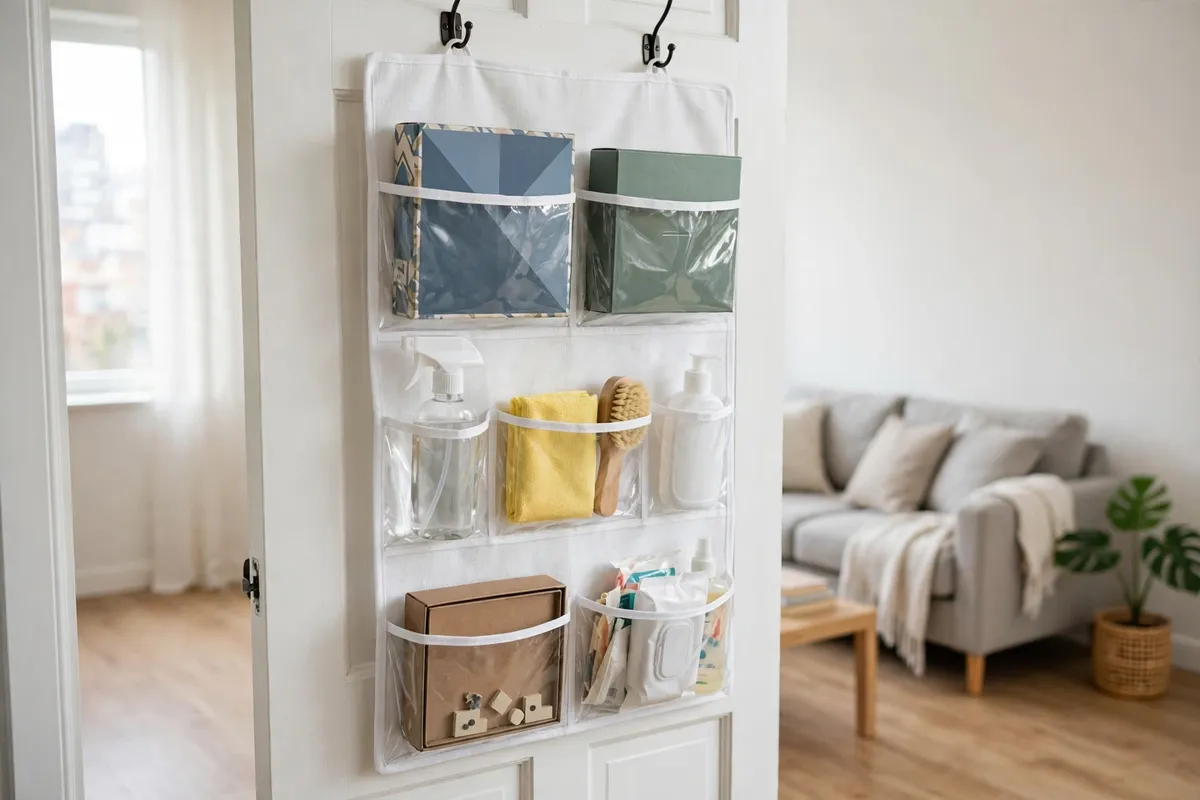
The back of a closet door in or beside the living room is a full cabinet you are not using. A hanging organiser about 15 in wide and 55–58 in tall holds cleaning supplies, pantry overflow, games or craft supplies, with no wall damage at all.
Try this: keep only light things here and check the door still closes flat — if the organiser stops the door closing, it is too full.
Cost: under $25 · Time: 5 minutes · Renter-safe: yes, over-the-door.
13. Add a fold-down table that disappears
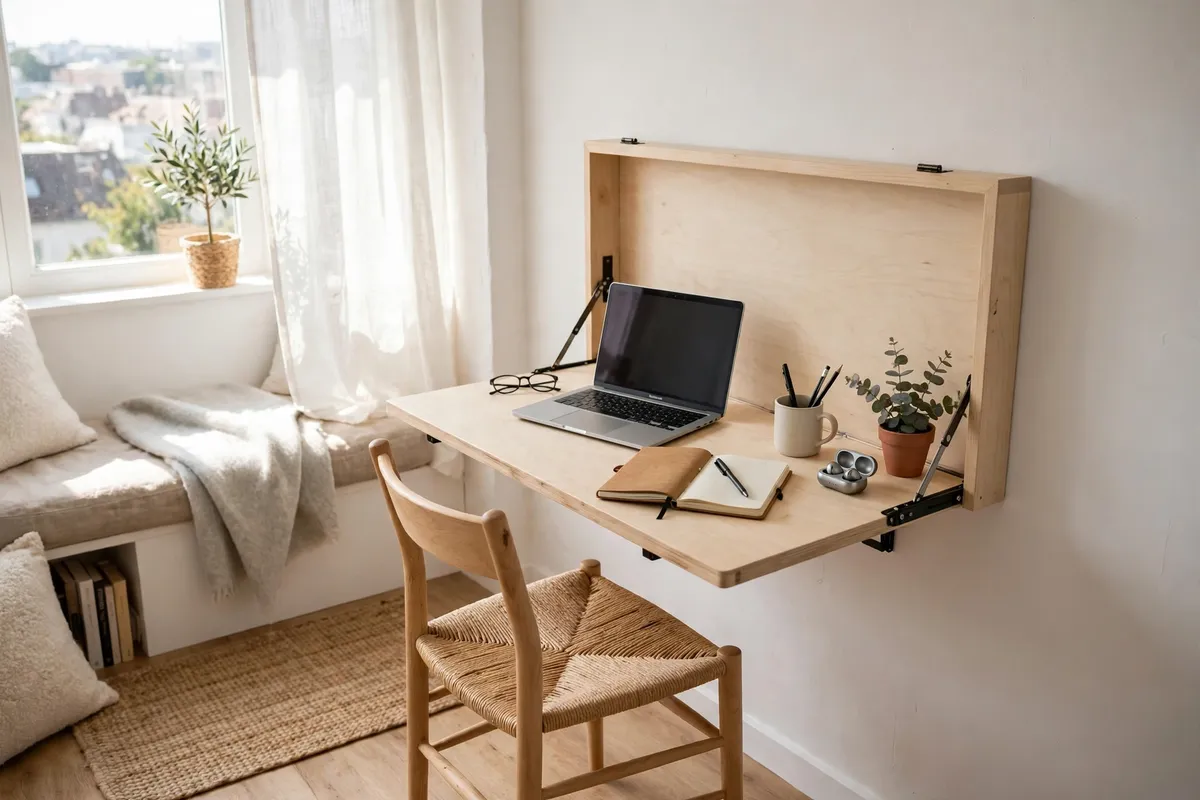
A drop-leaf table folds flat to about 3 in against the wall and opens to a desk, a craft table or dinner for two. In a studio it is the work-from-home desk that vanishes when the room needs to be a living room again.
Try this: if the folding version needs screws, choose a freestanding folding table instead, or ask the landlord first — do not assume a wall-mounted one is renter-safe. Tape the open footprint on the floor and check the 30-in walkway still survives.
Cost: $50–$150 · Time: 15 minutes · Renter-safe: freestanding folding version yes; wall-mounted version only with permission.
14. Use a trunk or stacked suitcases as a table
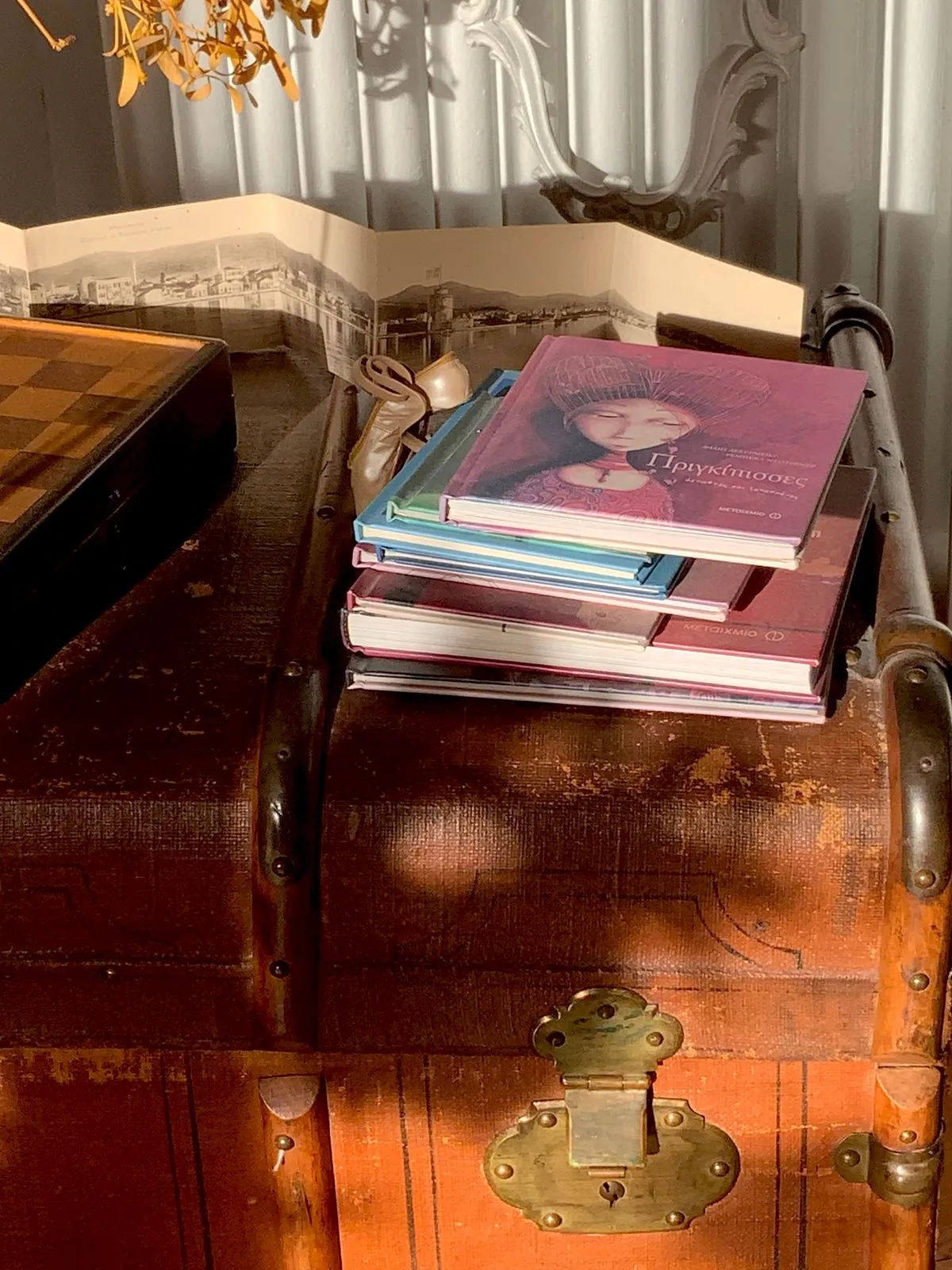
A storage trunk makes a coffee table with a whole blanket box inside it, and stacked vintage suitcases do the same as side tables. Both store pillows, blankets and books out of sight, and both leave with you on moving day.
Try this: keep the trunk for bulky, light things — blankets and spare cushions — not books. Books make it too heavy to move, and the lid will not stay open.
Cost: $40–$120 second-hand or new · Time: 0 minutes · Renter-safe: yes.
15. Do the one-basket nightly reset
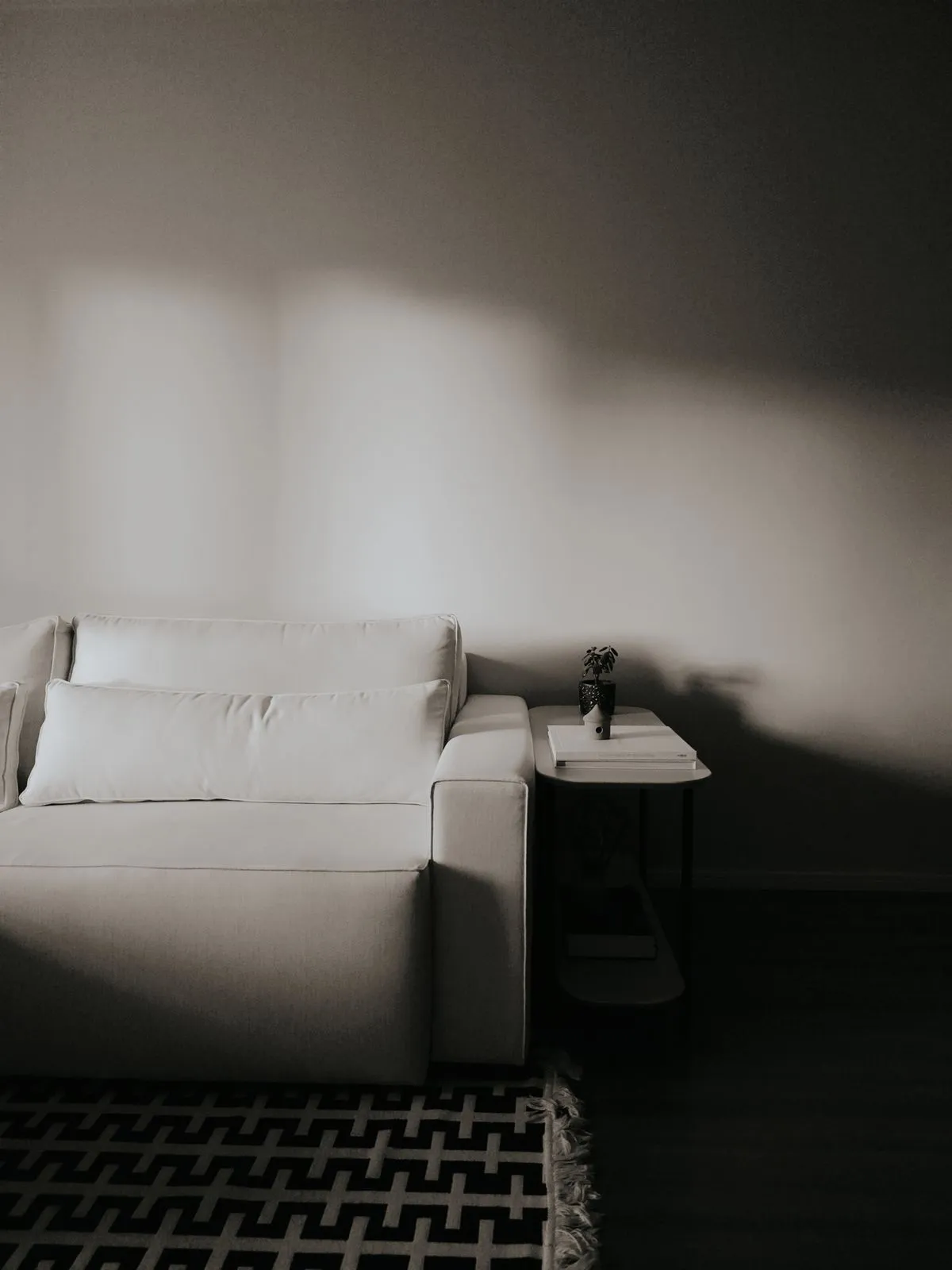
Storage only works if the room goes back to its zones. Every night, walk the room with one basket: remotes and chargers to the side-table drawer, blankets to the ottoman, games to their basket, mugs to the kitchen. Five minutes keeps the other 14 ideas working.
Try this: set a phone timer for five minutes. When it rings, stop — the point is a habit you will keep, not a deep clean.
Cost: free · Time: 5 minutes a night · Renter-safe: yes.
What to do first: 3 small living room storage ideas to start with
Start with 3 small living room storage ideas first: ideas 1, 11 and 12 — a storage ottoman, matching baskets for the shelves you already have, and an over-door organiser. Together they cost about $80–$150, take under an hour, need no drilling, and fix the blankets, the shelves and the closet door in one pass. Then add the KALLAX divider (idea 3) if the studio still has no line between sleeping and living.
More ideas for small spaces: 15 Small Kitchen Storage Ideas for Renters (No Drilling) and 12 Small Bathroom Storage Ideas That Don’t Damage the Walls.

One Comment