
14 Small Closet Organization Ideas for Apartments Under 500 Sq Ft
Small closet organization ideas for apartments start with one problem: one rod, one shelf and a floor that turns into a shoe pile by Tuesday — and in under 500 sq ft there is nowhere else for the overflow to go. You do not need a built-in system or a single hole in the wall to fix it — you need to use the rod you already have twice, the shelf above it, the back of the door and the floor underneath. Every idea below needs no drilling, most cost under $25, and all of it hangs, stands or slides out when you move. Measure first, buy second — an organizer that misses the closet depth by half an inch is just clutter in a box.
Before you buy anything — 3 rules
- Measure the four numbers that decide what fits. Inside width, clear depth, and height to the rod and to the top shelf — plus the width of the opening with the doors fully open, since that is what you can actually get in and out. A standard reach-in closet is 24 in (61 cm) deep inside, measured from the back wall to the inside face of the door, with the rod about 12 in from the back wall; 22 in is the workable minimum, and below that a side-to-side rod no longer fits hanging clothes. A single rod sits about 66–68 in from the floor; a double-hang setup uses rods at about 40–42 in and 80–84 in, with the top shelf at about 84 in. Sources: Refined Space closet dimensions; Advanced Custom Cabinets & Closets reach-in dimensions
- Check weight limits before you buy anything that hangs, sticks or braces. A small tension rod is typically rated just 3–7 lb — light loads only, never a rail full of coats. Command hooks are rated by size: small 1 lb, medium 3 lb, large 5 lb (3M’s own figures); wipe the surface with alcohol, press for 30 seconds, wait a full hour before hanging anything, and remove by pulling the tab slowly straight down. Never hang anything heavy or valuable on adhesive, and never use foam tape — it is the adhesive most likely to pull paint off. Sources: RenterOrganized weight-limits table (3M figures); Rented Nook Command load table
- Zone the closet before you shop, and keep the rod honest. Everyday clothes go nearest the opening at easy reach; long garments keep one uninterrupted drop; folded clothes, shoes and seasonal things each get one contained spot. If the rod is packed tight, move off-season pieces out (idea 14) instead of buying another organizer to squeeze them in — and if a bracket is already loosening, ask the property manager to repair it rather than loading it further.
1. Switch to slim velvet hangers first
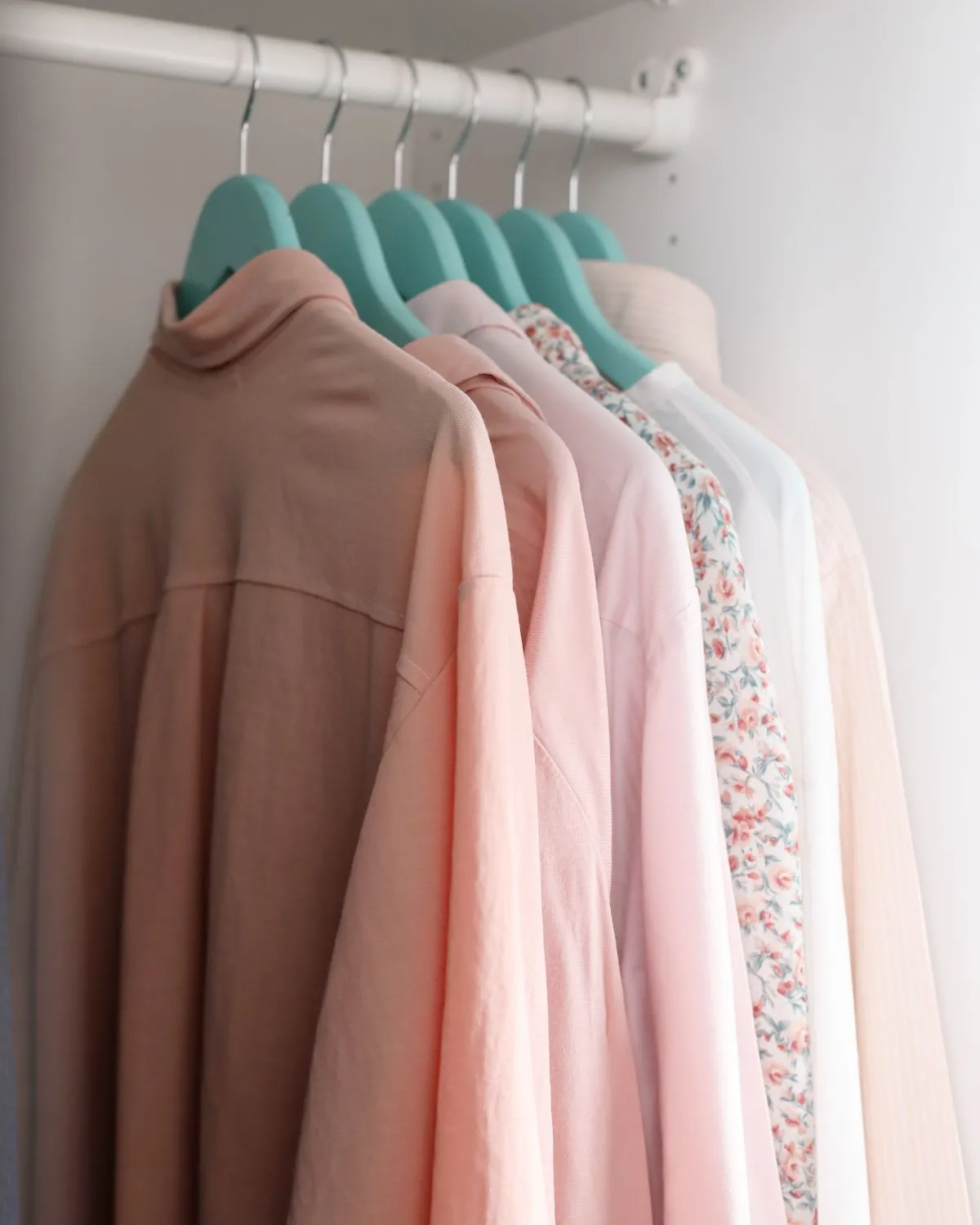
The cheapest space gain in any closet. Slim velvet hangers are thinner than plastic hangers and grip fabric, so clothes stop sliding off and the same rod holds noticeably more — and uniform hangers make the whole closet look calmer for the price of one pack.
Try this: swap one section first and count how many extra hangers fit before you buy a second pack. Keep heavy coats on their original sturdier hangers — slim hooks can bend under a heavy coat over time.
Cost: under $25 for a pack · Time: 20 minutes to re-hang · Renter-safe: yes.

Shop this: Amazon Basics Slim Velvet Hangers, 50-Pack on Amazon
2. Add a second tension rod below the main rod
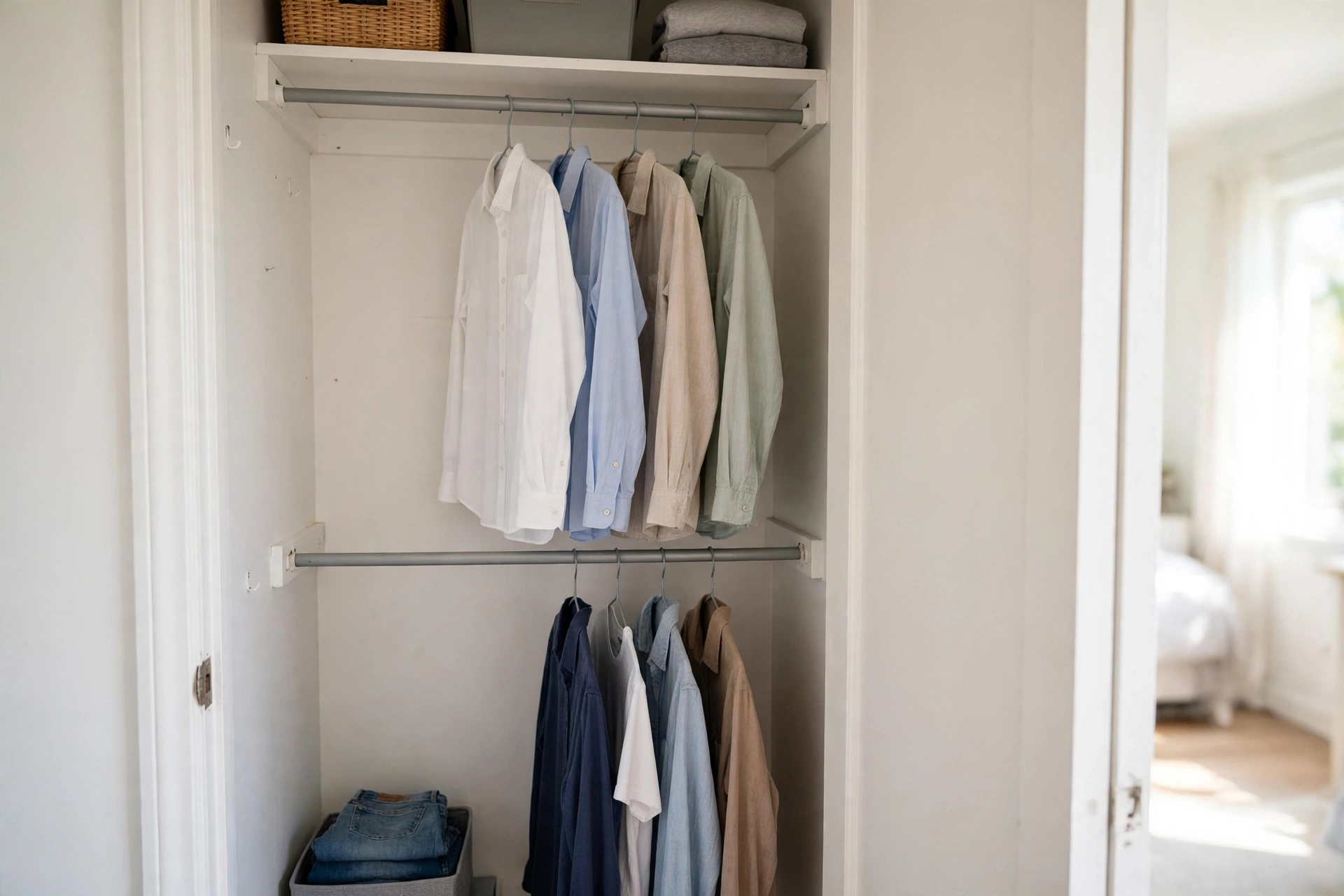
A tension rod hung below the short-item half of the main rod doubles that section overnight — shirts, folded trousers and light jackets on two levels instead of one, with no tools and no marks if the ends are padded. It is the single biggest capacity gain in this list.
Try this: hang it about 30 in (76 cm) above the floor for shirts, and only under the short-item half — long dresses and coats still need their full drop on the other side. Twist it tight and load it light: a small tension rod is typically rated 3–7 lb.
Cost: under $15 · Time: 5 minutes · Renter-safe: yes, if kept to light loads.
3. Hang a fabric shelf unit from the existing rod
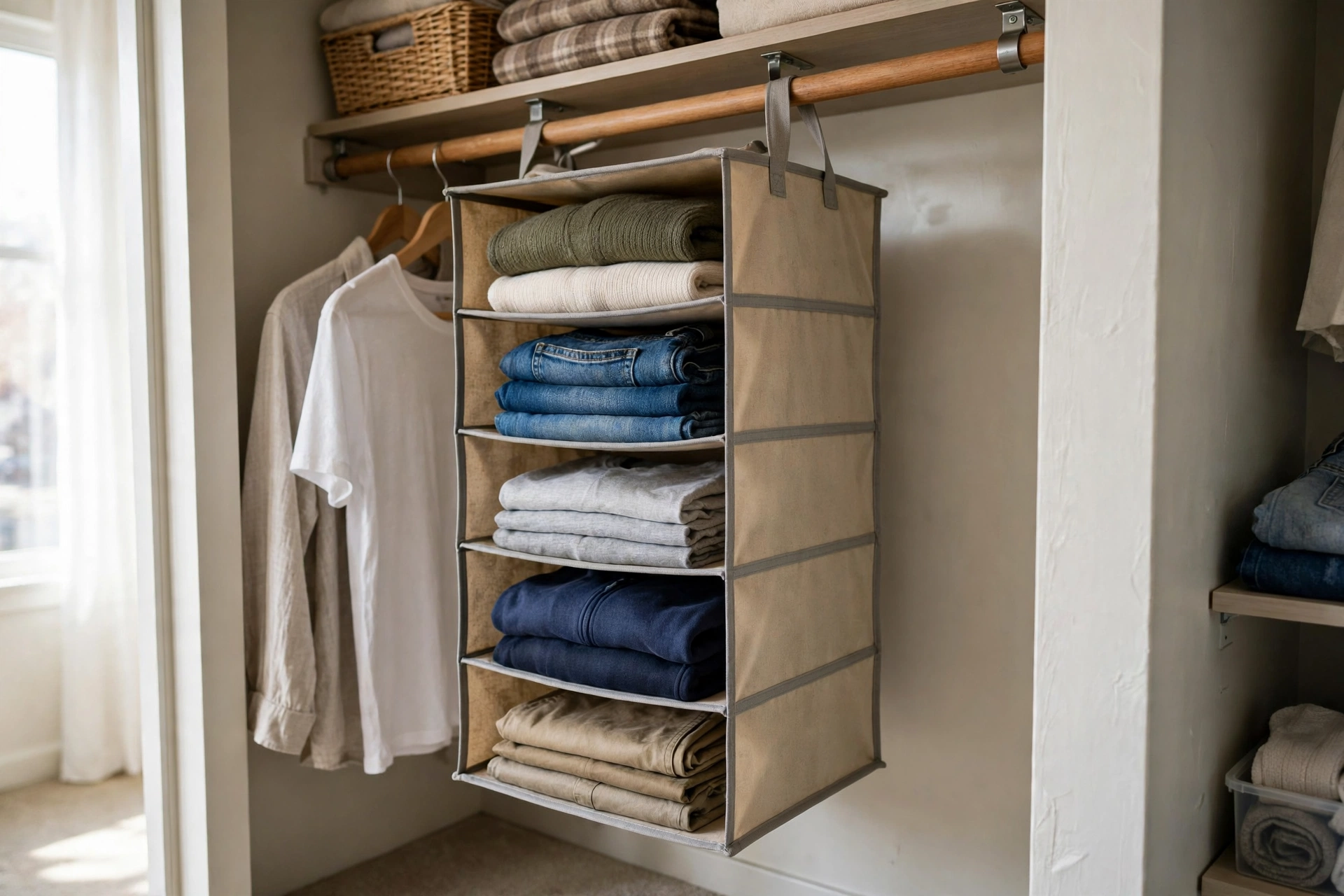
A hanging fabric organizer turns one rod into five or six cubbies for folded clothes, jeans, bags and accessories, using air that was holding nothing. It is the fix when you have rod space but no shelf space for folded things.
Try this: put the heaviest folded stacks at the bottom cubby so the unit does not sway, and check the existing rod can support the added weight before you load it. If the rod is already crowded, use idea 4 instead.
Cost: under $25 · Time: 5 minutes · Renter-safe: yes.
4. Put a freestanding drawer tower on the closet floor
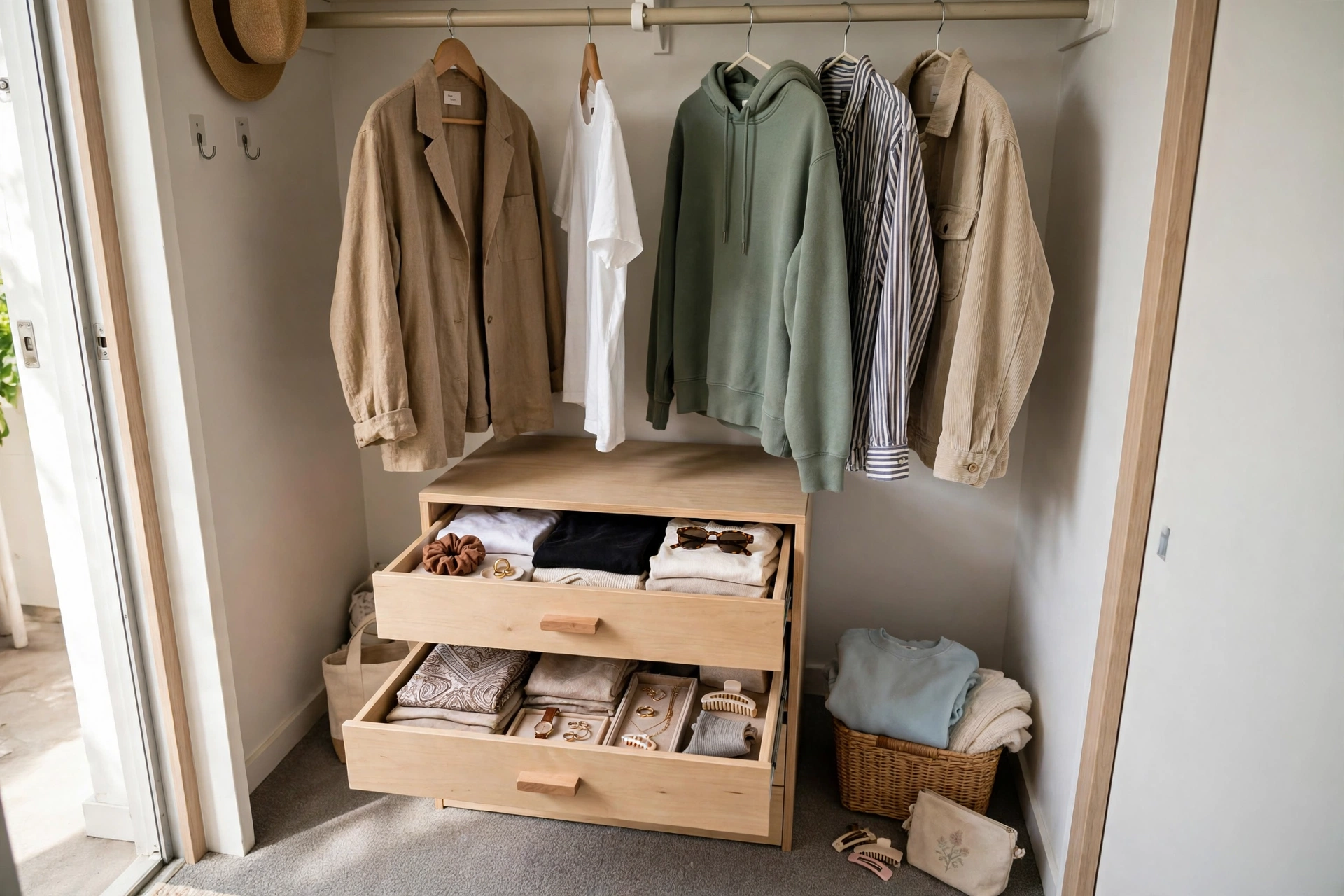
A narrow freestanding drawer tower or cube unit on the floor holds socks, underwear, accessories and folded tops without a single screw — and it comes out in one lift on moving day. It is the right choice when the rod is already full and you need drawers, not more hanging.
Try this: measure the floor space under your longest hanging clothes first, so the tower clears the hems, and leave walking clearance to reach the back of the closet. A low, stable unit beats a tall one in a rental: tall freestanding furniture can tip, and the US Consumer Product Safety Commission advises anchoring potentially unstable storage furniture — anchoring needs the landlord’s written permission first, so in a rental a low unit that needs no anchoring is the safer pick.
Cost: $25–$60 · Time: 20 minutes to assemble · Renter-safe: yes, freestanding; choose low/stable, do not anchor without written permission.
5. Add shelf dividers to the one top shelf
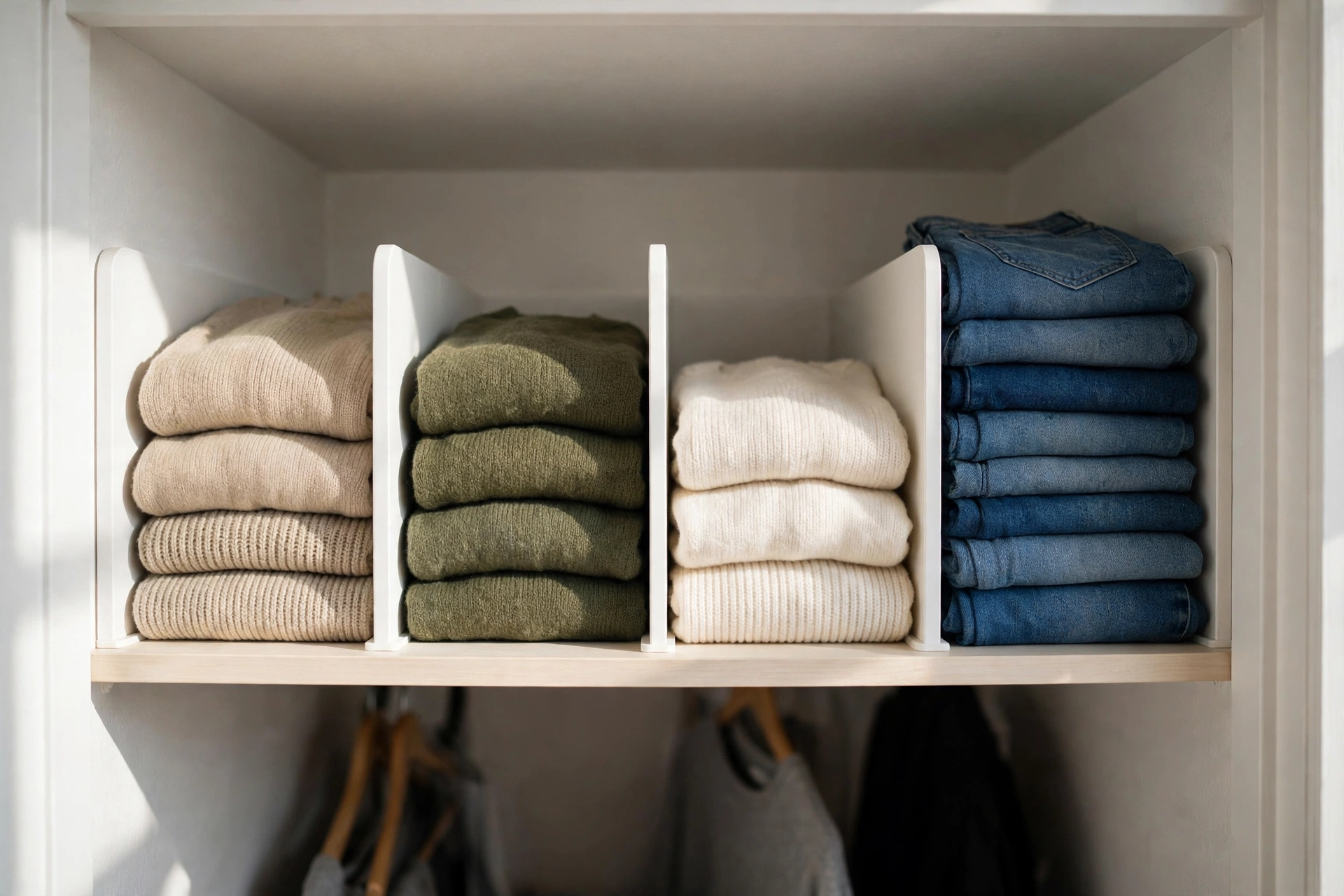
The top shelf is usually one long pile that collapses sideways. Shelf dividers stand folded stacks upright — sweaters in one bay, jeans in the next, workout clothes in the third — so you can pull one stack without the rest falling.
Try this: check the divider fits your shelf thickness and material before you buy; a divider made for a thick wooden shelf will not grip a thin wire shelf. Keep the stacks short — a stack taller than the divider is a pile again.
Cost: under $20 · Time: 5 minutes · Renter-safe: yes.
6. Use the back of the door with an over-door organizer
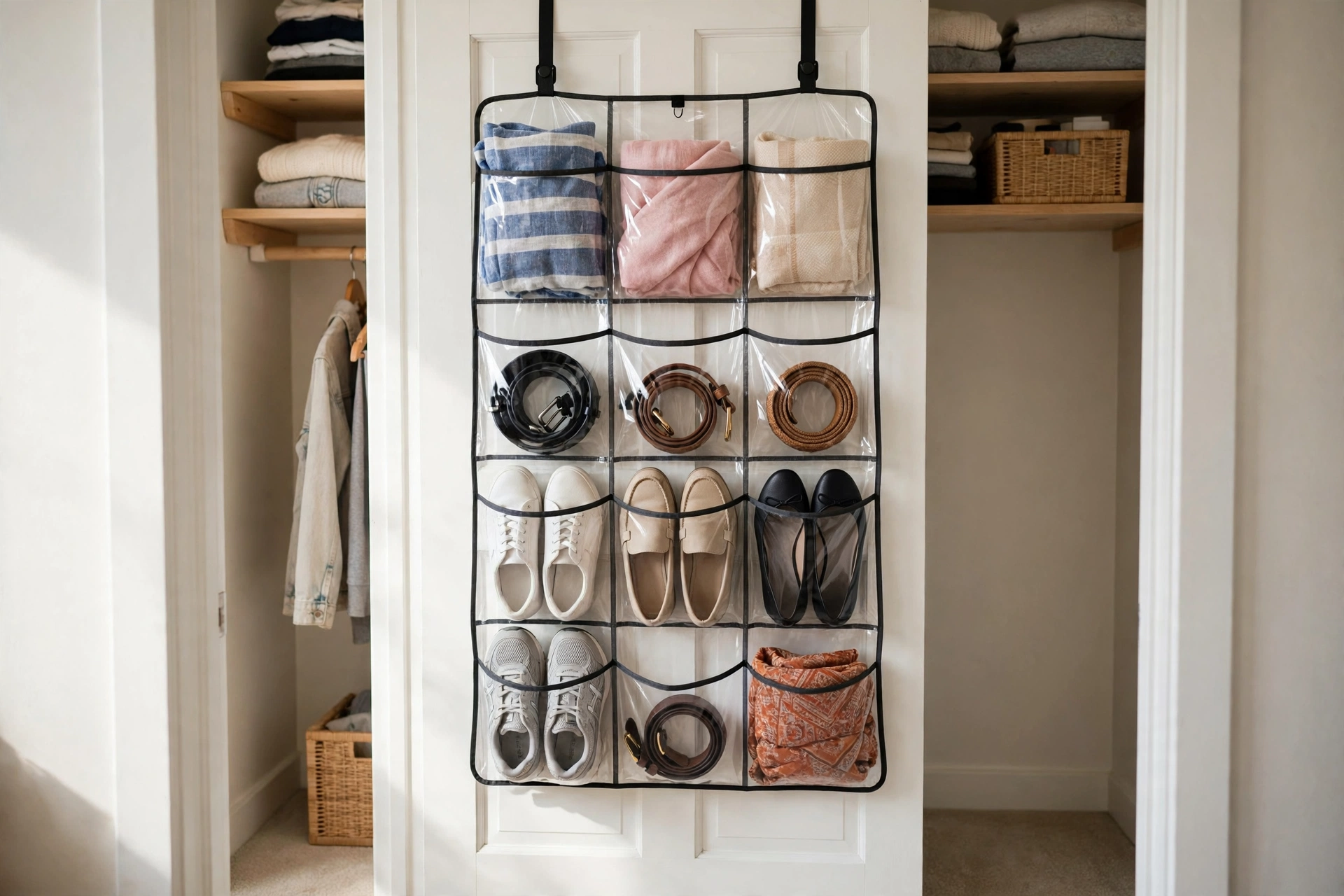
The back of the closet door is free storage. A clear-pocket or fabric over-door organizer holds shoes, scarves, belts, accessories or cleaning supplies, and it lifts off in seconds when you move out — far more space than a few hooks in the same spot.
Try this: choose a flat-hook style so the door still closes properly and the hinges are not strained, and test the full swing before you load it. In a shared closet, give each person one row of pockets.
Cost: under $25 · Time: 5 minutes · Renter-safe: yes.
7. Put a low shoe rack under the hanging clothes
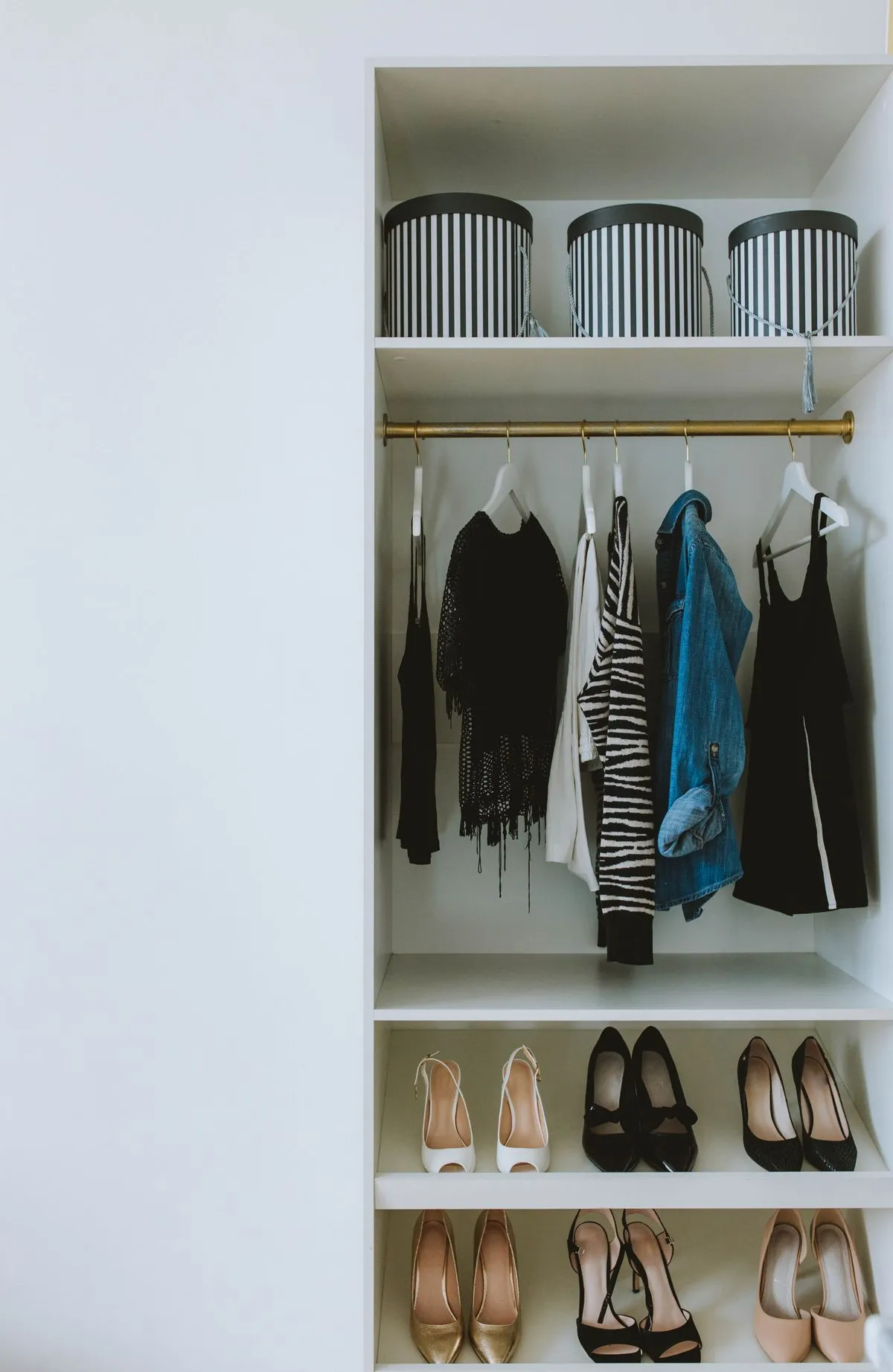
Shoes on the floor are what make a small closet feel chaotic. A low, washable shoe rack under the hanging clothes keeps everyday pairs in a row, off the floor and easy to grab — and it doubles as the shelf your longest garments hang above.
Try this: put everyday pairs at the front and occasion pairs at the back, and keep it to one row deep so nothing hides behind anything. If the rack is under long dresses, measure the hem clearance first.
Cost: under $25 · Time: 10 minutes to assemble · Renter-safe: yes, freestanding.
8. Stack labelled bins on the top shelf for seasonal things
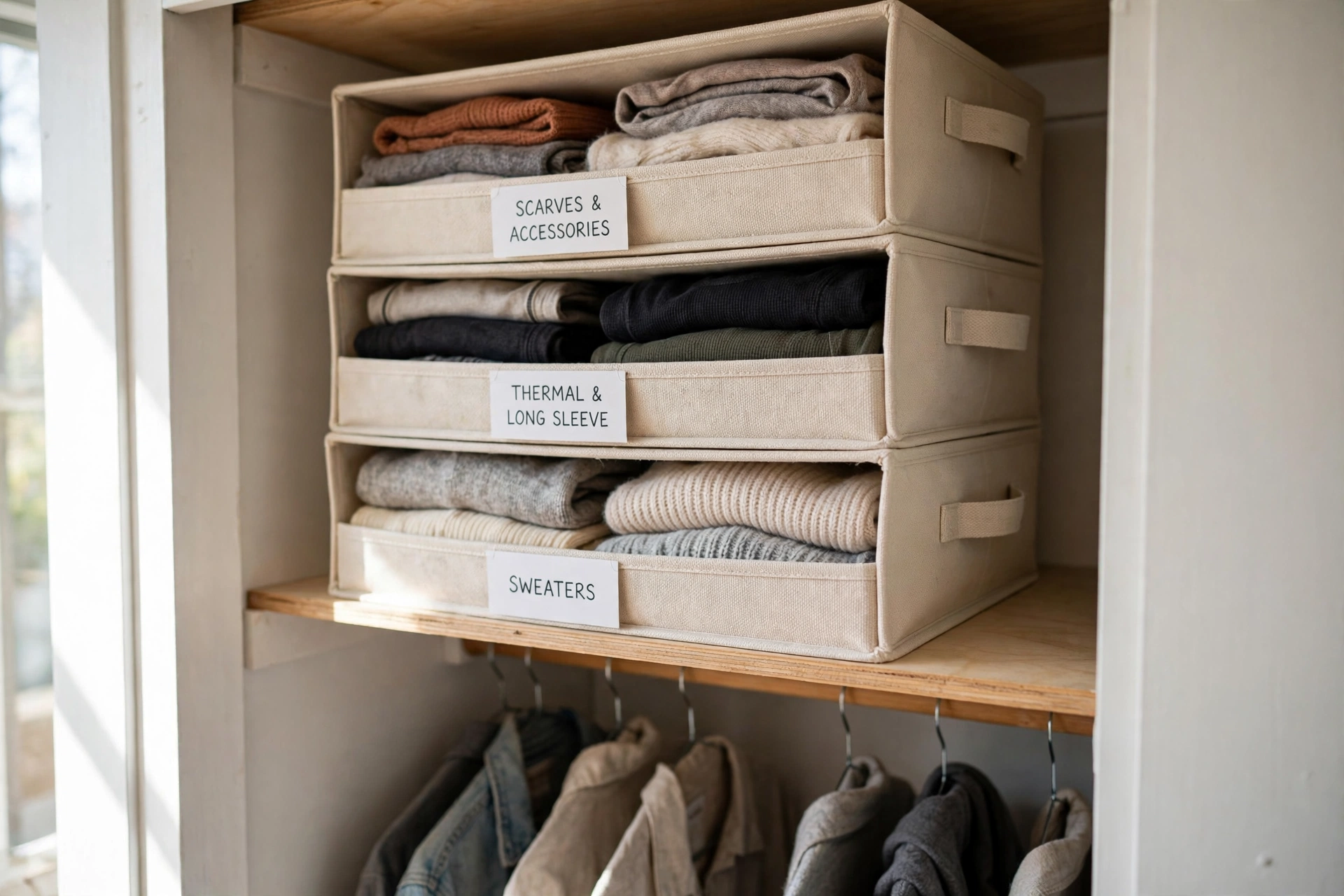
The top shelf is the right home for the things you do not reach for daily — off-season clothes, spare bedding, accessories — in stackable, labelled bins you can lift down in one go. Labels matter: an unlabelled bin on a high shelf is a box you will never open.
Try this: keep top-shelf bins light and easy to lift, and label the end that faces out, not the top. Heavy boxes belong on the floor, not above your head.
Cost: under $25 for two bins · Time: 10 minutes · Renter-safe: yes.
9. Hang belts, scarves and light bags on adhesive hooks — matched to weight
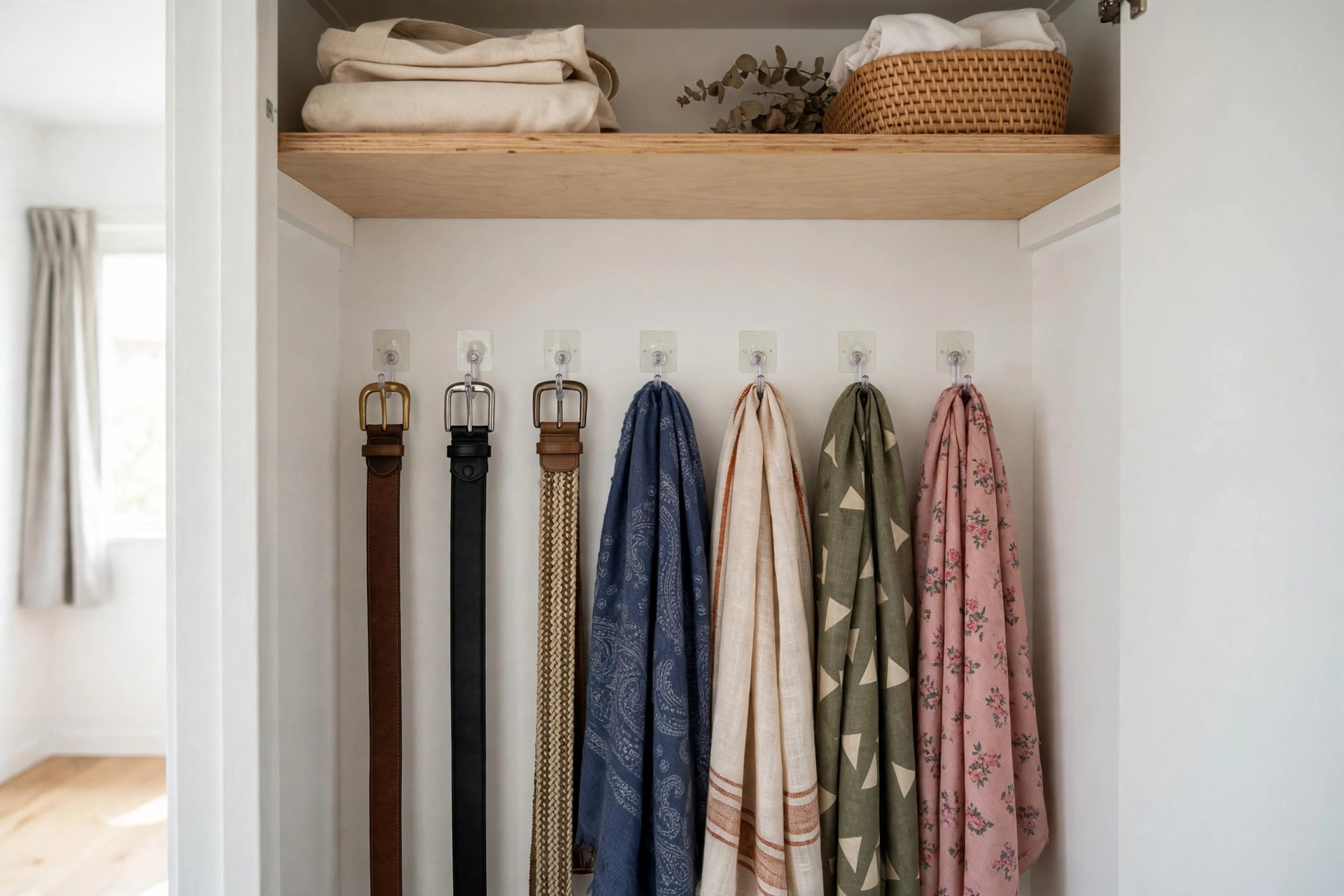
A few adhesive hooks on the closet wall or door turn belts, scarves, hats and a light tote into visible, grabbable storage instead of a tangled drawer. The rule is the whole idea: the hook rating must match the weight.
Try this: small hooks (1 lb) for scarves and caps, medium (3 lb) for a light jacket or tote, large (5 lb) for a backpack — and never a heavy bag on a single small hook, which will fail and can take paint with it. Wait the full hour after sticking before you hang anything (see the rules above).
Cost: under $15 · Time: 10 minutes plus one hour curing · Renter-safe: yes, if the rating matches the weight and the surface is smooth, clean paint.
10. Add a pull-out valet rod for tomorrow’s outfit
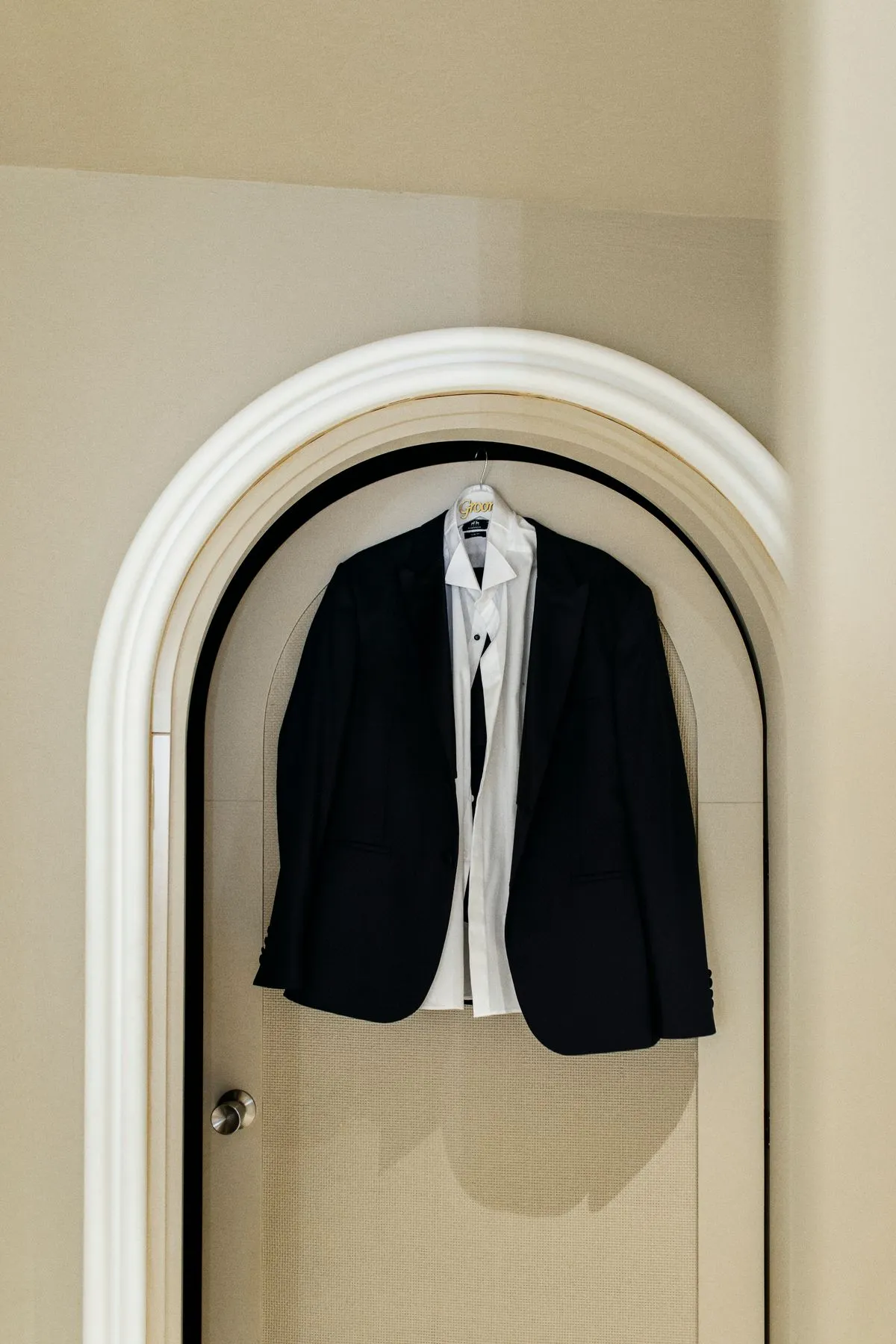
A small pull-out valet rod — or a single sturdy hook on the inside of the door frame — gives you one place to hang tomorrow’s outfit, a jacket that needs airing, or the clothes you wore once and are not ready to wash. It stops the chair pile without taking any rod space.
Try this: use it for one outfit only. The moment it holds three, it is a second rod, not a valet — move the extras back to their zones.
Cost: under $15 · Time: 5 minutes · Renter-safe: yes, if it clamps or hooks on; do not screw one in without written permission.
11. Fill the dead side gap with a narrow freestanding shelf
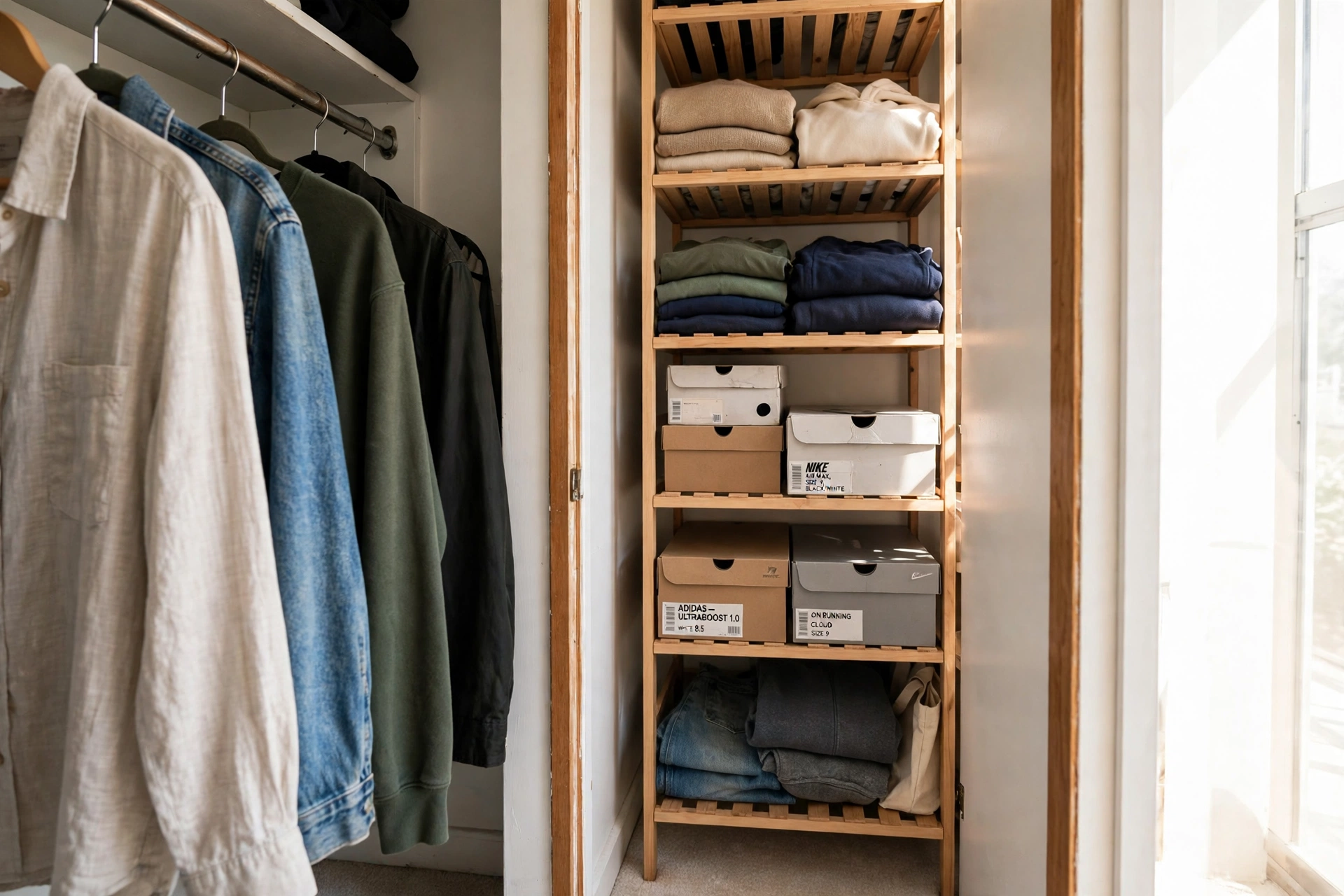
Most reach-in closets leave a narrow dead gap at one end of the rod, where hangers cannot slide. A narrow freestanding shelf or a slim stack of cubes in that gap holds folded clothes, bags or shoe boxes that would otherwise live on the floor.
Try this: measure the gap at the floor and at shelf height — walls are rarely perfectly straight — and check the unit still leaves room to reach the back of the closet. If the gap is under about 8 in, skip it and use idea 6 instead.
Cost: $20–$40 · Time: 15 minutes to assemble · Renter-safe: yes, freestanding.
12. Compress bulky winter things in vacuum bags on the top shelf
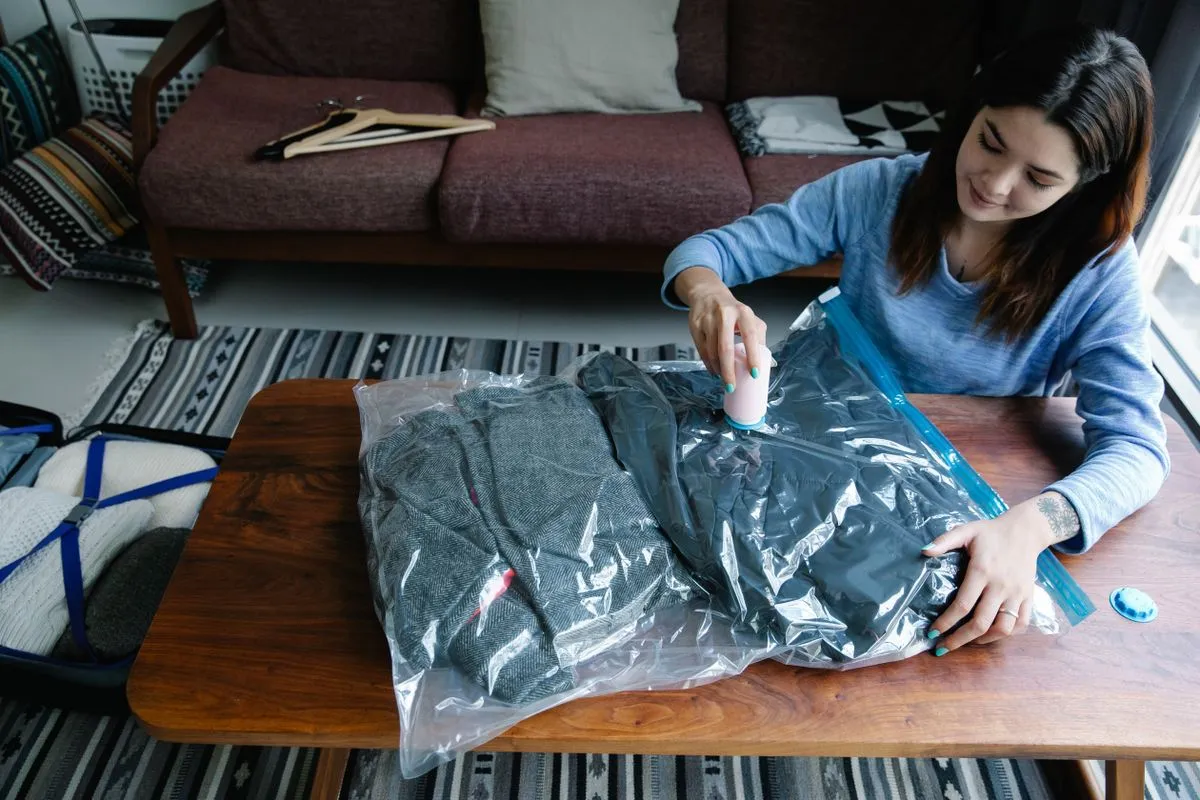
Bulky coats, jumpers and spare bedding eat a top shelf in one season. Vacuum bags compress them to a flat pack that stacks neatly, and they come back out undamaged when the season turns — no extra furniture, no extra room needed.
Try this: wash and fully dry everything before you seal it, and keep one bag per category with the label facing out. Do not vacuum-pack anything you will need this month.
Cost: under $20 for a pack · Time: 15 minutes · Renter-safe: yes.

Shop this: Cozy Essential Vacuum Storage Bags, 8 Jumbo on Amazon
13. Give accessories one hanging home, not five drawers
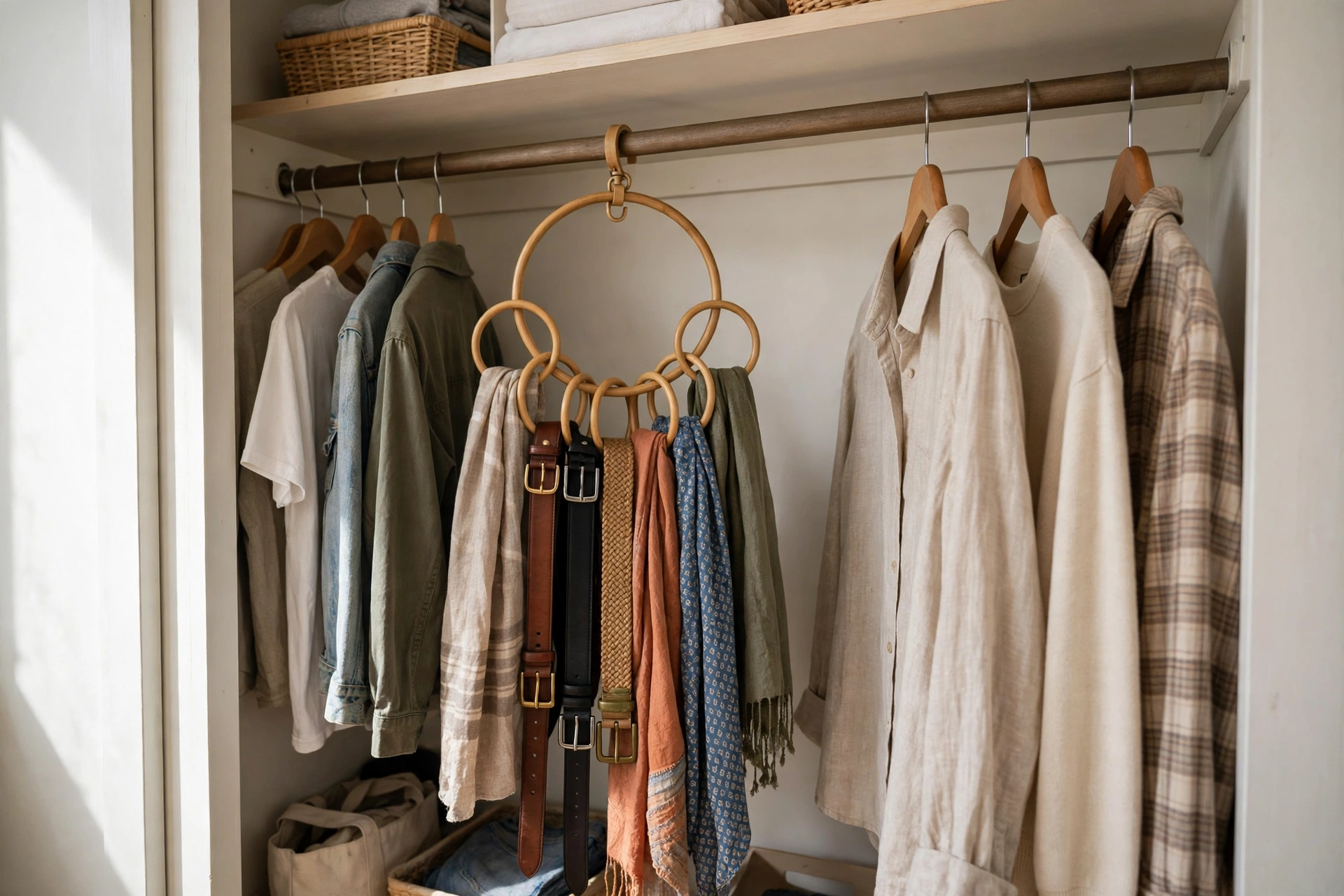
Belts, ties, scarves and necklaces tangle when they live in five different places. One hanging ring organizer or a single row of hooks on the rod keeps them visible, untangled and in one spot you can scan in seconds.
Try this: hang it at eye level on the rod end nearest the opening, so you see it every morning. If you cannot see an accessory, you do not own it — you store it.
Cost: under $15 · Time: 5 minutes · Renter-safe: yes.
14. Do the hanger trick and a 5-minute weekly reset
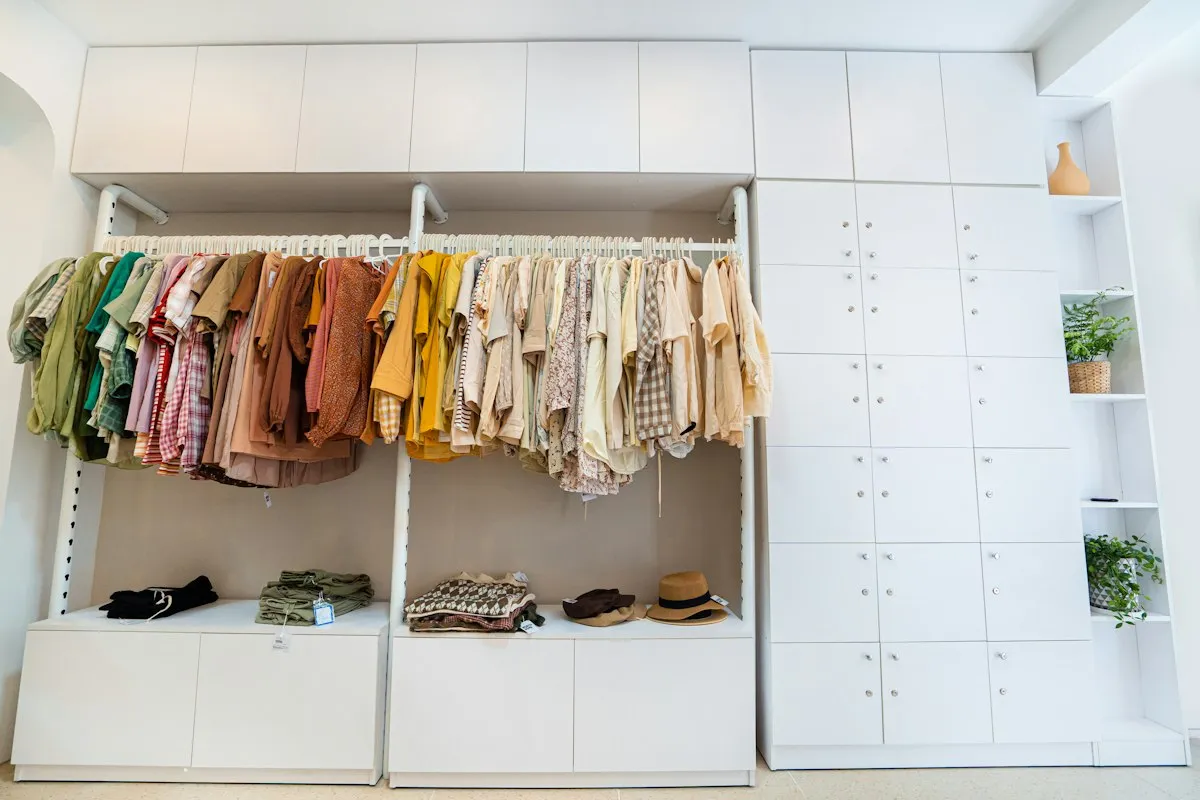
Organizers only work if the closet goes back to its zones. Turn every hanger backwards at the start of the season; after you wear something, return its hanger the right way round. At the end of three months, anything still facing backwards is a candidate to donate — and the space it frees is the space your closet was missing. Then, once a week, spend five minutes returning clean clothes by category, moving worn-once items to the valet rod (idea 10), and putting seasonal things back in their labelled bins.
Try this: set a phone timer for five minutes. When it rings, stop — the point is a habit you will keep, not a deep clean. One in, one out: every new item that enters the closet means one leaves it.
Cost: free · Time: 5 minutes a week · Renter-safe: yes.
What to do first: 3 small closet organization ideas for apartments to start with
Start with ideas 1, 2 and 3 — slim velvet hangers, a second tension rod, and a hanging fabric shelf unit. These three small closet organization ideas for apartments cost about $40–$70, take under an hour, need no drilling, and fix the three places a small closet
actually loses space: the rod, the air below it, and the air above the folded clothes. Then add the over-door organizer (idea 6) if the door is free, and the freestanding drawer tower (idea 4) if you still need drawers.
More ideas for small spaces: 12 Under-Bed Storage Ideas for Small Bedrooms and 14 Pantry Storage Ideas for Tiny Kitchens (No Pantry Needed).

5 Comments